Discussions over the potential benefits and drawbacks of driverless cars seemingly overlook one important question, says Allison Arieff: "[W]hy continue to design and plan for a car-based society?"


"Many experts, from architects to automobile executives, predict the ascendancy of the autonomous vehicle within three generations," writes Arieff. "Allstate is preparing actuarial tables; Ford, BMW, Audi, Mercedes-Benz and Nissan, among other car manufacturers, in an unusual shift toward long-term planning, are seeing the writing on the wall and have developed working prototypes."
"Self-driving cars seemed futurist a century ago; today, it seems out of touch to focus on cars at all," she observes. "Americans are buying fewer cars, driving less and getting fewer licenses as each year goes by. Rates of car ownership are decreasing. Bikeshare, rideshare and carshare programs are gaining in popularity and acceptance, as are transit-oriented communities."
"By becoming so enamored with how technology might transform the car, we’ve neglected to adequately explore how getting rid of cars might transform how and where we live."
Read the full story: Driving Sideways

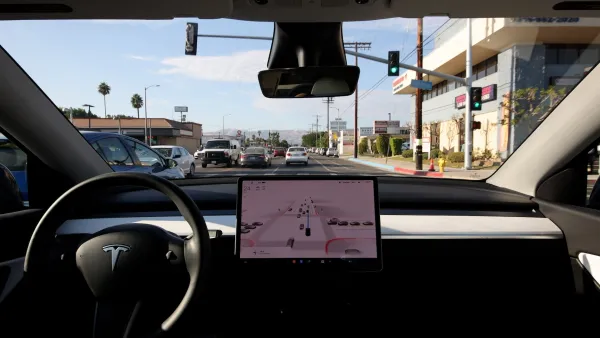
Tesla Launches Unsupervised Robotaxis in Austin
The company has been operating autonomous taxis with human safety drivers in the car in Austin since last June.
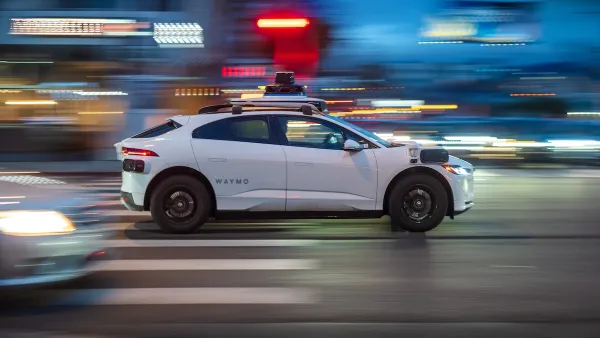
Seattle's Plan for Adopting Driverless Cars
Equity, safety, accessibility and affordability are front of mind as the city prepares for robotaxis and other autonomous vehicles.
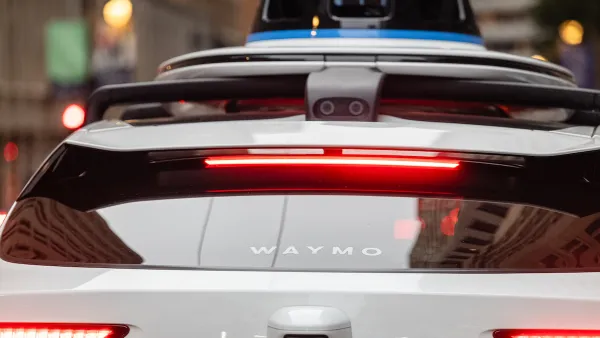
NHTSA Launches Investigations Into Two More Self-Driving Automakers
The federal agency is responding to reports of crashes and erratic behavior from Waymo and Zoox vehicles.

Planetizen Federal Action Tracker
A weekly monitor of how Trump’s orders and actions are impacting planners and planning in America.

‘Going backwards:’ Baltimore mayor, students rally against state's transit funding plan
Maryland's proposed six-year plan provides no funding for Baltimore’s BMORE bus program and reduces its road maintenance funding.

Detroit to transform waterfront with $2.2 billion investment
Developers will convert about 18 acres of unused parking lot space into civic spaces.

HUD, USDA agree on framework to simplify housing environmental review standards
Their agreement is a requirement of the 21st Century ROAD to Housing Act.

Cost of water rising at a faster pace than inflation, median household income
California and Maryland residents have seen their water bills grow especially high.

NYC building owners overwhelmingly comply with new emissions limits
The New York City Department of Buildings is fining owners who did not file emissions reports.

FREE Course: Walkable City 1: Why Walkability?
After describing his path towards focusing on walkability as the essence of good planning, Jeff Speck marches through his five principal reasons for making more walkable places.
Reinventing Malls: Planning Alchemy—Turning Gray Fields Into Gold
The course focuses on the opportunities and imperatives that shape reinvention of mall sites.

planning NEXT
City of Thousand Oaks
City of Wisconsin Rapids
The Architects Foundation
University of Cincinnati Online
Northern Illinois Transit Authority (NITA)
The Pocatello Development Authority
The Urban Renewal Agency of the City of Pocatello