Land Use
New Rule Will Require Local Governments to Account for Property Tax Breaks
An organization tasked with oversight of the accounting methods of government agencies will require local governments to report the value of property, sales, and income tax breaks.

The Failure of Preservation
Attempts to limit new construction to preserve neighborhood character are an example of "beggar thy neighbor" politics.
What's the Matter With the Planning Process?
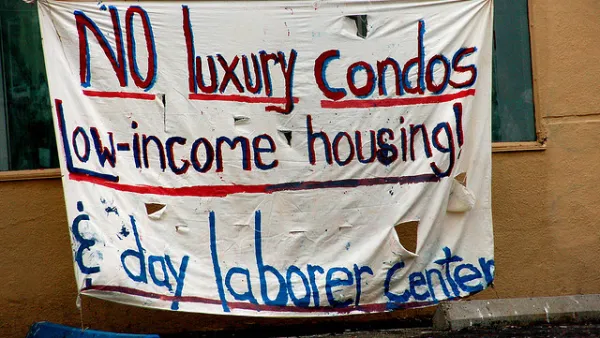
Current planning models places housing affordability and preservation fundamentally at odds with one another. We must be willing to re-evaluate our processes if we are to truly move forward.

A Highly Subjective Ranking of World Cities
Toronto, Tokyo, and Helsinki may have little in common, but they all top Metropolis Magazine's list of the world's most liveable cities, as named by an expert panel of designers and urbanists. Eight runnners-up were named in a variety of categories.

Urban Heat Waves Likely to Hit Harder
Yet another climate change side effect: more frequent urban heat waves. And because urban temperatures tend higher than rural ones, cities should be ready to protect the most vulnerable.
Durham's Transformation Built on Redevelopment Near Future Light Rail, Freeway
Two adjacent properties in downtown Durham totaling 18 acres were recently purchased by developers planning for intensive mixed use projects near the former tobacco warehouse district and future light rail station.
Hope for the 'Bronx Boondoggle'
The Bronx Parking Development Co. was created to build new parking around the new Yankee Stadium, but the glut of new parking has not yet produced a profitable venture.
Op-Ed: Transit-Oriented Gentrification Should Be Taxed
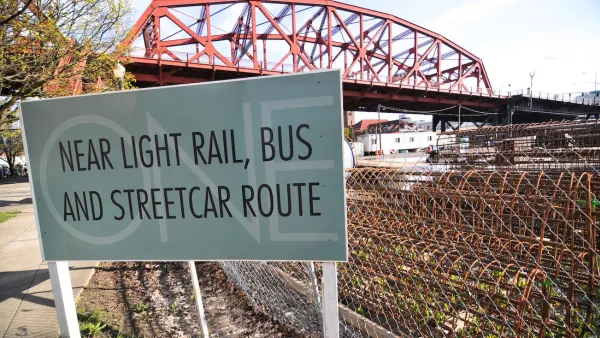
This piece from the Vancouver Sun advocates using land value capture taxes to fund transit and related improvements. Such a tax would target speculation, the author writes, rather than productive activity.
Blog Series Explores the 'Heart of the Arctic'
Hazel Borys chronicles an Arctic expedition adventure, rife with environmental insights. If you ever wondered what it felt like in the olden days to receive dispatches from explorers off in distant mysterious lands, maybe it felt something like this.
New Report Ranks Metros on Transportation, Land Use, and More
To make a strategic assessment of the St. Louis region, the 7th edition of "Where We Stand" ranks the largest 50 metropolitan areas on more than 200 variables.

Planners Across America: Josh Whitehead Helps Memphis Live Within Limits
Josh Whitehead, planning director of the Memphis and Shelby County Office of Planning & Development (OPD), discusses competing with suburbs, implementing a new zoning code, and redeveloping, for a second time, historic streetcar corridors.
Code Changes to Allow Tiny Houses Sought for Atlanta
An Atlanta City Councilmember and local advocates are pushing for the city to join the ranks of cities that have allowed tiny houses as a solution to housing challenges.

Homebuyers Return to the Exurbs
It's been a while since 2008, and a new crop of homeowners is colonizing the far-flung exurbs. Mostly foreclosed and even abandoned last time around, the exurbs are still a risky buy.

Not Racist—but Similar to Racism
Low-density zoning is not racist in the narrowest sense of the term—but it does have similar goals to racist housing policies and creates similar problems.
Proposed Chicago TOD Ordinance: Increase Density, Eliminate Parking Requirements
Mayor Rahm Emanuel announced an update of the city's 2013 transit oriented development ordinance. The new version of the ordinance would have a sweeping effect on the land uses around transit stations in Chicago.

Land Use Planning to Activate Downtown Nightlife
The Arlington County, Virginia downtown district of Rosslyn will provide the region's latest case study of a commercial district leveraging land use regulations to activate a dormant nightlife.
Jamaica, Queens: More Than Just a Stop on the Way to the Airport
Public and private interests have emerged to revitalize the Queens neighborhood, an inter-modal hub ten miles east of Midtown Manhattan.

Map Depicts Nationwide Geography of Inequality
An analysis and accompanying interactive map from the Urban Institute show where the nation's richest and poorest tend to live. The map tells a tale of deeply ingrained wealth segregation.

Seattle Tower-Spacing Rules Cause Controversy
To preserve views, zoning rules from 2006 require adequate distance between residential towers of a certain height. As developers chafe against the restriction, residents still worry they'll be left facing a wall.

Op-Ed: Newer Model Density Falls Short of its Promise
The general principle is simple: more density equals lower prices and less environmental impact. But suburbia's imprint is deep, both on cities themselves and on how we expect to inhabit them.

FREE Course: Walkable City 1: Why Walkability?
After describing his path towards focusing on walkability as the essence of good planning, Jeff Speck marches through his five principal reasons for making more walkable places.
Reinventing Malls: Planning Alchemy—Turning Gray Fields Into Gold
The course focuses on the opportunities and imperatives that shape reinvention of mall sites.

One Hundred Miles
County of Mendocino
planning NEXT
The Architects Foundation
University of Cincinnati Online
Montrose County
Northern Illinois Transit Authority (NITA)
The Pocatello Development Authority









