Infrastructure
Illicit Intervention Creates Protected Bike Lane in Seattle
In what is certainly one of the most polite forms of civil disobedience we've ever encountered, a small group of guerrilla urbanists installed bike lane protectors along a Seattle street one recent night. They kindly made them easy to remove.
New Study Raises Questions About Relevance of Food Deserts
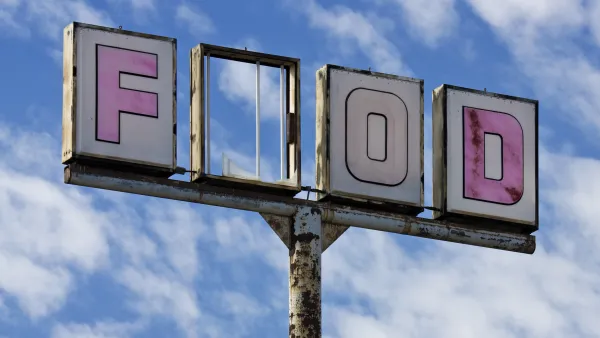
The role of access to fresh food in contributing to people's eating habits has been at the heart of efforts to identify and eliminate 'food deserts.' However, a new study questions the connection between obesity and the food environment.
San Francisco Keep Tabs on Residents' Trash to Clean Up the City's Diversion Rate
Mark Andrew Boyer looks at the work of San Francisco's "municipal cart auditors" a team of city employed trash diggers who scour the city's cans for scofflaw sorters as part of a broader effort to become 100-percent "waste-free" by 2020.
Looking for Lessons in China's Growing Air Infrastructure
Unbounded by budgetary concerns, lengthy approvals processes, or NIMBY neighbors, China is building 100 new airports over the next two years. Does their process offer any lessons for how to fix America's crumbling air infrastructure?
Cracking Beneath the Surface: America's Invisibly Eroding Roadways
In need of an underground overhaul, the Capital Beltway exemplifies the deteriorating conditions of 1/3 of the nation's roadways.
Santa Clara's Smart Solution for Providing Free Wi-Fi
The city of Santa Clara is piggybacking on the installation of connected, smart utility meters to blanket the city in a publicly accessible, free, wireless network.
Stop the Madness: New Thinking Needed for Prioritizing Transportation Projects
For architecture critic Inga Saffron, a $900 million project to improve a South Jersey interchange illustrates the madness of transportation funding priorities.
Freight Movement Drives Rail Resurgence
Freight rail is booming throughout the U.S. While shipping oil from North Dakota's Bakken shale basin has been a huge factor in the resurgence, Betsy Morris digs deeper and analyzes the surprising competition between road and rail.
Cycle Tracks and Bus Only Lanes Coming to Downtown L.A.
The updated designs for an ambitious project to remake car-clogged Figueroa Street as a transit-, pedestrian-, and bicycle-friendly complete street have been made public in advance of a community meeting next month.
What Type of Bus Stop Does $1 Million Buy You?
Arlington County, Virginia has opened the new $1 million Columbia Pike bus stop to popular disbelief. The prototype station will eventually accommodate buses and streetcars.
Can Cities Help Solve Global Food Challenges?
With growing populations demanding more food and growing borders requiring more land, cities are one of the primary challenges to feeding the world's hunger problem. Can they also be the solution?
Examining L.A.'s Boulevard of Urban Dreams
Christopher Hawthorne continues his exploration of the changing face of Los Angeles, as seen along its boulevards, with an examination of the street where the city has perpetually "embraced and tested out the future" - Wilshire Boulevard.
Great Placemaking Begins with Acknowledging the Obvious
Our brains simply tune out anything that might suggest that our behavior is in some way complicit in our problems. Scott Doyon zeros in on the obvious, but often overlooked, problems with our auto-oriented culture.
Top Trends 2012-2013
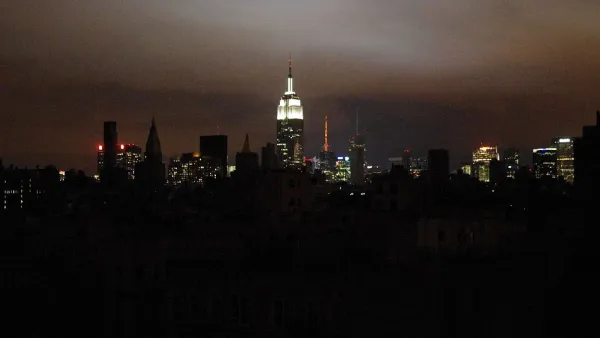
Over the course of the year, the editors of Planetizen review and summarize thousands of articles, books, studies and editorials related to planning and urban development. Here are our picks for the most notable planning trends of the past year.
America's Next Subway System Won't Carry Passengers
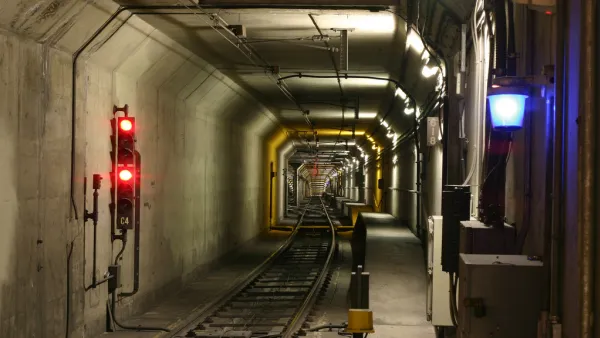
If the U.S. Air Force has its wish, America's next subway system won't be built in a city and won't carry passengers (not human ones anyway). Robert Beckhusen reports on plans for a "mobile doomsday train."
What Can Northern Europe Teach Us About Building Livable Communities?
In narrative and in images, Luis Rodriguez discusses the findings of a recent study tour to Germany and Scandinavia to discover the secrets to creating more livable communities.
America's Infrastructure Shows Improvement, But Still Shameful
For the first time in 15 years, the American Society of Civil Engineers' report on the state of America's infrastructure sees improvement. But the group has identified the need for $3.6 trillion in investment by 2020 to fix enduring problems.
The Great Public Facility Sell-Off
In need of at least $230 million for system-wide repairs, NYC libraries, which receive less than $15 million a year from the city, look to strike land deals with private developers, report Joseph Berger and Al Baker.
Farmers Markets Thrive, But Farmers Still Struggle
The resurgence of farmers markets across America has helped feed the growing desire for locally grown produce. Unfortunately, the return on investment still doesn't pencil out for many farmers.
How Can New York Feed its Food Resurgence?
Food is a central part of New York City's economy. Residents of the city spend $30 billion on food each year: growing jobs, driving development, and defining its neighborhoods. Yet there's much more NY could do to support its food resurgence.

FREE Course: Walkable City 1: Why Walkability?
After describing his path towards focusing on walkability as the essence of good planning, Jeff Speck marches through his five principal reasons for making more walkable places.
Reinventing Malls: Planning Alchemy—Turning Gray Fields Into Gold
The course focuses on the opportunities and imperatives that shape reinvention of mall sites.

City of Thousand Oaks
City of Wisconsin Rapids
Harvard University Graduate School of Design
The Architects Foundation
University of Cincinnati Online
Northern Illinois Transit Authority (NITA)
The Pocatello Development Authority
The Urban Renewal Agency of the City of Pocatello