Housing

What Is Inclusionary Zoning?
Inclusionary zoning refers to a range of policies and practices that mandate or provide incentives for the inclusion of affordable housing units in new developments to encourage mixed-income neighborhoods and increase the supply of affordable housing.

Portland's Inclusionary Zoning Effect Measured, Criticized
It's been over four years since the city of Portland implemented an inclusionary zoning policy that required all new apartment developments to set aside a portion of units for low- and moderate-income housing.
Local Solutions for Housing Affordability
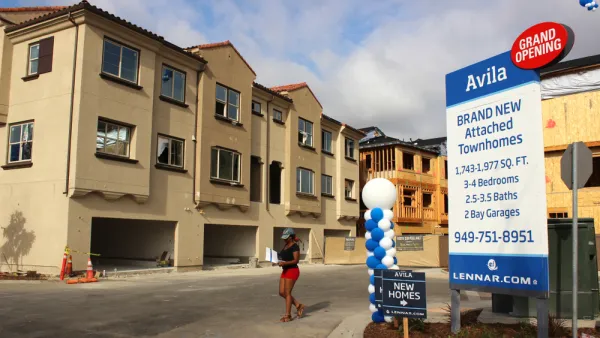
The Lincoln Institute of Land Policy recently published a report to identify local government actions to ensure stable and affordable places to live for everyone.

San Antonio Doubles Down on Public Housing
The San Antonio Housing Authority has been working for years to replace the Alazán-Apache Courts with mixed-income housing using a tax-credit deal. But that plan is now scrapped in favor of keeping the apartments as public housing.

A Compact, Connected, Clean, and Inclusive Recovery for Mexico
As the Mexican government charts the country’s recovery from COVID-19, a newly published paper charts national solutions to urban transportation and housing challenges that will put Mexico’s cities on a path to prosperity and resilience.

Los Angeles Streamlines ADU Permits with High-Design Templates
Los Angeles' ADU Standard Plan Program will offer homeowners a set of pre-approved designs that will save them time and money.

Home-Based Businesses Could Save the Post-Pandemic Economy
Seattle's city council considers reducing 'arbitrary' and 'exclusionary' limits on home-based businesses.

Upzoning Catches on in California
Eliminating single-family zoning and other exclusionary ordinances could have major impacts on housing in some of the country's most unaffordable cities.

Newark Launches Land Bank to Revive Long-Vacant Properties
The land bank will assess proposals for the sale and redevelopment of 100 city-owned properties in neglected neighborhoods.

100 Percent Affordable Overlay: Next Up for Berkeley's Reform Movement
After moving forward with parking and zoning reforms, the Berkeley City Council is also considering a new Affordable Housing Overlay on a model previously adopted in Cambridge, Massachusetts.

Zoning Reform Skepticism
Ending single-family zoning, as more cities around the United States have begun to do, is too extreme a response to contemporary planning challenges, according to a recent opinion piece published by the East Bay Times.

Bozeman's 'Only Racially Diverse Neighborhood' at Risk
Thanks in part to an influx of remote workers, the Montana town faces soaring housing costs and practically non-existent vacancy rates.

The Need for Social Housing in Seattle
Seattle trails international peer cities in its social housing stock, but there are steps city leaders can take to produce more units and increase affordability.

Comprehensive Plan Update Stokes Controversy in D.C.
Complex political dynamics are mustering for a showdown over D.C.'s comprehensive plan.

'Record-Shattering' Decline in Housing Inventory
New data reveals how far the U.S. housing market has stayed from anything resembling normal.
What Is Redlining?
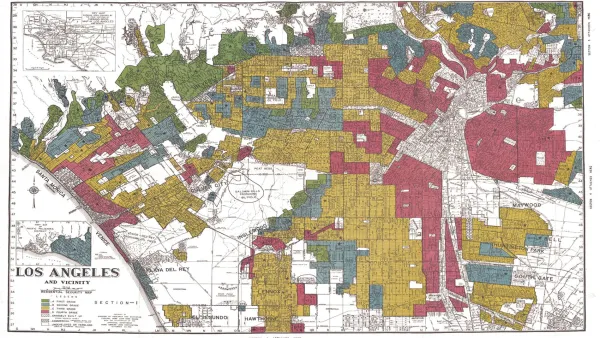
Redlining is the practice of restricting investment in areas deemed high-risk by banks. The term refers to the red color used to denote undesirable areas on maps used by lending institutions to determine loan eligibility.

San Diego Passes New Vacation Rental Regulations
The city passed a proposal to limit the number of whole-home vacation rentals and implement new regulations and fees for rental property owners.

How to Fix Racist Housing Policies: Sue the Suburbs
Strengthening U.S. Department of Housing and Urban Development's civil rights enforcement could send a powerful signal to communities resistant to changing discriminatory housing rules.

What Is Market Rate Housing?
Market-rate housing is a term used to define housing generated by the real estate market without direct subsidy. The price the market sets for housing, even without subsidies, is a direct outcome of policies and practices of planning.

Study Calls Seattle Nation's 'Most Economically Integrated' City
A study of real estate values in Seattle found that townhomes have helped diversify neighborhoods and increase affordability.

FREE Course: Walkable City 1: Why Walkability?
After describing his path towards focusing on walkability as the essence of good planning, Jeff Speck marches through his five principal reasons for making more walkable places.
Reinventing Malls: Planning Alchemy—Turning Gray Fields Into Gold
The course focuses on the opportunities and imperatives that shape reinvention of mall sites.

City of Rosemead
Rutgers University, Edward J. Bloustein School of Planning and Public Policy
One Hundred Miles
University of Michigan School for Environment and Sustainability (SEAS)
Hunter College, City University of New York (CUNY)
The Architects Foundation
City of Cambridge
The Pocatello Development Authority
The Urban Renewal Agency of the City of Pocatello









