There are more vacant properties now than there were at the height of the foreclosure crisis in the United States, and many vacant properties are hanging around in growing cities with a shortage of affordable housing.


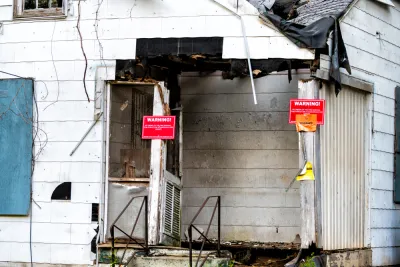
"Despite a shortage of affordable housing in many parts of the country, there are more than 6 million vacant, unused housing units, according to the U.S. Census Bureau’s American Community Survey," writes Amy Scott.
"That’s more than at the height of the foreclosure crisis, and it doesn’t count empty lots or commercial buildings."
Scott's article starts as a dispatch from the recent Reclaiming Vacant Properties conference, held recently in Atlanta, which can be held up as an example of the under-the-radar challenge of property vacancies in many parts of the country. The surprising persistence of property vacancies in a growing Atlanta especially exemplifies how effective responses to property vacancies will require actions specific to local economic context.
FULL STORY: The vacancy crisis is far from over

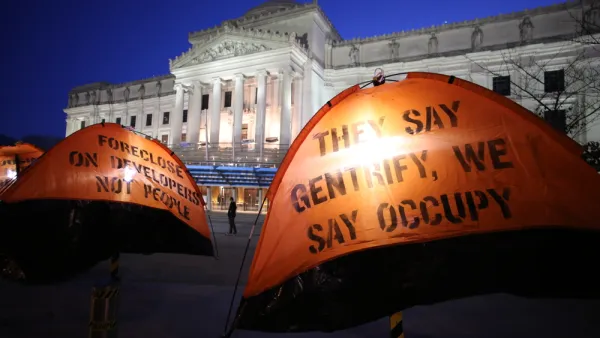
Strategies for Discussing Urban Revitalization in Context of Gentrification
With concerns about gentrification sometimes, and in some places, dominating the discussion, it can be difficult to advocate for revitalization.
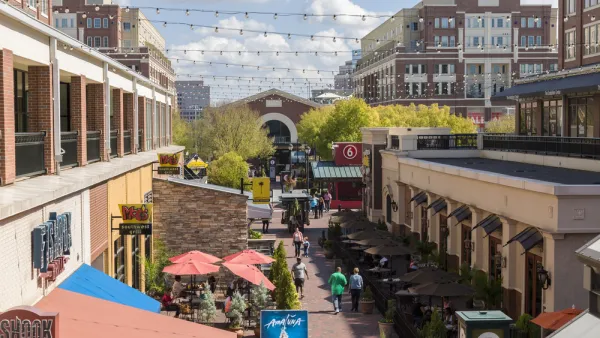
Debating Public Incentives for Private Developments
A debate common in growing cities around the country is taking place in Atlanta in answer to the question of how much support private developers need from the public.

Affordable Housing Funding Reaches New Heights for Beltline Neighborhoods
The city of Atlanta has allocated $11.9 million of its $45 million budget for the Beltline for affordable housing.

Planetizen Federal Action Tracker
A weekly monitor of how Trump’s orders and actions are impacting planners and planning in America.

The state-sanctioned urbicide of Austin
People don’t kill cities. Freeways do.

US to reduce Colorado River water deliveries to Mexico
A new Colorado Treaty amendment reduces Mexico’s Colorado River water allocation by 250,000 acre feet.

5 New England states march closer to 800 megawatt wind energy project
Securing federal approval for the project may be complicated under the Trump administration, which has historically been hostile towards domestic wind power.

Baltimore to break ground on $50 million Transit Priority Project
The project will bring faster bus trips, safer streets and better bike connections to Baltimore.

Airbnb launches $250 million 'last-dollar financing' housing accelerator, makes first investment in Austin
The company will put $6.4 million towards affordable housing development in Texas’ capital.

FREE Course: Walkable City 1: Why Walkability?
After describing his path towards focusing on walkability as the essence of good planning, Jeff Speck marches through his five principal reasons for making more walkable places.
Reinventing Malls: Planning Alchemy—Turning Gray Fields Into Gold
The course focuses on the opportunities and imperatives that shape reinvention of mall sites.

Eagle County Government
Harvard University Graduate School of Design
Nashville Planning Department
The Architects Foundation
University of Cincinnati Online
The Pocatello Development Authority
The Urban Renewal Agency of the City of Pocatello
Journal of the American Planning Association