A three-year investigation of the real estate industry on Long Island reveals rampant discriminatory practices and an industry complicit in the segregation of the communities that comprise the region.


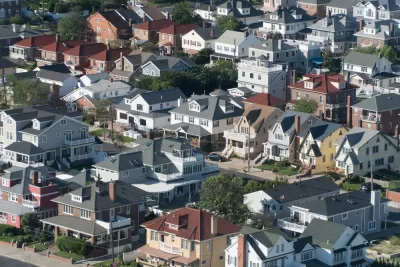
Ann Choi, Keith Herbert, and Olivia Winslow present the bombshell findings of an undercover investigative report into the unequal treatment of minorities by real estate agents working on Long Island in New York.
"The three-year probe strongly indicates that house hunting in one of the nation’s most segregated suburbs poses substantial risks of discrimination, with black buyers chancing disadvantages almost half the time they enlist brokers," according to the article.
Of the interactions encountered by the undercover reporters working on the story, 19 percent of Asians faced unequal treatment, 39 percent of Hispanics, and 49 percent of Blacks.
"Additionally, the investigation reveals that Long Island’s dominant residential brokering firms help solidify racial separations," according to the article. "They also avoided business in communities with overwhelmingly minority populations."
The article includes interactive graphics, videos of encounters during the investigation, and a lot more info to document a massive investigative undertaking.
Read the full story: Long Island Divide

Boston's Deeply Discriminatory Rental Market Ignores Black Renters
A new study documents staggering racial bais in the Boston rental market and compares the racial disparities among prospective tenants seeking housing in 2018 and 2019.
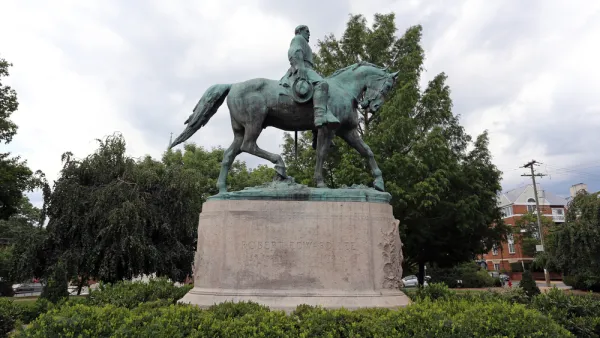
Mapping Housing Discrimination in Charlottesville
Like many American cities, the site of white supremacist unrest in 2017 has a long history of residential discrimination by race. This mapping project seeks to uncover the roots of today's disparities.
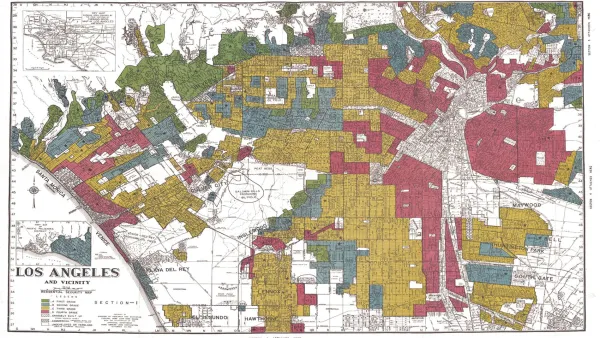
Housing Discrimination Still a Vast Problem, Survey Finds
In a survey conducted last October, Zillow found that 27 percent of respondents believe they've experienced housing discrimination. National Fair Housing Alliance president Lisa Rice discusses why that is.

Planetizen Federal Action Tracker
A weekly monitor of how Trump’s orders and actions are impacting planners and planning in America.

California plans to bury El Niño’s downpour
If the state plays its cards right, it may be able to store a billion acre-feet of El Niño’s water in aquifers.

Chicago breaks ground on $3 billion megadevelopment
The new neighborhood, titled Foundry Park, will one day host 3,700 residences.

Satanic place names
From streams and lakes to valleys and canyons, I mapped more than 1,000 places named after the Devil.

California High-Speed Rail Authority CEO resigns after $600,000 scandal
Under Ian Choudri, the authority used taxpayer dollars to fund first class flights and trips to nightclubs.

Want to study the Missouri River? Soon, you may need unanimous approval from 10 states
Legislation would require 10 governors’ permission to study or build projects moving water outside the basin.

FREE Course: Walkable City 1: Why Walkability?
After describing his path towards focusing on walkability as the essence of good planning, Jeff Speck marches through his five principal reasons for making more walkable places.
Reinventing Malls: Planning Alchemy—Turning Gray Fields Into Gold
The course focuses on the opportunities and imperatives that shape reinvention of mall sites.

City of Rosemead
Rutgers University, Edward J. Bloustein School of Planning and Public Policy
One Hundred Miles
Hunter College, City University of New York (CUNY)
The Architects Foundation
University of Cincinnati Online
City of Cambridge
Montrose County
The Pocatello Development Authority