Exclusives

BLOG POST
Bricks or Bullets? Obama Chooses Defense Over Housing
The federal government has largely abdicated its responsibility to build affordable housing. Nowhere is that more clear than in the comparison between President Obama's proposed $6 billion to HUD for housing production and $626 billion for defense.

FEATURE
Deconstructing the Policing of Conservation Subdivision Design Standards
Continuing a conversation about the definition of conservation subdivisions, this article examines the inconsistent application of the term by policymakers. Moreover, the auto-dependent realities of rural development require more critical thinking.

BLOG POST
Cleaner Air In Paris? There Will Be an App for That
Cars, smartphones, and Paris’ air quality crisis.

BLOG POST
Southern Fried Urbanism
You do not hear much talk about meaningful urbanism in the Southeast U.S. Until political winds shift, don't expect that to change.
BLOG POST
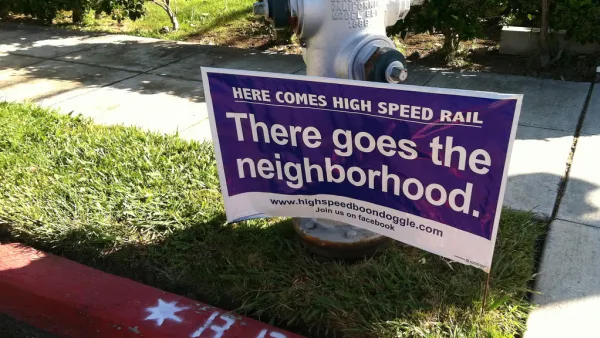
The Theory Behind NIMBYism
Why should people have veto power over anything built in their neighborhood?

FEATURE
Mid-Rise: Density at a Human Scale
All growing cities must find ways to develop at appropriate, transit-supporting densities without overwhelming the surrounding context. The human-scaled, mid-rise building can be a solution—but achieving a good neighbourhood “fit” is not easy.

BLOG POST
A Tribute to Small Town Urban Planning
Working for a small town doesn't just teach you how to plan a community; it teaches you how to be a part of it.
BLOG POST
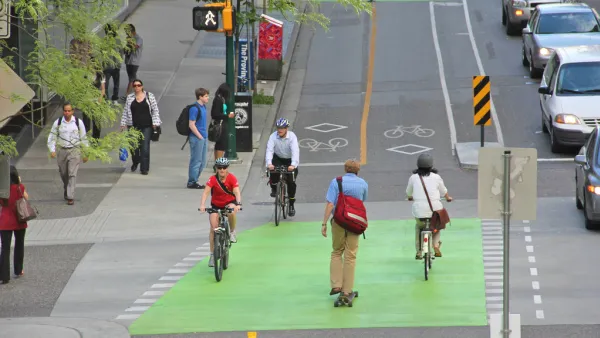
Economically Successful Cities Favor Space-Efficient Modes
Cities are, by definition, places where many people and activities locate close together. Their economic success and livability benefits from policies that favor space-efficient modes (walking, cycling, ridesharing and public transit).
FEATURE
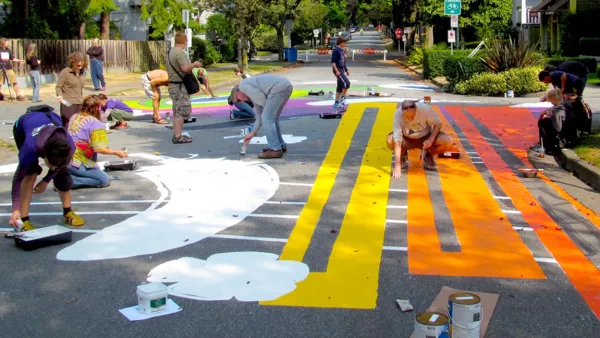
10 Lessons in More Engaging Citizen Engagement
With cities seeking to involve diverse voices in city-making to get beyond “the usual suspects,” Vancouver urbanists Brent Toderian and Jillian Glover examine how cities in their region are finding new ways to increase civic participation.

BLOG POST
The Little Prince Meets the Big City
When considering city life, we often look to Jane Jacobs or William H. Whyte. But an exhibit commemorating the 70th anniversary of the children's classic “The Little Prince” at New York's Morgan Library surprises as a field guide for urban living.

FEATURE
Clarifying the Conservation Subdivision Design Approach
After a recent scholarly article raising questions about the definition of conservation subdivisions, Randall Arendt, author of "Conservation Design for Subdivisions" and "Growing Greener," wrote the following response.

BLOG POST
And the Feel-Good Oscar Goes To...
Discussing some of the most pro-urban movies ever made.

BLOG POST
Yet Another Driver Subsidy: Inadequate Car Insurance Minimums
Insurance coverage hasn’t kept up with the cost of medical care and property damage caused by crashes. And whether we drive or not, when someone can’t pay for the damage they’ve done, we all have to pick up the tab.
BLOG POST
How Useful is Walkability: Are You Oriented to Walk?
The physical requirements for walkability—like narrow streets and wide sidewalks—aren't always enough to compel the activity of walking. How can we reorient toward the primal activity of walking?
BLOG POST
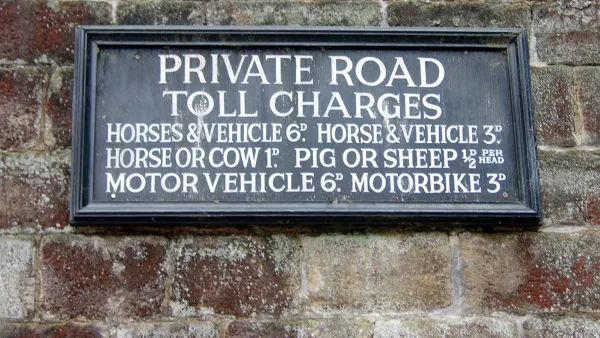
Road Tolls Are Fair and Benefit the Poor
Many people assume incorrectly that road tolls and parking fees harm poor people. In fact, they are usually less regressive than other funding options, and benefit poor people overall, particularly if some revenues are invested in alternative modes.

BLOG POST
Urbanists Left and Right
Conservatives are becoming more visible within the smart growth movement; they differ in some ways both from liberal smart growth activists and from conventional conservatives.
BLOG POST
A City that Takes its Planning Seriously (or Not)
Portland is a city that's often better known by the representations of it—like the television show Portlandia—than as an actual working city.
FEATURE
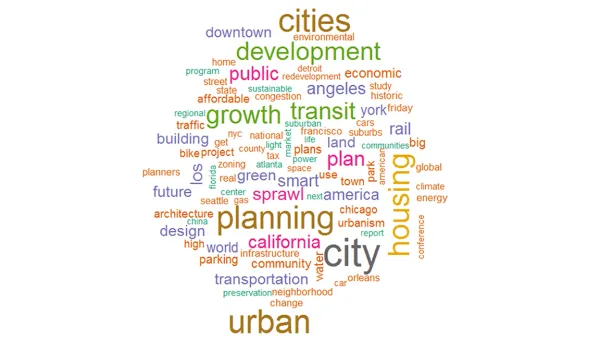
What Is Popular Planning? 13 Years of Planetizen
A chronicle of the evolution of popular planning, drawn from data collected from the long history of Planetizen as a forum for discussion and reporting.

BLOG POST
Affordable Housing in New York City—What’s Next
New York City Mayor Bill de Blasio has set a lofty goal of creating or preserving 200,000 units of affordable housing in New York City. How can the mayor's team deliver on that promise?

BLOG POST
For or Against Smart Cities: Where Should Planners Stand?
Are we using technology to plan for utopias? Or are we luddites who are ignoring an inevitable future? Should we be for our against smart cities? Two recent books take on this debate.
Harvard University Graduate School of Design
KFH Group Inc.
Greater Baltimore Committee
The Architects Foundation
University of Cincinnati Online
The Pocatello Development Authority
The Urban Renewal Agency of the City of Pocatello

FREE Course: Walkable City 1: Why Walkability?
After describing his path towards focusing on walkability as the essence of good planning, Jeff Speck marches through his five principal reasons for making more walkable places.
Reinventing Malls: Planning Alchemy—Turning Gray Fields Into Gold
The course focuses on the opportunities and imperatives that shape reinvention of mall sites.