Exclusives

BLOG POST
Ballot Initiative Could Overturn California's Zoning Reforms
The "mother of all NIMBY initiatives" is seeking signatures to qualify for the statewide ballot in California.

BLOG POST
Brief: U.S. DOT Rural EV Toolkit Is Good but No Panacea
The U.S. needs more charging infrastructure to support the electrification of the transportation sector. This toolkit is a good step in the right direction. But electric vehicles and charging infrastructure are no panacea to our transportation woes.

BLOG POST
Urban Villages for the Proletariat
Compact, walkable urban villages benefit working families and organized labor by creating jobs, improving household affordability, reducing commute duration, improving economic opportunities, and creating cleaner, healthier communities.

FEATURE
Green Infrastructure Thinking for Southern Cities in 2022 and Beyond
Resilience planning requires communities to think of a well planned and maintained tree canopy as a public utility system with multiple benefits.

PLANOPEDIA
What Is Discretionary Approval?
Discretionary approval requires an appointed or elected body of officials to decide whether or not to proceed with a development. Discretionary approval is usually reserved for development proposals that don't conform to zoning or building codes, but other regulatory triggers can also create the need for a discretionary approval process.


BLOG POST
6 Surprising Ways Communities Can Grow Their Businesses Amidst the Labor Shortage
While the labor shortage has affected businesses across the country, many communities have started taking steps to support area businesses and help them thrive.

BLOG POST
Can High-Speed Roads Stop Climate Change?
Some argue that even if wider roads induce more travel, they will actually reduce pollution by speeding it up. This post addresses one such argument.

PLANOPEDIA
What Is a Development Approval Process?
A development approval process decides whether or not to allow a proposed development project to proceed with construction. There is plenty of room for interpretation, both legal and political, about what a development approval process can or should entail.

BLOG POST
Rental Market Leaving More Americans Behind, Says Harvard Housing Report
The narratives of 1921, 2008, and 2020 are still in full effect after two years of pandemic disruption in the housing market. All the threats of eviction, homelessness, and systemic racism are still present, with the potential to worsen, in 2022.

BLOG POST
Urban Villages: The Key to Sustainable Community Economic Development
Compact, walkable urban villages support sustainable economic development by reducing transportation costs, leaving residents with more money to spend on local goods, and by creating more efficient and attractive commercial districts.

PLANOPEDIA
What Is Walkability?
Walkability refers to the ability to safely walk to services and amenities within a reasonable distance, usually defined as a walk of 30 minutes or less.

BLOG POST
It's Time to Get Serious About the Metaverse
The metaverse is expected to revolutionize the remote and hybrid workplace. But for cities whose municipal services rely on property and sales taxes, and even urban transit revenue, remote work could spell potentially long-term trouble.
BLOG POST
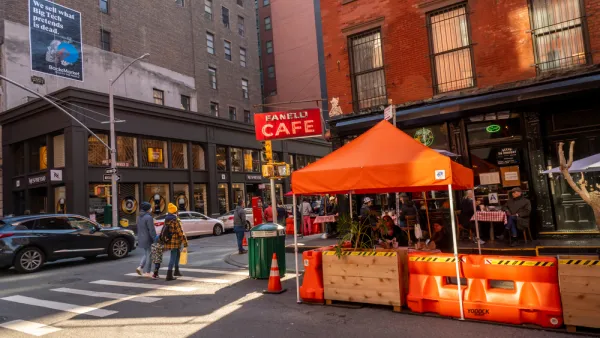
Outdoor Dining: Too Popular to Abandon
Some cities that took the almost unprecedented step to loosen restrictions on outdoor dining in the early days of the pandemic are deciding to make their new outdoor dining rules permanent.

FEATURE
Planning Trends to Watch in 2022
Building a framework of understanding for the year to come.

BLOG POST
A Market Urbanism Manifesto
In his new book on market urbanism, Scott Beyer describes market urbanism and to compares it to the status quo.

BLOG POST
Equity Plus: Toward More Integrated Solutions
Many transportation equity strategies only address a small portion of the need. To be more effective, we need structural reforms that create more diverse and affordable transportation systems and more compact and multimodal communities.

FEATURE
The Most Popular Articles on Planetizen in 2021
The most-read news, features, blogs, and Planopedia posts on Planetizen in 2021.

FEATURE
Year in Review: The Stories That Defined Urban Planning in 2021
Part two (of two) of Planetizen's review of 2021 collects the biggest stories and storylines of the year from the wide world of planning.

FEATURE
What Can Lessons From Traffic Safety Teach About the Covid Response?
Finger waggings aren't effective for pedestrian safety—so why should they work for public health? A "safe system" approach, created for traffic safety in Sweden, offers a model for improved pandemic public health outcomes, according to this opinion.
Harvard University Graduate School of Design
KFH Group Inc.
Greater Baltimore Committee
The Architects Foundation
University of Cincinnati Online
The Pocatello Development Authority
The Urban Renewal Agency of the City of Pocatello

FREE Course: Walkable City 1: Why Walkability?
After describing his path towards focusing on walkability as the essence of good planning, Jeff Speck marches through his five principal reasons for making more walkable places.
Reinventing Malls: Planning Alchemy—Turning Gray Fields Into Gold
The course focuses on the opportunities and imperatives that shape reinvention of mall sites.