Community / Economic Development
Largest Gathering in History Attracts Researchers
When the Kumbh Mela, a 48-day Hindu festival held every four years, starts this week in northern India it will be the largest gathering in history. Researchers are using the opportunity to study the formation and inner-workings of a pop-up mega city.
Beijing Smog Levels "Off The Scale"
In Beijing, the level of air pollution is the highest the monitors at the U.S. embassy have ever recorded since put in place in 2008. The pollution results from a combination of weather conditions and particulate matter - most from coal burning.
Developer Dreams of Turning Detroit Park Into Free Market Utopia
A suburban Detroit developer is promoting an alternative vision for Detroit's Belle Isle: transforming the island park into a commonwealth free market utopia for the elite.
Are Apps the Answer to Oakland's Problems?
Azeen Ghorayshi looks at how Oakland's civic hackers are trying to change the city through technology -- giving people greater access to data, increasing transparency, and keeping people better informed -- all with minimal investment by the city.
Could the Bloom be off D.C.'s Boom?
Annie Lowrey looks at how the taxpayer funded expansion of private contracting for the federal government turned D.C. from "national embarrassment" to creative class hot spot, and why those boom days may be coming to an end.
Mapping Chicago's Growing Cornucopia of Urban Gardens
In Chicago, like in many cities, local food production comes in many forms, from small backyard crops to community gardens. Researchers are now using Google Earth to paint a more accurate picture of food production at different scales.
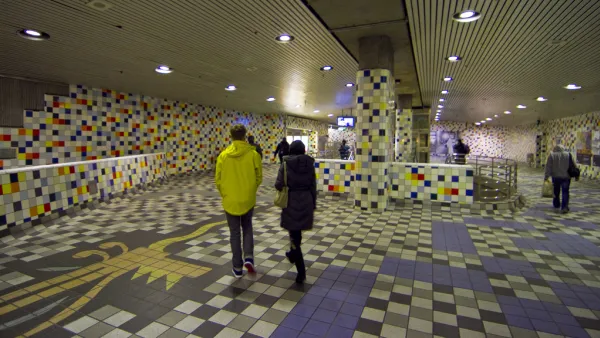
How Art Inspires L.A.'s Public Transit Commuters
As the L.A. metro continues to expand, so do opportunities for artists to showcase their art. For transit riders, this adds an important element to their daily journey, making the commuting experience all the more memorable.
The Demise of Fresh & Easy: What Does It Mean for Food Deserts?
What does the impending demise of the Fresh & Easy grocery chain mean for food deserts? Hannah Burton Laurison and Christine Fry look at how small-format grocery stores can still succeed where Fresh & Easy failed.
How Important is the Neighborhood Effect?
Social scientists have a theory that a neighborhood's character shapes its economic future more than income levels and foreclosure rates. A tragedy to the community of Chatham on Chicago's South Side has tested this "neighborhood effect."
Can Urban Planning Heal the Trauma of War?
To ease the transition from conflict into post-conflict and stability, there is a high need for urban professionals who can artfully balance the demand for security alongside city spaces for healing, argues Mitchell Sutika Sipus.
How Can the UK Revive its Main Streets?
Despite their more traditional, mixed-use development patterns, the UK's town centers are not immune from declining "high streets" as a result of the poor economy, and the attractions of shopping centers and online retail. How can they fight back?
Nashville is the Next "It" City
Nashville has flourished economically and culturally with new residents, immigrants, tourists and country music. Kim Severson discusses how this traditionally Southern city has gained the nation's fancy.
Appraising the Federal Impact on the Shape of America's Communities
A new report released by Smart Growth America evaluates the federal government's influence on America's real estate sector. With $450 billion in subsidies per year, it's clear "the communities we’ve constructed weren’t built on market demand alone."
The Top "ArtPlaces" in the U.S.
ArtPlace — a collaboration of foundations, banks, and federal agencies that supports creative placemaking projects — has released a new study that identifies 12 neighborhoods across the country as America's Top ArtPlaces 2013.
The Keys to Modernizing America's DOTs
According to Charles Marohn, institutional inertia continues to carry the nation's transportation agencies on a wayward path that correlates highway spending with economic development. He offers 9 principles to guide "Next Generation DOTs."
Street Redesign Provides Path to Prosperity
An award-winning street redesign project in the Los Angeles exurb of Lancaster provides a case study in the value of retrofitting for walkability.
Emerging Street Life of So Cal's San Fernando Valley Threatened
L.A. Times architecture critic Christopher Hawthorne reports on the changing nature of Lankershim Blvd., which appears to be at a crossroads between integrating transit into a multi-modal future or turning to outdated planning strategies.
Onerous Regulations Keep Food Trucks from Feeding Chicagoans
The difficulties food truck operators have encountered in trying to set up shop in Chicago provides a parable for how well meaning, but slow moving and cumbersome, public agencies can get in the way of their city's best interests.
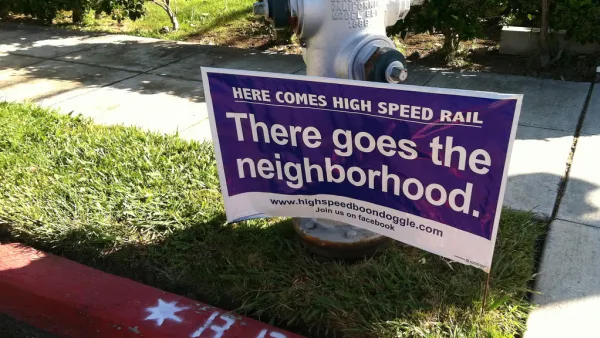
Leaked Settlement Shows the Dirty Underbelly of NIMBYism
In case anyone thought that developers were the only bad actors seeking to profit off of contentious projects, confidential settlement terms leaked to Curbed show how local groups abuse the California Environmental Quality Act for dubious gains.
Placemaking Wishes for 2013
Like a lot of people, Placeshakers is kicking off the new year with a list: placemaking wishes for 2013. Read on for seven trending ideas they hope break large.

FREE Course: Walkable City 1: Why Walkability?
After describing his path towards focusing on walkability as the essence of good planning, Jeff Speck marches through his five principal reasons for making more walkable places.
Reinventing Malls: Planning Alchemy—Turning Gray Fields Into Gold
The course focuses on the opportunities and imperatives that shape reinvention of mall sites.

Greater Baltimore Committee
Eagle County Government
Harvard University Graduate School of Design
The Architects Foundation
University of Cincinnati Online
The Pocatello Development Authority
The Urban Renewal Agency of the City of Pocatello
Journal of the American Planning Association