Community / Economic Development
California Cities Still Navigating Redevelopment Dissolution
Two and a half years after California shuttered its redevelopment agencies, cities are still grappling with the repercussions—from resolving the legal obligations of CRAs to searching for alternative methods of revitalizing areas in need.
A Comprehensive Accounting of Economic and Environmental Performance: Who's in?
For the last several decades, North American cities have used growth as a primary economic engine. Increasingly less dense new growth is subsidized by the more dense core, but requires a growth rate that is not supportable in the long term.
Responding to Harsh Critiques of the American South
When the Washington Post used a report by the Organization for Economic Cooperation and Development to conjure up a headline about the South being the "worst place to live," one southerner critiqued the article's methodology.
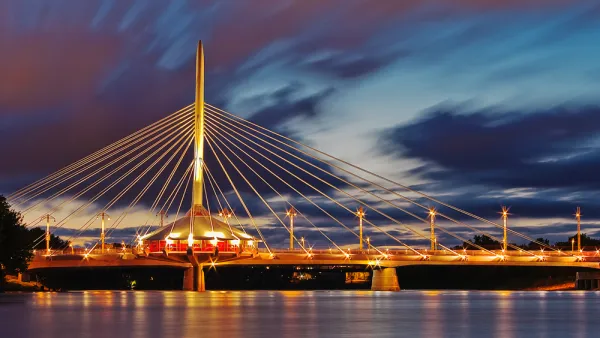
Creative Placemaking: Preserve, Repair, Intensify
Many cities have long been investing in art and culture, marrying it to placemaking, and generating extraordinary local transformations. Hazel Borys offers up a little inspiration from an art opening this week, and a few pointers for urbanists.
How the Federal Government Can Support Innovation Districts
A new report by Bruce Katz of Brookings Institute discusses the federal government’s role in spurring and aiding the innovation districts found in many cities across the country today.
Star Apartments Offer Starchitect Treatment for L.A.'s Skid Row Homeless
The new 100-unit, $40-million Star Apartments opened in Skid Row earlier this week is part of Los Angeles County’s Housing for Health initiative to house 10,000 of the most vulnerable homeless people.
De Blasio Announces $130 Million Park Equity Plan
In response to criticisms of the large investments in "big ticket" parks in wealthy neighborhoods during the Bloomberg Administration, New York City announced a park equity plan this week.
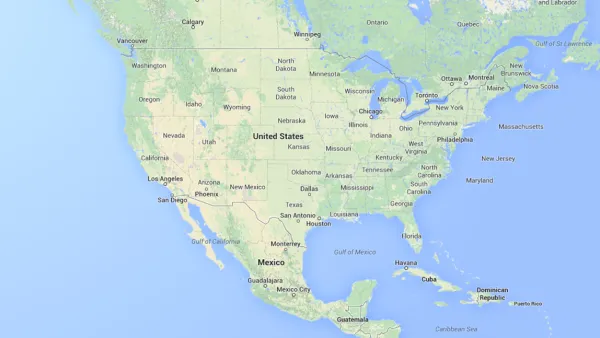
Mapping Lifestyle, Age, Income, and Population Density by ZIP Code
Esri offers a new product called Tapestry Segmentation, which overlays geography with U.S. Census and marketing data.
A New Buzzword for Changing Cities: 'Trust'
Christopher Swope writes of the emergence of the word "trust" in the buzzy lexicon of urbanism.
How to Revitalize a 'Stuck' Neighborhood?
Congress Heights, in Washington D.C., has suffered decades of neglect. Now, city planners and activists want to transform it into a mixed-use, mixed-income success story. What if it doesn't work? What if it works too well?
'RiverFit': A Pop-Up Fitness Park in Memphis
Hoping to combat the city's dismal rankings in obesity, public and private partners launched the RiverFit pop-up fitness park along the Mississippi River in September.
Ranking the Best and Worst Cities to Live and Work with Special Needs
WalletHub recently released the "2014 Best & Worst Cities for People with Disabilities" to highlight the economic power of providing employment opportunities and livable communities for people with special needs.

What an Innocuous Piece of Plastic Says About Our Suburban Future
Suburban Starbucks models are bumming urbanists out. But they also served as a nice allegory of what the future there might hold. Scott Doyon's latest blog post explains.
A Call for Cities to Help Veterans through Homelessness and PTSD
As noted by the Department of Veteran Affairs, even one veteran without safe and stable housing is too many. Ron Littlefield calls for cities to move beyond studies and seek ways to aid returned veterans.
Can Detroit's Comeback Benefit Everyone?
Suzette Hackney, a former Detroit Free Press journalist, expresses her concern about who is getting left out of Detroit's comeback story.
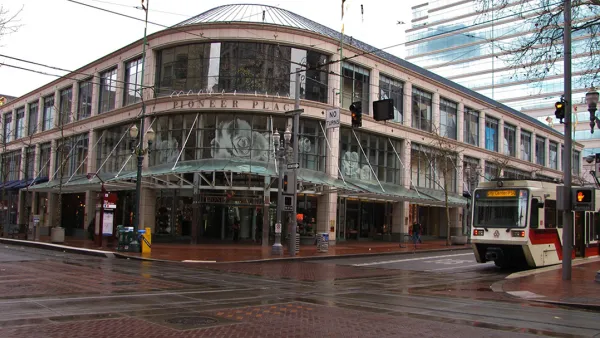
Neighborhoods, Streets, and Public Space: 30 'Great Places in America'
The American Planning Association (APA) has released its annual list of 10 Great Neighborhoods, 10 Great Streets, and 10 Great Public Spaces.
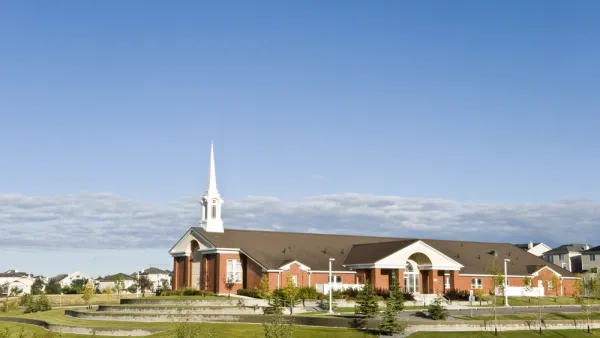
The Faith-Based Gap in the Institutional Landscape of Cities
By focusing on their common interest in working toward the public good, the gap between faith-based institutions and the planning processes of their communities can be bridged.
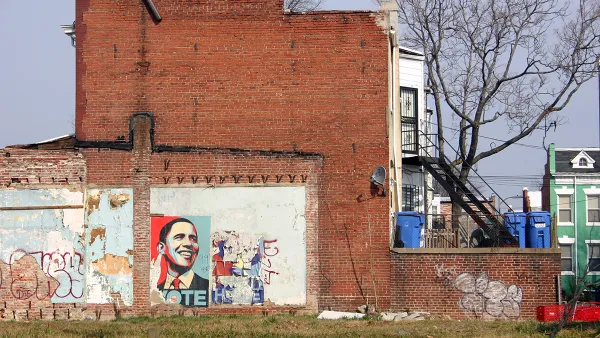
Gentrification's Liberal Enablers
Gavin Mueller writes a withering critique of the forces behind gentrification and the liberal justifications that allow poverty and racism to persist.
Why Smart Cities Must be Sharing Cities
Julian Agyeman and Duncan McLaren make the case that the only smart city is a shareable city.
A Call to Protect Cultural Institutions from Urban Renewal
While considering plans for a large urban renewal project in Hollywood, Los Angeles struggles to avoid throwing out the baby with the bathwater—that is, saving a place for small cultural institutions when redeveloping neighborhoods.

FREE Course: Walkable City 1: Why Walkability?
After describing his path towards focusing on walkability as the essence of good planning, Jeff Speck marches through his five principal reasons for making more walkable places.
Reinventing Malls: Planning Alchemy—Turning Gray Fields Into Gold
The course focuses on the opportunities and imperatives that shape reinvention of mall sites.

KFH Group Inc.
Greater Baltimore Committee
Eagle County Government
The Architects Foundation
University of Cincinnati Online
The Pocatello Development Authority
The Urban Renewal Agency of the City of Pocatello