Large companies are choosing cities rather than suburban office parks to locate. A recent article details how corporations can make the most of their urban environment.


"The growth of cities—and their middle classes—has developed larger markets for the consumption of advanced goods and services, causing corporations to become city savvy and pursue distinctive strategies," write Greg Clark and Bruce Katz.
In fact, "[rather] than spending time with prime ministers or the heads of national ministries, they focus on work with mayors and local business chambers and universities."
To elucidate how city-focused business can work for corporations, Clark and Katz detail three strategies:
- Moving the core elements of operations to central cities.
- Changing the product to cater to the needs of urban spaces and citizens.
- Treating cities as working partners rather than mere markets.
Read the full story: Forget big suburban campuses, innovative corporations are moving downtown

Apple's Big New Austin Campus Revealed, Breaks Ground
November saw a rendering and news of a groundbreaking for Apple in Austin.
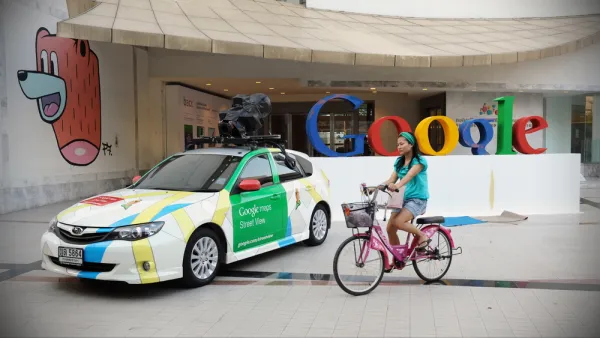
Google's Plan for the Future of its Campus Would Shift the Expectations for Corporate Campuses
Fast Company details the ambitions of a plan that would add thousands of homes, open space, and commercial development to the home of Google in the Silicon Valley.

Walmart Planning Massive New Arkansas HQ
Another corporate behemoth is planning a new headquarters. But this time cities won't have to compete for it. Walmart is remaining true to its hometown of Bentonville, Arkansas.

Planetizen Federal Action Tracker
A weekly monitor of how Trump’s orders and actions are impacting planners and planning in America.

California plans to bury El Niño’s downpour
If the state plays its cards right, it may be able to store a billion acre-feet of El Niño’s water in aquifers.

Desperate measures: Advocates weigh draining Lake Powell to fill Colorado River
Draining the reservoir could reduce evaporation losses by a couple hundred thousand acre-feet.

Los Angeles just elected an urban planner as its mayor
Transportation analysts are optimistic that Raman will be more aggressive in addressing transit issues than Bass.

Mamdani’s pied-à-terre tax survives legal challenge
A panel of judges found that the plaintiffs failed to demonstrate injury as a result of New York City's implementation of the tax.

Eastern Nebraska is running out of electricity
Data centers and electrification are straining eastern Nebraska’s grid, throttling economic development.

FREE Course: Walkable City 1: Why Walkability?
After describing his path towards focusing on walkability as the essence of good planning, Jeff Speck marches through his five principal reasons for making more walkable places.
Reinventing Malls: Planning Alchemy—Turning Gray Fields Into Gold
The course focuses on the opportunities and imperatives that shape reinvention of mall sites.

City of Rosemead
Rutgers University, Edward J. Bloustein School of Planning and Public Policy
One Hundred Miles
University of Michigan School for Environment and Sustainability (SEAS)
Hunter College, City University of New York (CUNY)
The Architects Foundation
City of Cambridge
Montrose County
The Pocatello Development Authority