United States
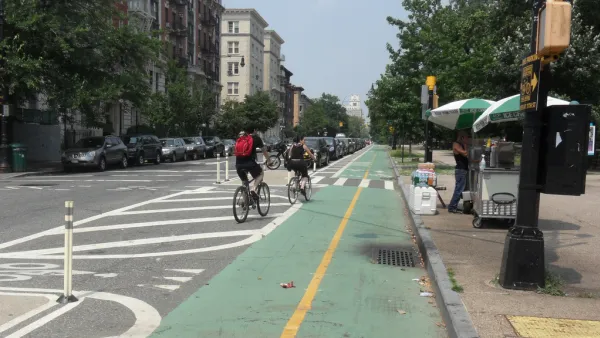
The Chicken and the Egg: Gentrification and Bicycling
Shaun Courtney examines the current politics surrounding gentrification and bicycling throughout the country and what planners can do to address the issue.
Smart Planning for Watershed Protection
Planning for growth impacts watersheds in rural and urban settings. Kaid Benfield provides access to best practices for both ends of the development spectrum.
How Congress Skews Commuter Benefits
Current commuter benefits favor employees driving to work instead of taking public transportation, despite years of advocacy and lobbying efforts in Congress.

Do Zombie Subdivisions Have a Future?
Alana Semuels writes about the state of the zombie subdivisions scattered around the western United States—a derelict reminder of the high water mark of the last master planned community building boom.
The Challenges of Being a Chief Resilience Officer
The seriousness of resilience for cities to plan and prepare for is evidenced by the creation of a new position called the chief resilience officer.

Can a Net Zero Cottage Work in the Suburbs?
In its first year alone, Zero Cottage has produced 22 percent more energy than it consumes. But can such an urban project be replicated in a suburban setting?
How to Solve the Pension Challenge
Diana Lind of Next City poses five ways big cities can alleviate some of their pension funding problems.
Want a Stronger Economy? Focus More on Racial Inclusion
"We asked the question: How much higher would total earnings and economic output have been in 2012 if racial differences in income were eliminated"...
If Keystone Bill Becomes Law, Would it be Built?
It's not a foregone conclusion that President Obama would veto a bill expected in the Senate next week to allow the construction of the Keystone XL pipeline. But if it were to pass and Obama signs it, would it be built? CNBC investigates.
2050: Year of the Minority Majority
Tanvi Misra discusses with William Frey of the Brooking Institution the repercussions of the demographic flip expected to occur by 2050.
A Census for City Streets
Eric Scharnhorst, project manager at Gehl Architects, argues for a wide-scale census instrument detailing city life, not just pedestrian counts and fatalities.
The $100 Billion Question Facing the New Republican Majority
A huge challenge for the next Congress will be finding the funds to keep the Highway Trust Fund solvent when the current patch expires on May 31.
Does Airbnb Impact the Affordable Housing Market?
Michelle Cohen discusses whether or not companies like Airbnb, which provide platforms for room and house-sharing aimed at travelers, impact a city's affordable housing market.

The Undeniable Urbanism of the 'Plot'
According to researchers and practitioners in the United Kingdom, there's still room for another urbanism. Chuck Wolfe digests the recent Summit on Plot-Based Urbanism from Glasgow.
Pew Study: U.S. Cities Still Recovering from Recession
A new Pew Charitable Trusts report discusses the ongoing recovery of American cities from the 2008 Great Recession, more than five years after it officially ended.
Will the Historic Climate Accord Survive the U.S. Political Process?
While environmentalists were hailing the historic carbon emissions reduction agreement between the leaders of the United States and China, the world's two largest emitters, Republican leaders wasted no time in slamming the accord.
'Ridescore' Rates the Hired Driver Regulations for 50 Cities
The Ridescore system grades cities for their regulatory friendliness to hired drivers—transportation network companies, taxis, and limos. Washington D.C. offers the most friendly regulations for hired drivers, Las Vegas the least.
Breaking News: China and U.S. Agree to Emissions Reduction Plan
A surprise, groundbreaking agreement between China and the United States was unveiled in Beijing at the end of the APEC conference, providing hope that the world can reduce the threat from climate change.
Urban Ecology and the Evolution of the City
A recent article reveals the inconspicuous nature of the city—an ecosystem, "pipes and all."
Report Recommends Trains for the Postal Service
The Post Office once used trains but no more, unlike the United Parcel Service (UPS). A new reports recommends that the Post Office return to their past, though not necessarily sorting the mail on the train like you might see in a rail museum.

FREE Course: Walkable City 1: Why Walkability?
After describing his path towards focusing on walkability as the essence of good planning, Jeff Speck marches through his five principal reasons for making more walkable places.
Reinventing Malls: Planning Alchemy—Turning Gray Fields Into Gold
The course focuses on the opportunities and imperatives that shape reinvention of mall sites.

One Hundred Miles
County of Mendocino
planning NEXT
The Architects Foundation
University of Cincinnati Online
Montrose County
Northern Illinois Transit Authority (NITA)
The Pocatello Development Authority









