The third annual rating of cities ranks the access, size, and spending of parks in the 60 largest cities in the country.


A press release from the Trust for Public Land announced the results of the third annual ParkScore rating. Here's the summary of the ratings: "Minneapolis took top honors on The Trust for Public Land's 3rd annual ParkScore® index, earning a perfect '5-park bench' rating from the nonprofit organization. Minneapolis remains the only city park system to earn the coveted '5 bench' score. New York, Boston, Portland, and San Francisco rounded out the top five."
Among the changes between earlier iterations of the ratings, this year's ParkScore ranked the 60 largest cities in the United States, up from 50 in 2013. "Among the ten new ParkScore entrants, Aurora, CO ranked best, earning four park benches and a 10th place tie with Virginia Beach. New Orleans earned 3.5 park benches, tying for 18th position—the second highest score among new ParkScore cities."
One local media outlet reacted to their poor showing: Robert Wilonsky reported on Dallas' continuing plunge in the rankings, citing growing population and limited park funding as a reason for the city's poor performance on the ratings.
Read the full story: ParkScore® index

2020 ParkScore Ranks Minneapolis at the Top
The need for access to parks and open space has never been as obvious, or as pressing.

Learning loss and urban schools, part 2
Did test scores in progressive cities drop more post-COVID than test scores in moderate ones?
2020 Population Growth Rates for the 50 Biggest U.S. Cities
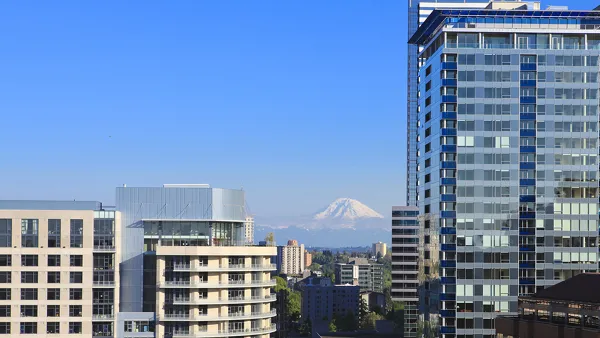
The Census Bureau released new data on May 27 that includes the first four months of the pandemic. Seattle tops the growth rate at 2.2% from July 1, 2019, to July 1, 2020, while Baltimore and San Francisco land at the bottom with -1.4%.

Planetizen Federal Action Tracker
A weekly monitor of how Trump’s orders and actions are impacting planners and planning in America.

California plans to bury El Niño’s downpour
If the state plays its cards right, it may be able to store a billion acre-feet of El Niño’s water in aquifers.

Desperate measures: Advocates weigh draining Lake Powell to fill Colorado River
Draining the reservoir could reduce evaporation losses by a couple hundred thousand acre-feet.

Los Angeles just elected an urban planner as its mayor
Transportation analysts are optimistic that Raman will be more aggressive in addressing transit issues than Bass.

Mamdani’s pied-à-terre tax survives legal challenge
A panel of judges found that the plaintiffs failed to demonstrate injury as a result of New York City's implementation of the tax.

Eastern Nebraska is running out of electricity
Data centers and electrification are straining eastern Nebraska’s grid, throttling economic development.

FREE Course: Walkable City 1: Why Walkability?
After describing his path towards focusing on walkability as the essence of good planning, Jeff Speck marches through his five principal reasons for making more walkable places.
Reinventing Malls: Planning Alchemy—Turning Gray Fields Into Gold
The course focuses on the opportunities and imperatives that shape reinvention of mall sites.

City of Rosemead
Rutgers University, Edward J. Bloustein School of Planning and Public Policy
One Hundred Miles
University of Michigan School for Environment and Sustainability (SEAS)
Hunter College, City University of New York (CUNY)
The Architects Foundation
City of Cambridge
Montrose County
The Pocatello Development Authority