Transportation
Houston Launching Car-Free Streets Pilot Project
Starting in April, Houston will close 2.5 miles of streets to automobile traffic between 11 am and 3 pm. Additional street closures will follow in May.
Increases in Transit Ridership Overthrowing Assumptions About Why We Ride
A recent report by the American Public Transportation Association (APTA) shows transit ridership increasing to historic levels. The surprise is that the increase occurs as gas prices have fallen.
USDOT Continues to Overestimate Future Vehicle Travel - When Will They Learn?
The USDOT's "Conditions & Performance Report" predicts that VMT will grow between 1.36% and 1.85%, although current demographic and economic trends have resulted in flat or negative growth in recent years. Why won't they learn?
The 'Quietways' Bike Network Revolution
London has been preparing for years for a “quiet revolution” for its bike network: the "Quietways" of side streets and back roads. London is already building Quietways in anticipation of a September launch.
Dallas Warming Up to Complete Streets
A new Complete Streets Design Manual is under consideration in Dallas City Hall, but according to a recent article explaining Dallas' move toward walkable neighborhoods, the city has some work to do before the idea fully takes hold.
First Transportation Plan Since 1940 Launches in Chicago’s Cook County
Cook County is in the early stages of public outreach for its first transportation plan since the 1940 “Highway Plan for Cook County.”
Wisconsin Struggles with Interstate Tolling Option
State transportation leaders are scrambling to increase funding as MAP-21 draws to its expiration on Oct. 1. Interstate tolling is being eyed by more than a few. While the Wisconsin Assembly likes the idea, Gov. Scott Walker rejects it.
Removing a Vehicle Lane? It’s Not the End of the World
Most members of the public are still very skeptical that removing a vehicle lane won’t cause terrible congestion—especially on already busy streets. A recent articles details some of the counter arguments to those concerns.
Note to 'Best Workplace' List-Makers: The Commute Matters
Baltimore Magazine’s annual “Best Places to Work” list factors in in salaries, benefits, and workplace perks—but not commuting. In the Washington, DC metro area, that’s no small thing.
Bus Rapid Transit on Track in Albuquerque
Following three years of study, Albuquerque Mayor RJ Berry declared a “tipping point” in the city’s BRT plans. The city will require a federal matching grant to proceed.
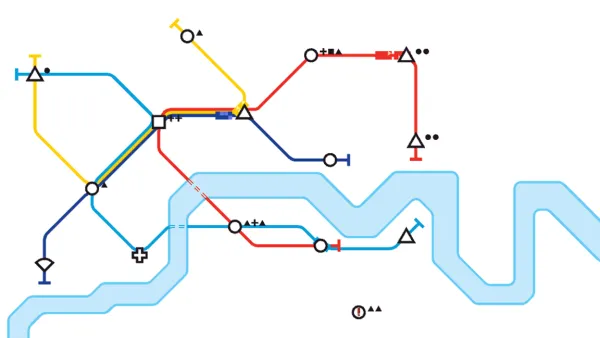
Friday Fun: Build Your Own 'Mini Metro'
It's been available since September 2013, but news of the "Mini Metro' subway layout game recently hit the web. Finally, a test for all those armchair enthusiasts who think they can make the trains run on time.
MAP-21 Putting Pedestrian and Bike Programs on the Chopping Block
It took a few years, but funding changes as a result of MAP-21, the 2012 federal transportation bill, have started to impact funding for Metro “Call for Projects” grants in Los Angeles County.
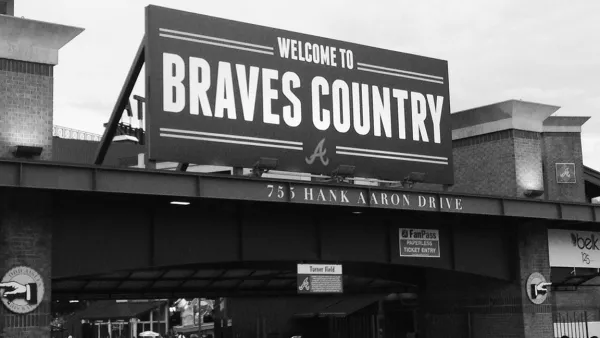
On the Land Use and Transit Implications of 'Take Me Out to the Ballgame'
The decision of where to locate ballparks, and to what extent the public should subsidize that location, can have ripple effects throughout the land use and transportation systems of a region.
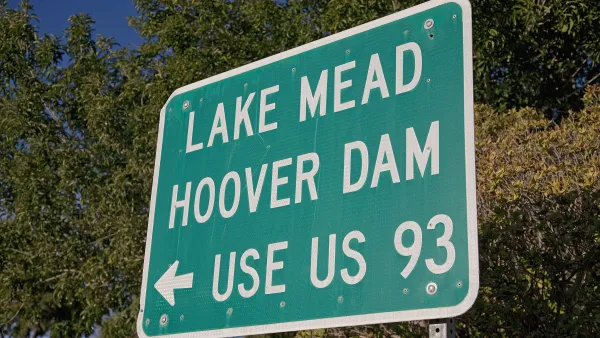
Long Road Ahead for Las Vegas-Phoenix Interstate Connection
The planners of the 1950s didn’t foresee the growth of the Southwest’s two largest cities. Upgrading the freeway connection between the cities, however, remains a tough task.
Urban Planning Fundamental: Facilitate a Strong Labor Market
Wendell Cox reviews a new working paper by Alain Bertaud called “Cities as Labor Markets.” Cox calls the lesson contained therein “Urban Planning 101” and a “much needed midcourse correction to urban planning around the world.”
San Francisco Announces New Pedestrian Safety Program: WalkFirst
With its own “Vision Zero” goals in place to eliminate pedestrian fatalities within a decade, San Francisco has developed the WalkFirst plan to target the most dangerous intersections in the city for safety improvements.
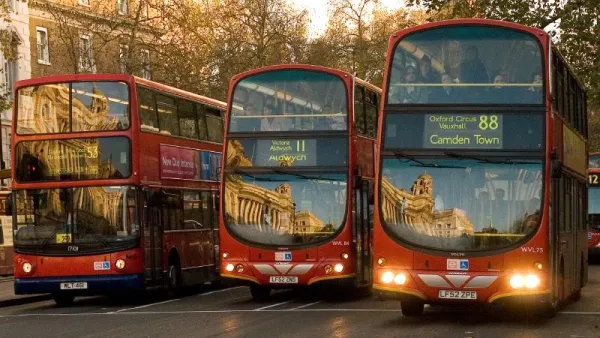
A Call for 'Cooler' Buses
Edward Glaeser pens an opinion piece on the missing ingredient in the bus riding experience—cool. Not necessarily Mick Jagger cool, but definitely Steve Jobs cool.
Transportation Reauthorization Funding Mechanism May Be Settled
How best to "plug the growing hole" in the Highway Trust Fund which provides the federal revenue for roads and transit: increase the gas tax, new vehicle miles traveled fees, more road tolls, or "corporate tax reform"? All but one is a user fee.
The Organizations Behind the Growth of Biking in D.C.
Adrienne LaFrance surveys the bike scene in Washington D.C.—from co-ops to bikeshare programs to social groups.
How to Gain 21 Million Transit Trips a Year in Chicago?
At a recent hearing of the Northeastern Illinois Public Transit Task Force, experts like Peter Skosey made the case for the types of changes necessary to meet Chicago’s goals for increased transit ridership, focusing on transit oriented development.

FREE Course: Walkable City 1: Why Walkability?
After describing his path towards focusing on walkability as the essence of good planning, Jeff Speck marches through his five principal reasons for making more walkable places.
Reinventing Malls: Planning Alchemy—Turning Gray Fields Into Gold
The course focuses on the opportunities and imperatives that shape reinvention of mall sites.

City of Rosemead
Rutgers University, Edward J. Bloustein School of Planning and Public Policy
One Hundred Miles
University of Michigan School for Environment and Sustainability (SEAS)
Hunter College, City University of New York (CUNY)
The Architects Foundation
City of Cambridge
The Pocatello Development Authority
The Urban Renewal Agency of the City of Pocatello









