Transportation
Despite Woes, Bike Share Programs Continue to Spread
Bike share programs are spreading throughout the United States, now in 36 urban areas, up from six four years ago. However, half the programs have encountered technical or financial difficulties, according to a tally by The Wall Street Journal.
Innovative Transportation Systems Require Innovative Transit Oriented Developments
As new transportation systems continue to emerge and gain popularity, the sacred cows of land use and transportation planning require radical new thinking, according to Gabe Klein.
Bipartisan Opposition to Cap and Trade for Transportation
Opposition is stirring in industry and within the California legislature over the inclusion of oil refineries* in the cap and trade program come Jan. 1. Warning of a new tax on gas, opponents hope to delay the requirement for transportation fuels.
Women Bikers Ride to 'Take Back the Streets'
Even Andrews reports on the unsafe environment that women encounter while on their bikes—and the organizations and people who are working to make the roads safer from harassment.
A Call for Local Architects to 'Redefine the Drive' in Chicago
A local architect produced a DIY design to push the Illinois Department of Transportation to think big with the "Redefine the Drive" project on North Lake Shore Drive. With the proposal: invitations for more local designers to participate.
House Republicans Announce Transportation Funding Plan
A $10.7 billion funding plan to continue federal transportation spending at the current rate through May 2015 has been offered by Republicans in the House Ways and Means Committee. The General Funds transfer would be offset by "pension smoothing."
The Many Benefits of 'Level of Service' Reform
A long read by Eric Jaffe serves as a primer on the "Level of Service" (LOS) requirement in the California Environmental Quality Act (CEQA), as well as predicting the large impact of LOS reform on planning in the state and around the country.
Benefits of Uber in Philadelphia: Reduced Drunk Driving
While much of the concern of how to regulate transportation network companies like Uber, Lyft, and Sidecar comes down to questions about safety and access, recent findings show that the apps have reduced DUI arrests in the City of Brotherly Love.
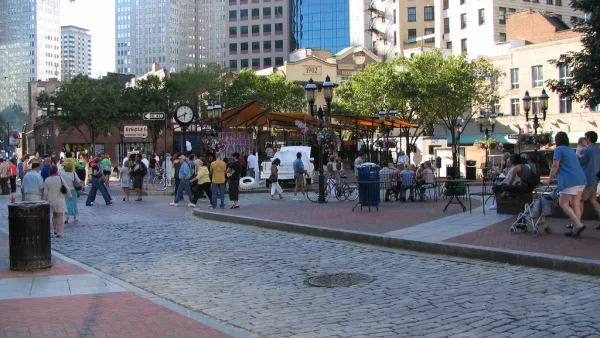
Pittsburgh Mixes Modes to Lead 'Shared Space' Movement
Streetsblog recently launched a series that will highlight Pittsburgh as a city "shedding its 'Rust Belt' image and emerging as a leader in progressive street design." The first case study: the city's three shared streets projects.

Responding to the 'All Bikers are Scofflaws' Fallacy
NPR's Scott Simon, Peabody-winning journalist and the Saturday host of Morning Edition, recently set off a Twitter-storm when he called out bikers as scofflaws.
'Go Forward' Plan Would Expand Bus Service in Cincinnati
With 41 percent of the Cincinnati region’s 1 million jobs located in neighborhoods without public transportation, the Southwest Ohio Regional Transit Authority is developing the "Go Forward" plan to lean on bus service to fill the gap.
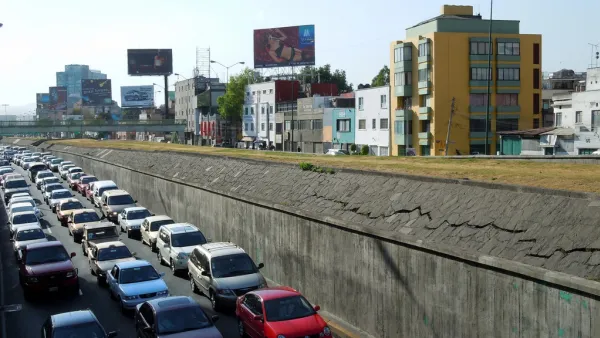
Why and Where Driving is a Rational Choice
A recently released tool for analyzing the efficiency of travel modes in cities around the country reveals that driving is almost always a better choice—at least in travel time—than transit.
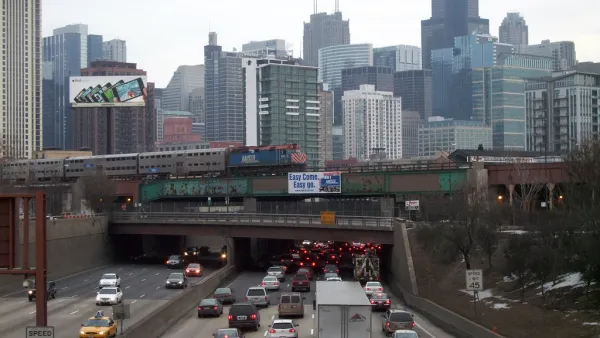
Transit, Density, and Congestion
The most transit-oriented metro areas often have lower levels of traffic congestion than one might expect based on their size.
More Disincentives for Driving Required for Philadelphia to Achieve 'Greenest' Status
Philadelphia's Mayor Michael Nutter has set a policy goal of becoming the "Greenest City in America," but the city's lack of progress in reducing automobile use is a troubling obstacle to such a lofty goal.
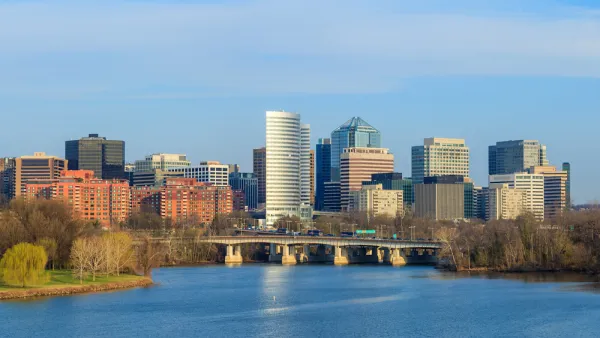
The Suburb of the Future: Arlington, Virginia
The successes of Arlington, Virginia as a suburb have been discussed by planners and urbanists before, but the model has taken on new meaning as the current urban boom send ripple effect out into nearby suburbs like Long Island and Palo Alto.
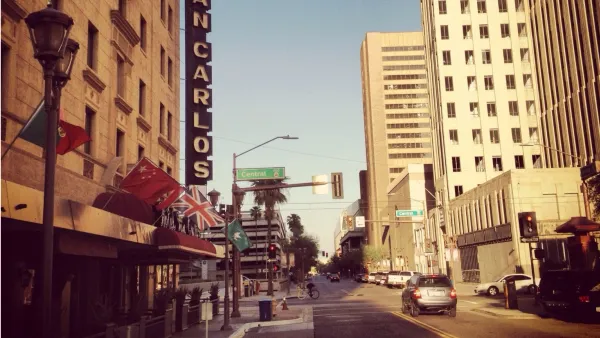
Phoenix Approves Complete Streets Ordinance
Phoenix's new complete streets ordinance, approved on an 8-1 vote, is a first step toward changing the city's reputation for car-centric planning.
Lac-Mégantic One Year Later
July 6, 2014 marks the one-year anniversary of North America's most catastrophic energy calamity when a runaway oil unit train carrying Bakken crude exploded in this small Quebec town killing 47 people and incinerating ten blocks of its downtown.
Heritage Action on Highway Trust Fund: There is No Crisis
Is Heritage Action in a state of denial? Keith Laing, The Hill's transportation reporter, reviews a recent blog from the powerful conservative group claiming that spending will decrease only 7% at most, thus no reason to increase taxes or spending.
Study: Oregon Bikers Abide Red Lights
Move aside, myth of the reckless biker who flouts the law at every possible junction.
Transportation Network Companies Struggling with ADA Compliance
Ted Trautman provides a thorough investigation of the actions (or lack thereof) of transportation network companies to provide access for customers with special needs.

FREE Course: Walkable City 1: Why Walkability?
After describing his path towards focusing on walkability as the essence of good planning, Jeff Speck marches through his five principal reasons for making more walkable places.
Reinventing Malls: Planning Alchemy—Turning Gray Fields Into Gold
The course focuses on the opportunities and imperatives that shape reinvention of mall sites.

City of Rosemead
Rutgers University, Edward J. Bloustein School of Planning and Public Policy
One Hundred Miles
University of Michigan School for Environment and Sustainability (SEAS)
Hunter College, City University of New York (CUNY)
The Architects Foundation
City of Cambridge
The Pocatello Development Authority
The Urban Renewal Agency of the City of Pocatello









