Traffic Congestion
More Criticism of Texas Transportation Institute's Congestion Report
The Texas Transportation Institute's latest Urban Mobility Scorecard claims, that "TRAFFIC GRIDLOCK SETS NEW RECORDS FOR TRAVELER MISERY." This critique by the Frontier Group puts their hyperbole into perspective. No need to panic!
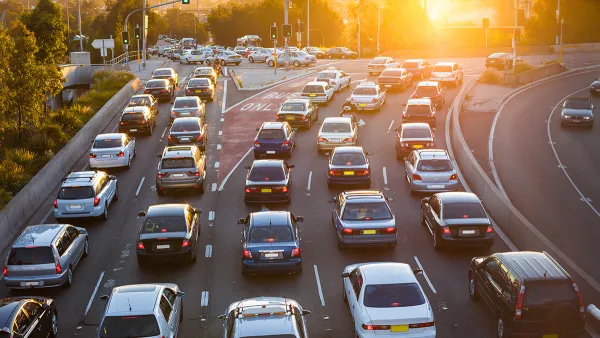
2015 Urban Mobility Scorecard: Still Measuring Urban Travel Conditions Incorrectly
The new Urban Mobility Scorecard measures traffic congestion with greater precision, but incorrectly. As with previous editions, it exaggerates congestion costs and undervalues the congestion reduction benefits of alternative modes and Smart Growth.
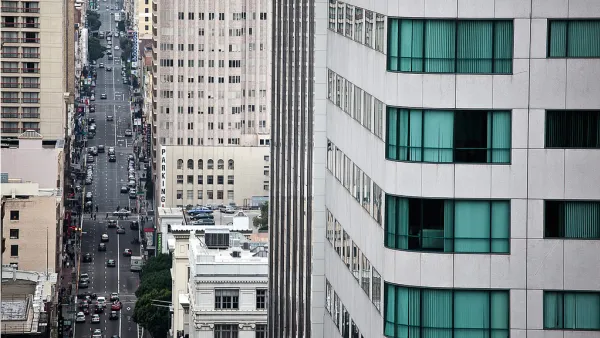
Who Should Pay for Congestion in Booming San Francisco?
Facing record-level population growth and a booming job market, the city of San Francisco wants luxury developers to pay into the public transit system.
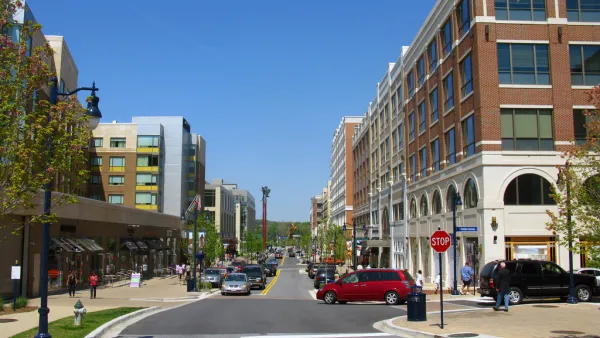
On the Benefits of Traffic Signal Removal
Certain intersections stand to gain from losing their traffic lights. According to this study, cities can save money and improve safety by uninstalling signals in low-traffic zones.

Federal Highway Administration Quietly Acknowledges the Driving Boom is Over
The Federal Highway Administration has quietly acknowledged the end of the Driving Boom, cutting its VMT forecast by 24-44 percent. This represents a major change in travel forecasting and planning.
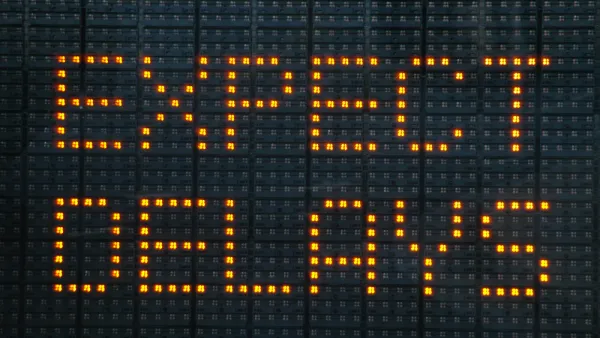
How Not To Measure Traffic Congestion—Hold the Hyperbole, Please!
The new INRIX congestion costing report is another good example of bad analysis. We just want accurate information; hold the hyperbole, please.
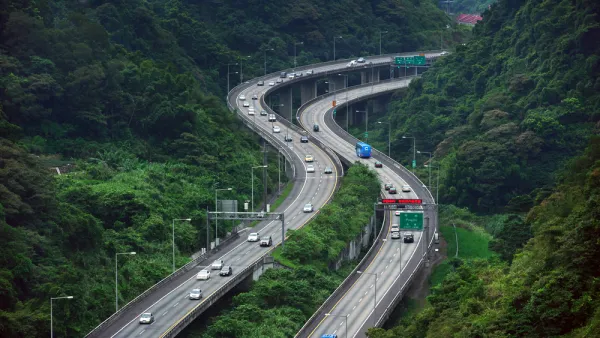
Reform Transport Engineering: Expand Beyond Just Roadway Level of Service (LOS) Ratings
Transportation engineers currently evaluate urban transport system performance using roadway level of service (LOS) ratings. Here are six good reasons to change.
California's Proposed Traffic Impact Rules Rethink Congestion
California planning expert Bill Fulton discusses a long-awaited proposal from the Governor's Office of Planning and Research that would shift the state's traffic impact assessments away from their current focus on traffic congestion.
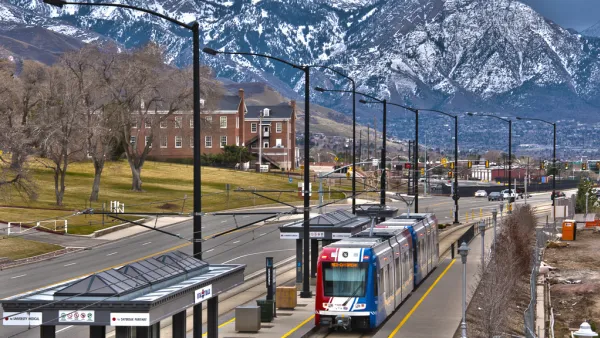
Salt Lake Light Rail System Reduces Vehicle Traffic On Parallel Roadways
A new study finds that Salt Lake City's TRAX light-rail system significantly reduces traffic on parallel roadways. It estimates that a LRT line reduces daily from 44,000 (if it did not exist) to 22,300 (what actually occurs) on one arterial.
Paradox: Congestion May Signify Better Accessibility and Economic Productivity
Although transport planners consider traffic congestion economically harmful, economic productivity tends to increase with congestion and decline with increased road supply. This paradox can be explained by more nuanced analysis of accessibility.
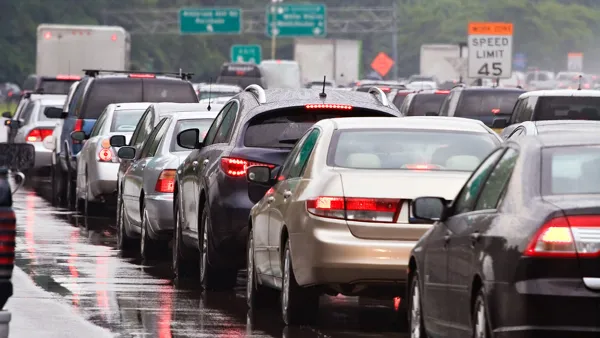
Is Traffic Speed Compliance A Congestion Cost?
Conventional evaluation often exaggerates congestion costs by using baseline travel speeds which exceed speed limits. This assumes that traffic speed compliance is a congestion cost that justifies major infrastructure investments to alleviate.
Defending Atlanta from Anti-Sprawl Malcontents
Robert Bruegmann, professor emeritus of art history, architecture, and urban planning at the University of Illinois at Chicago, defends the recent attacks against Atlanta, especially regarding its sprawling footprint.
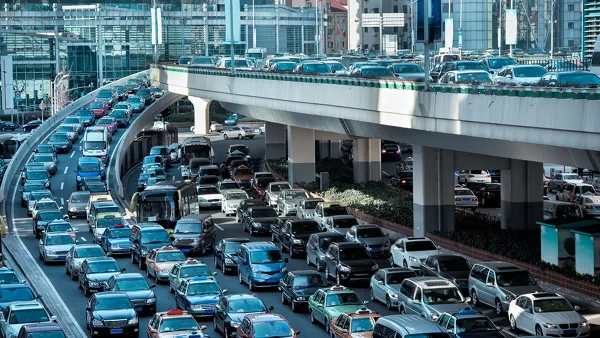
A Critical Evaluation of the USDOT Conditions and Performance Report
The “Status of the Nation’s Highways, Bridges, and Transit: Conditions and Performance, Report To Congress” is intended to provide a comprehensive and objective evaluation of our transportation system. Let’s evaluate this evaluation.
Smarter Congestion Evaluation – An Example
A new study claims that public transit does not reduce traffic congestion. It is a good example of how not to evaluate this impact. When measured correctly, high quality transit is found to reduce congestion and increase transport system efficiency.
Smarter Congestion Solutions in 2014
It is time to find better solutions to congestion problems. This requires more comprehensive evaluation in order to identify win-win solutions: the congestion reduction strategies that help achieve other planning objectives.
Should We Pay People Not to Drive?
Build more lanes, improve operations, let cars do the driving: Are these the best ways to reduce traffic congestion? Richard Mudge thinks a more effective route may be to offer financial incentives to keep people off the roads.
Congestion Costing Point-Counter-Point
Conventional transportation planning tends to exaggerate congestion costs and roadway expansion benefits, and undervalues other transportation solutions such as improving alternative modes, pricing reforms and smart growth policies.
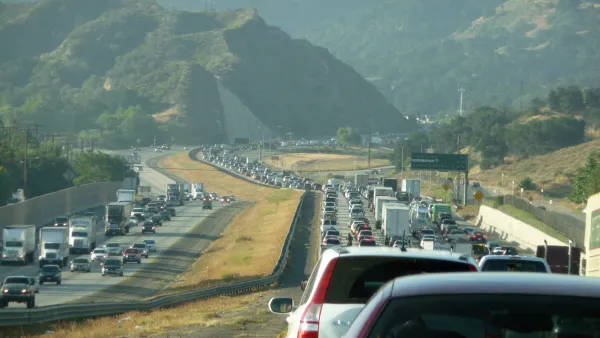
Is Los Angeles' Car Culture on a Collision Course with Economic Ruin?
Architect and planner Gerhard W. Mayer asserts that a city developed to accommodate cars is no place for paltry public transit offerings; Los Angeles needs major changes to its DNA if it wants to remain viable.
Critiquing the "Urban Mobility Report"
The "Urban Mobility Report" produces widely-cited congestion cost estimates. It is biased in various ways that exaggerate congestion costs and roadway expansion benefits. Few users of these cost estimates seem aware of these problems.
D.C. Has the Country's Worst Traffic, But is That Such a Bad Thing?
The Texas A&M Transportation Institute (TTI) is out with its annual Urban Mobility Report. You'll probably hear a lot in the next day about how awful your city's traffic is. But you likely won't hear much about why that might not be so bad.

FREE Course: Walkable City 1: Why Walkability?
After describing his path towards focusing on walkability as the essence of good planning, Jeff Speck marches through his five principal reasons for making more walkable places.
Reinventing Malls: Planning Alchemy—Turning Gray Fields Into Gold
The course focuses on the opportunities and imperatives that shape reinvention of mall sites.

City of Wisconsin Rapids
Harvard University Graduate School of Design
KFH Group Inc.
The Architects Foundation
University of Cincinnati Online
The Pocatello Development Authority
The Urban Renewal Agency of the City of Pocatello