Segregation

Black Chicagoans Segregated, Regardless of Income
Latino Chicagoans are more likely to live in diverse neighborhoods than whites or blacks do.

Critics: NYC Zoning Promotes Segregation, Inequality
The editors of a new book on displacement in New York argue that the city's historical record of exclusionary zoning carries over into the present. Urbanist concepts in vogue today simply rehash old divides.

Op-Ed: Exclusionary Zoning Worsens Education Gap
Pete Rodrigue pulls from multiple studies, arguing that zoning contributes to an education gap between rich and poor students. Housing costs lie at the heart of the problem.

As Cities Have Changed, So Have Richard Florida's Ideas
Call it the re-education, the evolution, or the contrition of Richard Florida, but the "rock-star urbanist" has realized some unintended consequences of his creative class ethos, and he's ready to share a new vision for cities.

The Dangers of Demolition for Its Own Sake
Jason Hackworth argues that demolition has come to be seen as a good, in and of itself, in rust belt cities like Detroit; giving rise to policies that are wrong-headed and dangerous.

A Sordid History: Race in Real Estate
Commentators relentlessly debate whether Donald Trump's support hinges on economics or race. Alexis C. Madrigal discusses how the two are joined at the hip, especially in real estate.
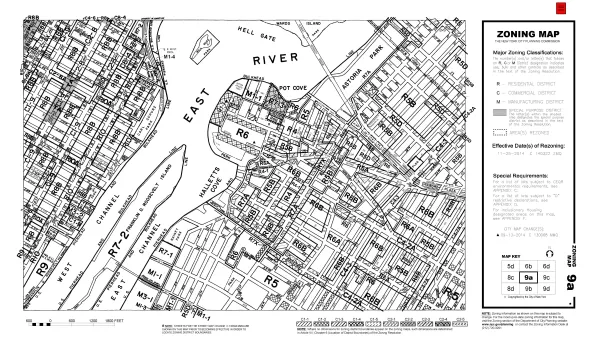
Reexamining the Origins of Zoning
According to Seymour Toll's 1969 book, New York City's 1916 zoning code was less a civic-minded project than an attempt to protect elite retail districts from the riff-raff. The ramifications for American zoning at large are significant.
8 Ways Exclusionary Zoning Hurts Cities
The Sightline Institute tackles what may be "our most acute urban public policy challenge."
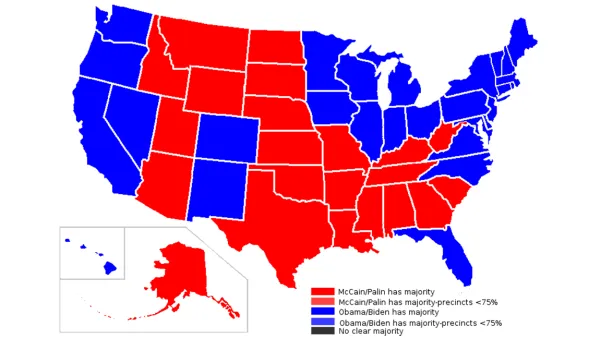
The New Political Map of the United States
A new book published by the Pew Research Center details the demographic changes that will shape the politics—beyond presidential elections—of the future.
Study: Local land Use Regulations Segregate Metropolitan Areas
A new study reveals new understanding about how restrictive land use regulations in urban areas affect economic segregation across metropolitan areas.
Census Data Reveals Slight Decline in Racial Segregation
It's too soon to declare the beginning of the end for segregation, but one demographer is hopeful that there are opportunities to better integrate different racial groups.
Op-Ed: Why Cities Need the 'Poor Door'
Drawing on a distinction between equality and equity, Rick Jacobus argues that so-called 'poor doors' are a necessary compromise to promote affordable housing and neighborhood integration.
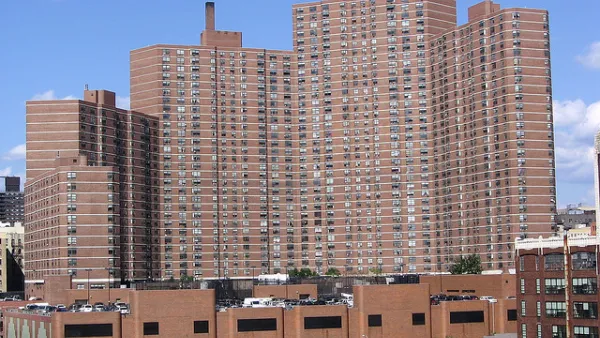
Housing Choice Voucher Holders Still Face Barriers to Mobility
Voucher recipients live in slightly better neighborhoods than the average poor household, but they still live in economically and racially segregated neighborhoods with poor-performing schools.
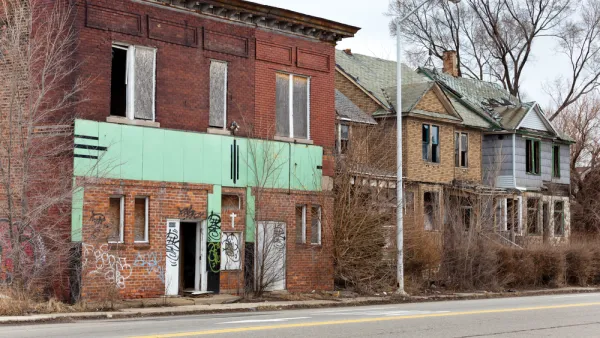
Map Depicts Nationwide Geography of Inequality
An analysis and accompanying interactive map from the Urban Institute show where the nation's richest and poorest tend to live. The map tells a tale of deeply ingrained wealth segregation.
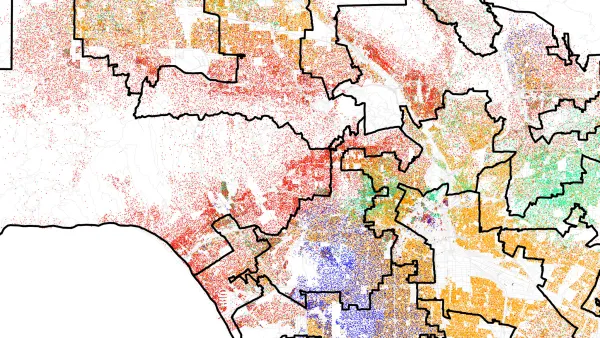
Diverse on Paper, Segregated in Reality
Many places are statistically diverse, but their inhabits can be worlds apart. A local perspective (and finer data) is needed to fully appreciate how different races and classes inhabit a neighborhood.
How Landlords Segregate Neighborhoods
Exploring the persistence of racial segregation as a result of U.S. housing policies—policies intended to break patterns of segregation, not reproduce them.
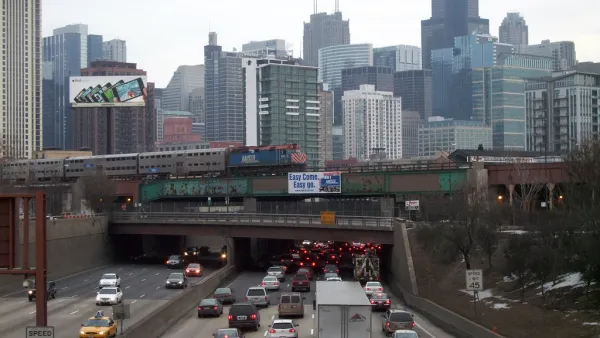
How Urban Diversity Equals Neighborhood Segregation
Statistics sage Nate Silver crunches the numbers illustrating the relationship between U.S. cities' overall diversity and their neighborhood diversity. His conclusion: the greater diversity, the greater the segregation.
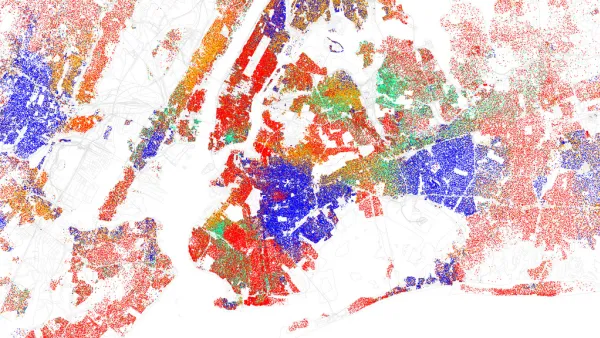
Study: More Than Income, Race Influences Neighborhood Standards
Although income inequality receives plenty of coverage these days, research suggests that neighborhoods of color have less access to resources than white neighborhoods despite similar median incomes.
Study: Affordable Housing Policy Increases Segregation in the Twin Cities
A new study by researchers at the University of Minnesota identifies the consequences of Twin Cities affordable housing policy: deepening racial and economic segregation.
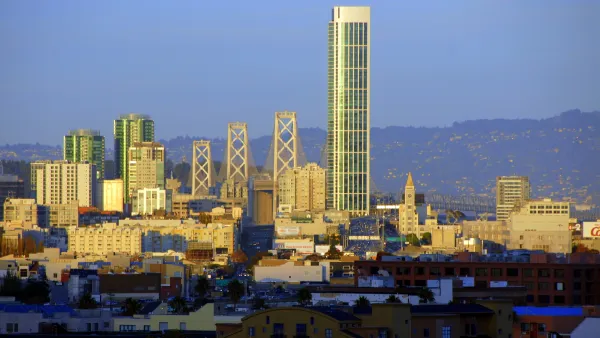
Report: Cities Segregating by Employment Type—Not Just Income Level
New analysis from Richard Florida and the Martin Prosperity Institute maps segregation by employment type, finding the darker effects of the creative class.

FREE Course: Walkable City 1: Why Walkability?
After describing his path towards focusing on walkability as the essence of good planning, Jeff Speck marches through his five principal reasons for making more walkable places.
Reinventing Malls: Planning Alchemy—Turning Gray Fields Into Gold
The course focuses on the opportunities and imperatives that shape reinvention of mall sites.

City of Rosemead
Rutgers University, Edward J. Bloustein School of Planning and Public Policy
One Hundred Miles
Hunter College, City University of New York (CUNY)
The Architects Foundation
University of Cincinnati Online
City of Cambridge
Montrose County
The Pocatello Development Authority









