Although income inequality receives plenty of coverage these days, research suggests that neighborhoods of color have less access to resources than white neighborhoods despite similar median incomes.


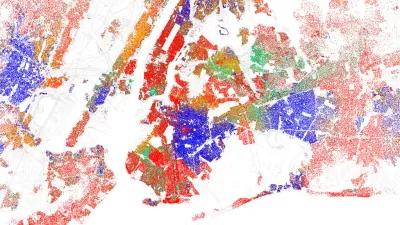
In the 1990s, the U.S. Department of Housing and Urban Development carried out an experimental program called Moving to Opportunity for Fair Housing (MTO). Low-income families from Baltimore, Boston, Chicago, Los Angeles, and New York received housing vouchers and other assistance to relocate into neighborhoods with higher median incomes. In a recent report, researchers from the Cleveland Federal Reserve examine the legacy of MTO.
Their foremost conclusion is, simply, not all high-poverty (or low-poverty) neighborhoods are created equal. From Next City's article on the findings: "they say that it's possible that segregation — more than median income — affects schools, personal security, employment networks and access to public resources."
When policymakers and planners focus only on alleviating the effects of poverty, race-based inequities in neighborhood quality don't receive adequate attention. From the article: "Aliprantis and Kolliner's research suggests that if we continue to ignore racial segregation as a factor in neighborhood equality, policies aimed at creating opportunity for low-income Americans will continue to yield disappointing results."
Read the full story: Race May Matter More Than Income When It Comes to Neighborhood Quality

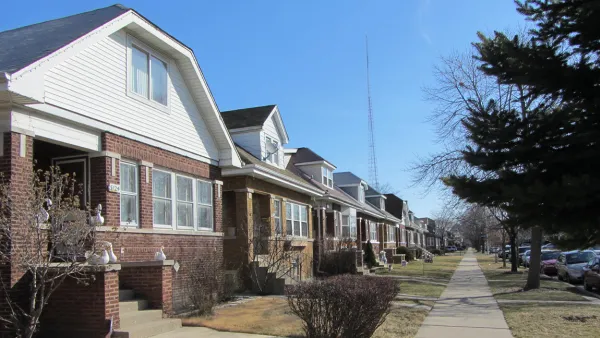
Mapped: Chicago's Shrinking Middle Class
In 1970, half of the city's census tracts were middle-income. Now, only 16 percent of them remain so. Polarization between the well-off and the poor essentially splits the city in two.

Op-Ed: Dallas Suffers From Long-Term, Entrenched Segregation
In a appeal by no means limited to the Dallas metro region, Mike Koprowski condemns the city's entrenched segregation and calls for a stronger response.

Racial Segregation in U.S. Neighborhoods
Despite the intentions of the nation's fair housing laws, neighborhoods in the United States continue to segregate by race.

Planetizen Federal Action Tracker
A weekly monitor of how Trump’s orders and actions are impacting planners and planning in America.

Amtrak, CN end decades-long dispute with eight-year agreement
The new operating agreement establishes an updated framework for the companies to work together, including processes to resolve disputes.

Judges permit Denver to divert 77,000 acre feet from the Colorado River for reservoir expansion
Overuse and climate change have caused the Colorado River’s water levels to plummet.

Philadelphia to invest $2 billion into upgrading city airports as PHL places last in customer satisfaction
Modernizations to Philadelphia's airports will include baggage system upgrades and a new automated parking garage guidance system.

The LA housing policies making developers turn away from the city
Despite LA’s housing shortage, developers say the city’s "mansion-tax" and pandemic-era policies make it an unappealing place to build housing.

New density bill would require 7 California cities to establish regional transit hubs
The bill would also require major cities in California to permit high-rise residential buildings.

FREE Course: Walkable City 1: Why Walkability?
After describing his path towards focusing on walkability as the essence of good planning, Jeff Speck marches through his five principal reasons for making more walkable places.
Reinventing Malls: Planning Alchemy—Turning Gray Fields Into Gold
The course focuses on the opportunities and imperatives that shape reinvention of mall sites.

City of Wisconsin Rapids
Harvard University Graduate School of Design
KFH Group Inc.
The Architects Foundation
University of Cincinnati Online
The Pocatello Development Authority
The Urban Renewal Agency of the City of Pocatello