Social / Demographics
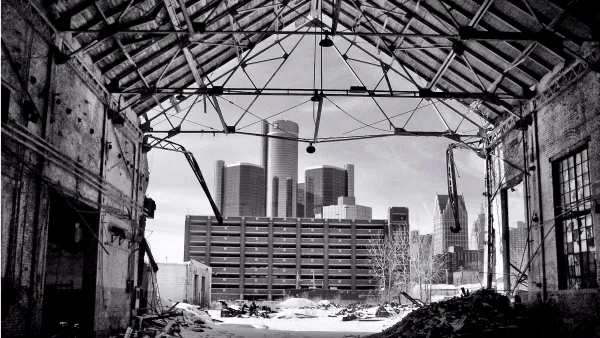
The Full Story of Detroit's Decline: The Shunning
The decline of Detroit can't be completely explained by the decline of the U.S. auto industry, according to an editorial commemorating the 50th anniversary of a five-day period of rioting and protest that resonates to this day.
Art in the Face of Gentrification
Art and culture tend to be integral to helping disenfranchised communities self-identify, develop their identities, and organize around place-based issues. But its presence can also be used be used by real estate interests to market neighborhoods.
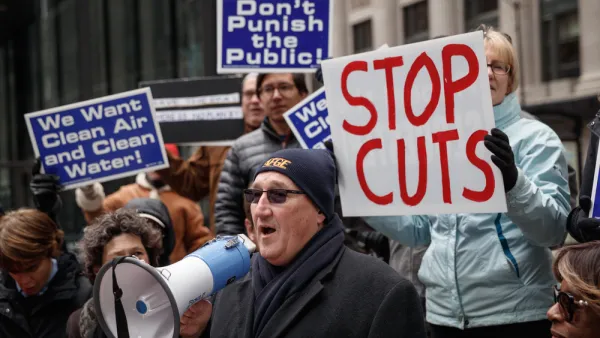
How Long Will the Office of Environmental Justice Last in Trump's EPA?
Does environmental justice need its own office to help vulnerable populations impacted by pollution, or can all divisions within the EPA address the issue? The Office of Environmental Justice, established in 1993, may be shut down.
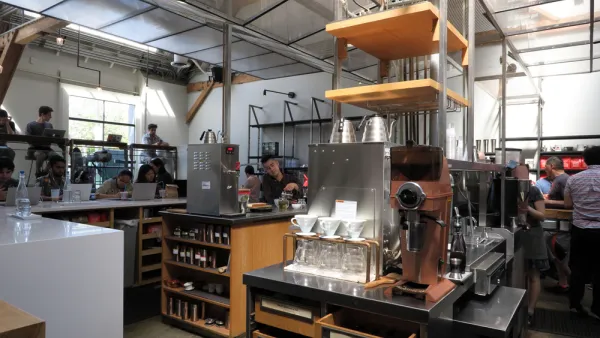
Coffee With Your Gentrification?
The Los Angeles Times published a pair of incendiary articles this week in which coffee plays an integral role in the conversation about gentrification.
U.S. DOT Won't Investigate Potential Civil Rights Violation on Baltimore Red Line Cancellation
In the waning days of the Obama Administration, the U.S. Department of Transportation saw reason to investigate the civil rights implications of a decision to cancel funding for the Baltimore Red Line light rail project.
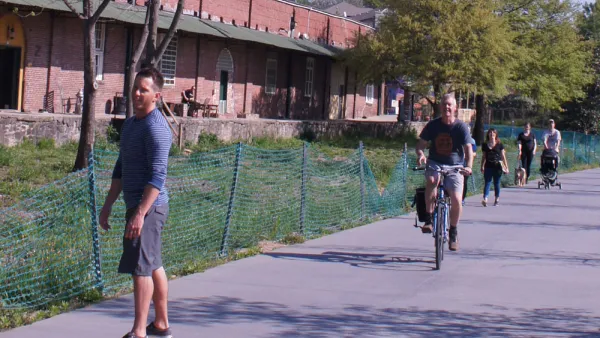
An Investigation of Affordable Housing Failure on the Atlanta Beltline
An investigative collaboration between the Georgia News Lab and The Atlanta Journal-Constitution has produced a scathing critique of Atlanta Beltline Inc., the organization shepherding one of the nation's most ambitious public works projects.
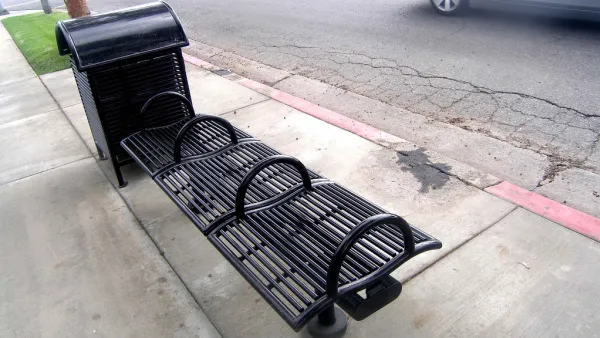
Booming Downtowns Are Squeezing Out Homeless Shelters
In downtowns across America, booming development has come at the expense of crucial homeless services that have traditionally located there.
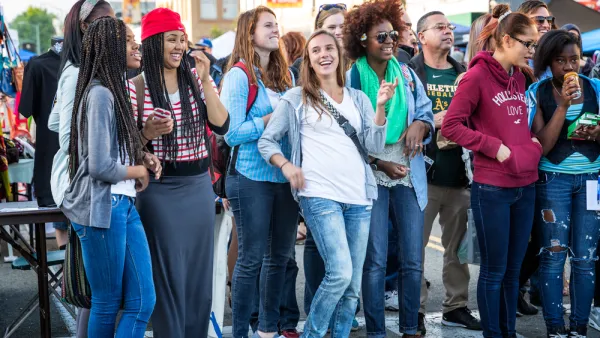
The Roots of Racial Transition
In some American cities, the white population is growing while the black population is declining. Is this a result of gentrification or of black upward mobility?
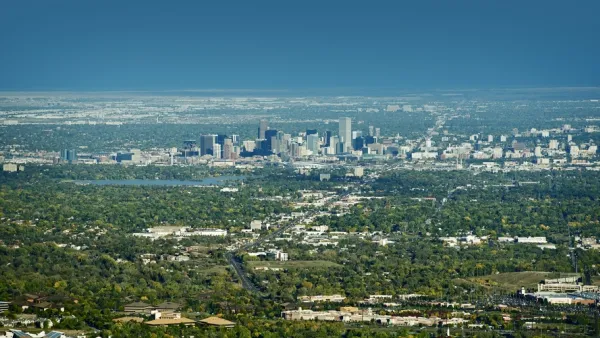
Suburban Poverty in the Denver Region Compares Favorably to National Averages
A more nuanced understanding of suburban poverty is available from an examination of the Denver region.
Report Predicts the End of Individual Car Ownership
The first report from independent think tank RethinkXL predicts that by 2031, 95 percent of U.S. passenger miles traveled will be served by on-demand, autonomous electric vehicles owned by companies providing transport as a service.

Telecommuting Skews Affluent
Here's a reason to doubt telecommuting as a silver bullet for congestion in growing regions: most people don't have the option.

Safe for Now, Brooklyn Music Mecca Sees a Cloudy Future
More than 20 percent of New York's smaller music venues have closed in the past 15 years. Although Brooklyn institution Barbes was recently saved by a crowdfunding campaign, its founder is pessimistic about the future of New York's independent arts.
Study Reveals Housing Discrimination Against Same-Sex Couples, Transgender Individuals
A study of three of the country's population and cultural centers reveals the kinds of discrimination same-sex couples and transgender individuals are likely to encounter on the rental market.

Making the Coast Accessible for Black and Latino Californians
A history of segregation and other barriers have made California's beaches and oceanfront disproportionately white.

Pursuing Inclusion, Equity in the Nation's Capital
The history of Washington, D.C., both recent and distant, has generated one of the most fascinating planning case studies in the country. The man leading the D.C. Office of Planning explains his approach the unique responsibilities of the job.

Tacoma Relocates Homeless Residents to City-Owned Encampment
Tacoma, Washington is attempting to approach homeless encampments from a public health perspective.

Twin Cities Regional Forecast Foresees Steady Growth and Big Changes
The Metropolitan Council has released "The Twin Cities Regional Forecast to 2040: Steady Growth and Big Changes Ahead" to provide a foundation for coordinated planning by the Metropolitan Council and local governments.
Another Problem to Blame on Millennials
First the auto companies blamed millennials for not driving enough, and now demographers blame them for the nation's declining birth rate.
Autonomous Vehicles: Turn On, Tune In, Drop Out?
The implications of autonomous vehicles for social interactions are potentially vast.

Hidden Crisis: Homelessness on the Reservation
Poverty and evictions among Native Americans are an underreported part of the national homelessness crisis. Often, homeless families stay as long as they can in the dwellings of family and friends.

FREE Course: Walkable City 1: Why Walkability?
After describing his path towards focusing on walkability as the essence of good planning, Jeff Speck marches through his five principal reasons for making more walkable places.
Reinventing Malls: Planning Alchemy—Turning Gray Fields Into Gold
The course focuses on the opportunities and imperatives that shape reinvention of mall sites.

City of Charlotte
City of Rosemead
Rutgers University, Edward J. Bloustein School of Planning and Public Policy
University of Michigan School for Environment and Sustainability (SEAS)
Hunter College, City University of New York (CUNY)
The Architects Foundation
University District Partnership









