Uber (and Lyft, of course) drivers and taxi drivers hope a cap on the number of ride-hailing vehicles would improve wages and reduce congestion.


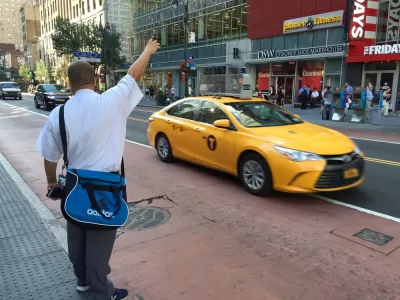
Emma G. Fitzsimmons and Aaron Robertson report that the proposal to cap the number of ride-hailing vehicles in the city has the support of the drivers who do the ride-hailing work. In other words, the proposal has united taxi drivers and Uber drivers.
It is their economic despair — underscored by six driver suicides in recent months — that has prompted the City Council to consider legislation this week to cap ride-hailing vehicles in the city and set a minimum pay rate for drivers.
Both taxi and Uber drivers are optimistic that the city’s proposals would halt the flood of vehicles clogging city streets and start making it easier for drivers to earn a decent living.
According to the article, the proposed legislation is expected to face a vote by the City Council on Wednesday of this week. "The legislation would limit the number of vehicles at the current level by stopping the issuance of new for-hire vehicle licenses while the city studies the rapidly changing industry, which has been transformed by Uber’s remarkable rise," according to Fitzsimmons and Robertson. "Ride-hail companies would be able to add new vehicles only if they are wheelchair-accessible."
Read the full story: Taxi and Uber Drivers Are United in Backing a Cap on Ride-Hail Vehicles


New York City Council Proposes Cap on Number of Ride-Hailing Vehicles
To support the taxi industry and reduce congestion, the New York City Council could cap the number of ride-hailing vehicles operating in the city. The cap could be a first major step toward a new era of transportation regulation.
Ride-Hailing Prices Skyrocket as the U.S. Emerges From the Pandemic
A shortage of drivers and spiking demand are driving Uber and Lyft prices higher than ever as the companies struggle to achieve profitability.
New Regulations Grind Hiring to a Halt for Uber and Lyft
The New York City set standards for transportation network companies, and now those companies are being a lot more selective about who they hire as drivers.

Planetizen Federal Action Tracker
A weekly monitor of how Trump’s orders and actions are impacting planners and planning in America.

California plans to bury El Niño’s downpour
If the state plays its cards right, it may be able to store a billion acre-feet of El Niño’s water in aquifers.

Chicago breaks ground on $3 billion megadevelopment
The new neighborhood, titled Foundry Park, will one day host 3,700 residences.

California High-Speed Rail Authority CEO resigns after $600,000 scandal
Under Ian Choudri, the authority used taxpayer dollars to fund first class flights and trips to nightclubs.

Want to study the Missouri River? Soon, you may need unanimous approval from 10 states
Legislation would require 10 governors’ permission to study or build projects moving water outside the basin.

Desperate measures: Advocates weigh draining Lake Powell to fill Colorado River
Draining the reservoir could reduce evaporation losses by a couple hundred thousand acre-feet.

FREE Course: Walkable City 1: Why Walkability?
After describing his path towards focusing on walkability as the essence of good planning, Jeff Speck marches through his five principal reasons for making more walkable places.
Reinventing Malls: Planning Alchemy—Turning Gray Fields Into Gold
The course focuses on the opportunities and imperatives that shape reinvention of mall sites.

City of Rosemead
Rutgers University, Edward J. Bloustein School of Planning and Public Policy
One Hundred Miles
Hunter College, City University of New York (CUNY)
The Architects Foundation
University of Cincinnati Online
City of Cambridge
Montrose County
The Pocatello Development Authority