San Francisco's street furniture predates Google, but the city hopes a new design will bring it into the Information Age.


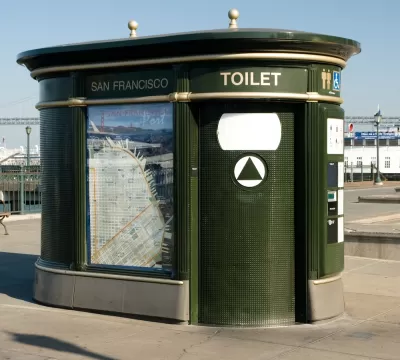
Next year, San Francisco will replace the 25 street toilets and 114 matching ad kiosks that dot its streets, reports urban design critic John King.
The green, "mock-Parisian" commodes were installed in the 1990s and mimic the city's historic character. In their search for "elegant, comfortable" design solutions to accommodate human needs, commissioners have considered a series of sleek metallic pods meant to evoke the "merging of nature and technology."
Like the toilets, the new kiosks will bring a new "forward-thinking" aesthetic to public space in the tech-rich city. Many of the originals once held newsstands, and 20 of the new models will likewise house small vendors or art installations. A recent proposal would even outfit kiosks and toilets alike with rooftop gardens—though that concept may prove too ambitious for easy maintenance.
Public toilets are considered critical amenities and important tools for public health. The project is the first to warrant collaboration between San Francisco's Arts and Historic Preservation commissions, King notes.
FULL STORY: Creativity flows in proposed designs for S.F.’s futuristic new street toilets

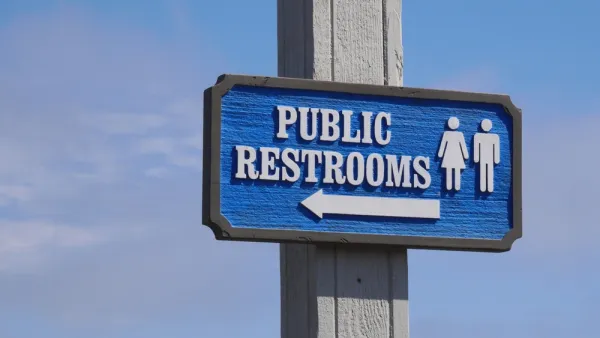
Uproar Over San Francisco’s $1.7 Million Toilet
Critics question why a single-toilet public bathroom could cost the city close to $2 million and take two years to build.
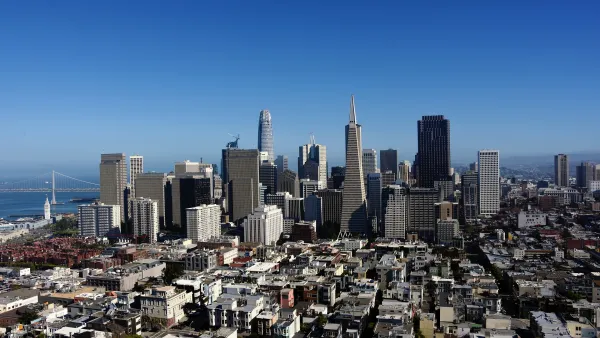
San Francisco's 1971 Urban Design Plan Echoes Today's Concerns
A 1971 effort to quantify the city's values and design goals reflects many of the same priorities that planners and residents face today.

Reimagining San Francisco for the Post-COVID Era
A San Francisco nonprofit is developing a set of recommendations for making downtown neighborhoods more flexible and welcoming to a more diverse set of users.

Planetizen Federal Action Tracker
A weekly monitor of how Trump’s orders and actions are impacting planners and planning in America.

The state-sanctioned urbicide of Austin
People don’t kill cities. Freeways do.

US to reduce Colorado River water deliveries to Mexico
A new Colorado Treaty amendment reduces Mexico’s Colorado River water allocation by 250,000 acre feet.

Colorado’s Largest Data Center Could Rise Next to Homes — Without a Public Hearing
The proposed campus would consume 11 times the power of Denver International Airport; as it has across the country, opposition mounts.

5 New England states march closer to 800 megawatt wind energy project
Securing federal approval for the project may be complicated under the Trump administration, which has historically been hostile towards domestic wind power.

Baltimore to break ground on $50 million Transit Priority Project
The project will bring faster bus trips, safer streets and better bike connections to Baltimore.

FREE Course: Walkable City 1: Why Walkability?
After describing his path towards focusing on walkability as the essence of good planning, Jeff Speck marches through his five principal reasons for making more walkable places.
Reinventing Malls: Planning Alchemy—Turning Gray Fields Into Gold
The course focuses on the opportunities and imperatives that shape reinvention of mall sites.

Eagle County Government
Harvard University Graduate School of Design
Nashville Planning Department
The Architects Foundation
University of Cincinnati Online
The Pocatello Development Authority
The Urban Renewal Agency of the City of Pocatello
Journal of the American Planning Association