Is the gritty, diverse New York of yesteryear dying, vanishing, or otherwise ceasing to exist? Depends on who you ask and where you look.


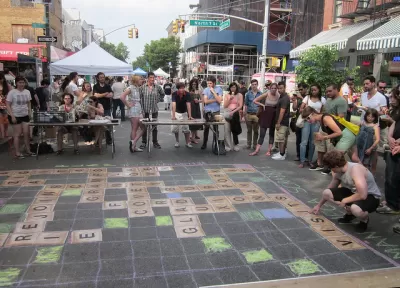
Kevin Baker penned a scathing missive about the changes transforming New York City. The dramatic nature of the article is summed up in its headline and subhead: titling the article "The Death of a Once Great City: The fall of New York and the urban crisis of affluence."
Baker explains that he's lived in New York for 40 years, but the recent changes in the city's character are unprecedented in his experience: "I have never seen what is going on now: the systematic, wholesale transformation of New York into a reserve of the obscenely wealthy and the barely here—a place increasingly devoid of the idiosyncrasy, the complexity, the opportunity, and the roiling excitement that make a city great."
In a pointed response, Ben Adler takes Baker's points to task. Noting that Baker's work treads familiar ground, Adler has plenty of responses at his disposal.
"Only someone who neglects to venture the tiniest bit off the beaten path, where New York is more diverse and alive than ever, would think it’s truly dead," according to Adler.
Adler's most salient point to the discussion of growing cities and gentrifying neighborhoods, recalls the large forces that control the evolution of cities. "The assertion that New York is particularly adrift also mistakes national and global phenomena, chiefly capitalism and growing inequality, for something distinctive to New York and within its own control."
Read the full story: The Death of a Once Great City

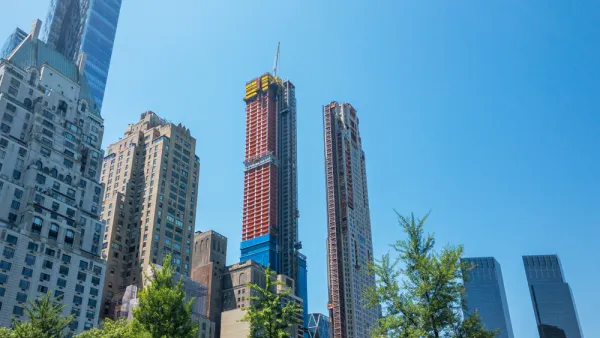
The Inclusionary Zoning Debate
New York City's groundbreaking Mandatory Inclusionary Housing Program will turn five years old in March. While some call for the program to be eliminated, others defend it.
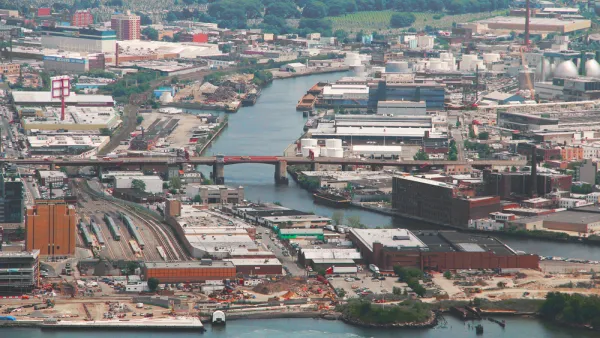
How Broken Planning and Development Processes Hobble the Potential of Neighborhoods
A stinging critique of the public review process in New York City.
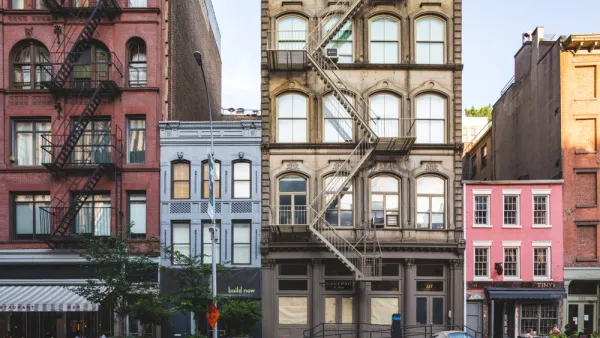
NoHo and SoHo Rezoning Controversies, Amplified
One of the big questions of planning is up for debate with a proposed rezoning in the SoHo and NoHo neighborhoods of New York City: Can upzoning be an effective tool for affordability?

Planetizen Federal Action Tracker
A weekly monitor of how Trump’s orders and actions are impacting planners and planning in America.

The state-sanctioned urbicide of Austin
People don’t kill cities. Freeways do.

US to reduce Colorado River water deliveries to Mexico
A new Colorado Treaty amendment reduces Mexico’s Colorado River water allocation by 250,000 acre feet.

Nation's most wind-powered state turns to coal as data centers increase energy demand
For the first time in decades, Iowa has increased its generation of coal power.

NYC cools commuters with city's first rain garden above a bus stop
New York City officials say the plants in the rain garden can absorb 16 gallons of rainwater during heavy storms.

Brightline West’s future may rely on $6 billion federal loan
The company has until Nov. 2 to make a $400 million equity investment into its proposed high-speed rail line.

FREE Course: Walkable City 1: Why Walkability?
After describing his path towards focusing on walkability as the essence of good planning, Jeff Speck marches through his five principal reasons for making more walkable places.
Reinventing Malls: Planning Alchemy—Turning Gray Fields Into Gold
The course focuses on the opportunities and imperatives that shape reinvention of mall sites.

Greater Baltimore Committee
Eagle County Government
Harvard University Graduate School of Design
The Architects Foundation
University of Cincinnati Online
The Pocatello Development Authority
The Urban Renewal Agency of the City of Pocatello
Journal of the American Planning Association