A 2015 NHTSA report showed that pedestrians were multiple times more likely to die if struck by SUVs, but that information was neither shared nor acted upon.


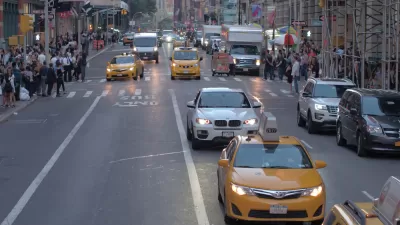
The United States has seen a rapid rise in pedestrian deaths, and reporting shows officials at the NHTSA were not forthcoming with key information on one of the causes. "A Detroit Free Press/USA TODAY NETWORK investigation found that the SUV revolution is a key, leading cause of escalating pedestrian deaths nationwide, which are up 46 percent since 2009," Eric D. Lawrence, Nathan Bomey, and Kristi Tanner report for the Detroit Free Press and USA Today. Safety regulators have been aware of this since at least 2015, but didn't move to mitigate this danger or publicize this finding.
In Europe, cars are rated by how dangerous they are for pedestrians, the National Highway Traffic Safety Administration (NHTSA) had announced plans to release similar safety ratings, but that has yet to happen. In the meantime SUV sales have continued to climb, surpassing traditional sedans this year.
People are two to three times more likely to die when hit by tall SUVs than they are when they're hit by typical sedans, the NHTSA found when looking at 12 independent studies. Higher fronts on SUVs mean pedestrians are more likely to go under the wheels of SUVs than they are if they're struck by sedans which have lower bumpers. Pedestrians that are thrown onto the hood of a car are more likely to survive.
FULL STORY: Federal Safety Officials Knew SUV Design Kills Pedestrians and Didn’t Act

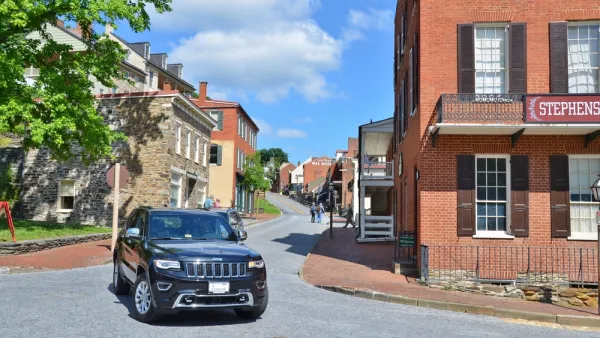
For Transportation Justice, Auto Safety Must Protect People Outside the Car
Light trucks are killing more pedestrians than ever while keeping their drivers and passengers safer. Is it time to reframe safety regulations?
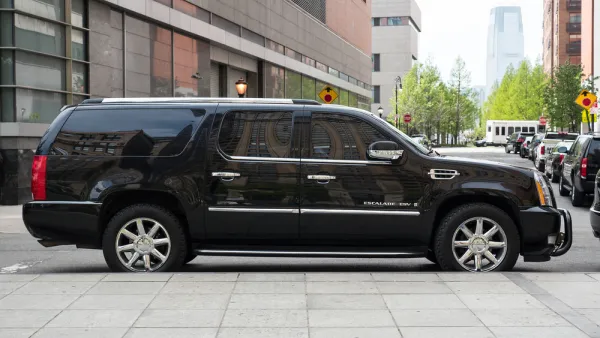
British Researchers Sound the Alarm About the Dangers of Large SUVs
These researchers call for dangerous, large-sized SUVs to be removed from the road.
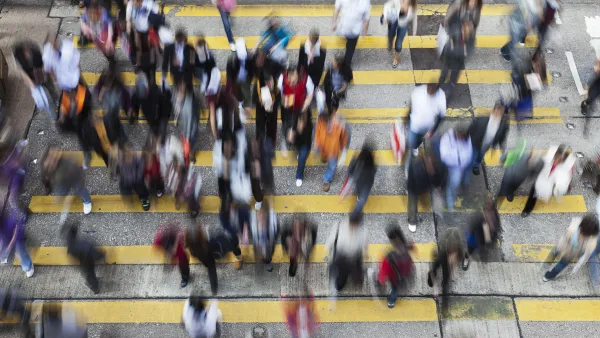
Big Cities Make Pedestrian Safety a Priority
New data released Dec. 19 by NHTSA shows increased safety for those traveling by car, but pedestrian fatalities are 15% higher than in 2009. Plans by San Francisco, Los Angeles, New York, and Chicago to increase ped safety are described by the WSJ.

Planetizen Federal Action Tracker
A weekly monitor of how Trump’s orders and actions are impacting planners and planning in America.

The state-sanctioned urbicide of Austin
People don’t kill cities. Freeways do.

US to reduce Colorado River water deliveries to Mexico
A new Colorado Treaty amendment reduces Mexico’s Colorado River water allocation by 250,000 acre feet.

5 New England states march closer to 800 megawatt wind energy project
Securing federal approval for the project may be complicated under the Trump administration, which has historically been hostile towards domestic wind power.

Baltimore to break ground on $50 million Transit Priority Project
The project will bring faster bus trips, safer streets and better bike connections to Baltimore.

Airbnb launches $250 million 'last-dollar financing' housing accelerator, makes first investment in Austin
The company will put $6.4 million towards affordable housing development in Texas’ capital.

FREE Course: Walkable City 1: Why Walkability?
After describing his path towards focusing on walkability as the essence of good planning, Jeff Speck marches through his five principal reasons for making more walkable places.
Reinventing Malls: Planning Alchemy—Turning Gray Fields Into Gold
The course focuses on the opportunities and imperatives that shape reinvention of mall sites.

Eagle County Government
Harvard University Graduate School of Design
Nashville Planning Department
The Architects Foundation
University of Cincinnati Online
The Pocatello Development Authority
The Urban Renewal Agency of the City of Pocatello
Journal of the American Planning Association