The new initiative will fund crowdsourced mobility solutions.



Ford's third City of Tomorrow Challenge begins this month in Grand Rapids, Michigan. The initiative takes the form of "a pitch-off for community-sourced ideas" to improve mobility and congestion in the city, Timothy Seppala explains in Engadget.
Residents shouldn't expect a resurrected streetcar network in the city, but bike-sharing kiosks, more bike lanes and wider sidewalks are probably safe bets ... The Challenge [will also] accept ideas that use infrastructure and transportation data to enable "smart transportation choices."
The winning two teams will receive $100,000 to pilot their ideas, with funding provided by companies including AT&T, Dell, and Microsoft, as well as the Michigan Economic Development Corporation's PlanetM mobility initiative.
The challenge's launch comes shortly after Ford announced that it would create an innovation hub at the Michigan Central Station in Detroit. The company has also launched City of Tomorrow initiatives in Miami and Pittsburgh.
FULL STORY: Ford's next 'City of Tomorrow' is Grand Rapids, Michigan

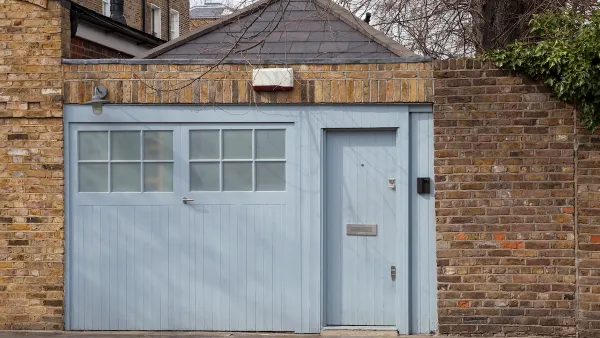
Grand Rapids Mayor Proposes Garage Conversion Plan
The mayor says allowing homeowners to convert garages to dwelling units could alleviate the city’s housing shortage.

Empower LA: The LA2050 Grants Challenge
The 2025 LA2050 Grants Challenge invites organizations to become outreach partners and help mobilize Angelenos to vote on how $1 million in grants will be allocated to address key local issues like homelessness, income inequality, and park access.
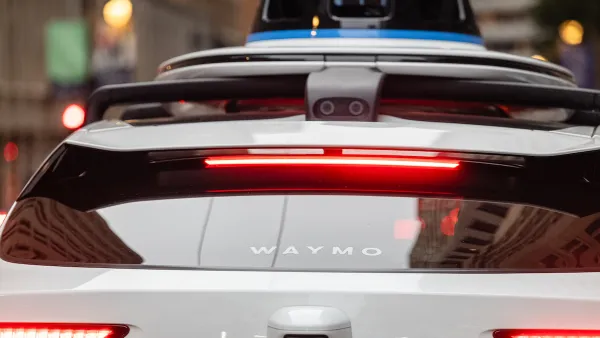
NHTSA Launches Investigations Into Two More Self-Driving Automakers
The federal agency is responding to reports of crashes and erratic behavior from Waymo and Zoox vehicles.

Planetizen Federal Action Tracker
A weekly monitor of how Trump’s orders and actions are impacting planners and planning in America.

The state-sanctioned urbicide of Austin
People don’t kill cities. Freeways do.

US to reduce Colorado River water deliveries to Mexico
A new Colorado Treaty amendment reduces Mexico’s Colorado River water allocation by 250,000 acre feet.

5 New England states march closer to 800 megawatt wind energy project
Securing federal approval for the project may be complicated under the Trump administration, which has historically been hostile towards domestic wind power.

Baltimore to break ground on $50 million Transit Priority Project
The project will bring faster bus trips, safer streets and better bike connections to Baltimore.

Airbnb launches $250 million 'last-dollar financing' housing accelerator, makes first investment in Austin
The company will put $6.4 million towards affordable housing development in Texas’ capital.

FREE Course: Walkable City 1: Why Walkability?
After describing his path towards focusing on walkability as the essence of good planning, Jeff Speck marches through his five principal reasons for making more walkable places.
Reinventing Malls: Planning Alchemy—Turning Gray Fields Into Gold
The course focuses on the opportunities and imperatives that shape reinvention of mall sites.

Eagle County Government
Harvard University Graduate School of Design
Nashville Planning Department
The Architects Foundation
University of Cincinnati Online
The Pocatello Development Authority
The Urban Renewal Agency of the City of Pocatello
Journal of the American Planning Association