Critics of Mayor Bill de Blasio's "Five-Borough Bikeshare" program argue that Citi Bike should be expanded instead.


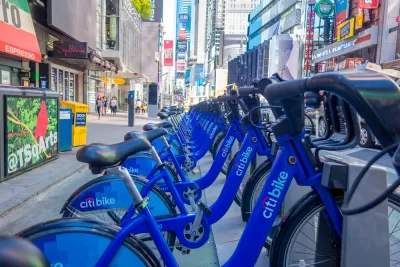
"Two neighorhoods [sic] that never made it onto Citi Bike's map will get first crack at the next generation of bike shares—the dockless bike," reports Matthew Flamm.
"A total of 12 dockless bike-share operators will take part in the pilot, which is being run by the Department of Transportation," adds Flamm. "It will begin in July in the Rockaways in Queens and Coney Island in Brooklyn."
A separate article by David Meyer turns a critical eye to the context of the announcement.
While today’s announcement allows de Blasio to check “five-borough bike-share” off his to-do list, 2018 will also be the first year since Citi Bike launched that the city’s existing, intensely used bike-share system won’t be expanded.
Meyer raises the point, because he believes an expanded Citi Bike system would deliver a much larger benefit to the city overall than could possibly be expected from the dockless bikeshare pilot.
FULL STORY: Dockless bike share pilot to begin in July

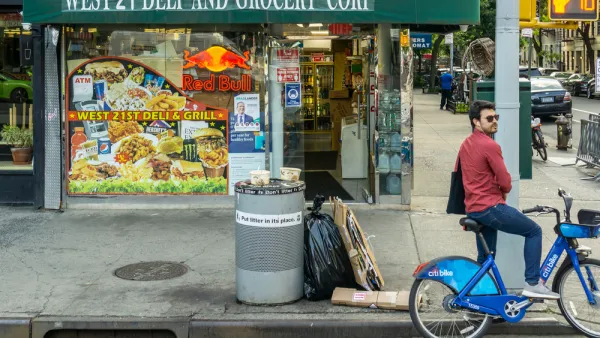
NYC on a Roll: Citi Bike Breaks Ridership Records
The Citi Bike bikeshare system in New York is achieving record new successes, despite never having received zero funding from city coffers.
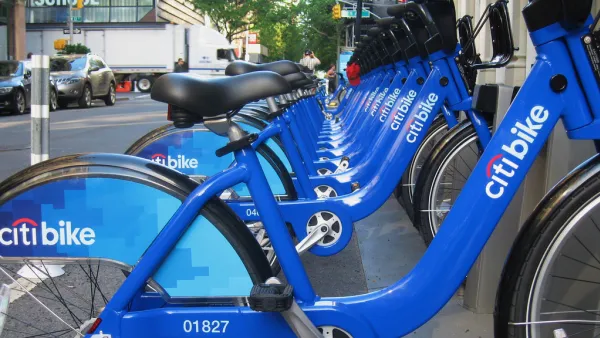
Nation's Second Bikeshare Fatality Under Investigation in Manhattan
The police report conflicts with videos showing CitiBike rider Dan Hanegby, 36, an avid cyclist on his daily commute, being hit by a charter bus on June 12. Almost a year earlier, a Divvy Bike rider was fatally struck by a truck in Chicago.
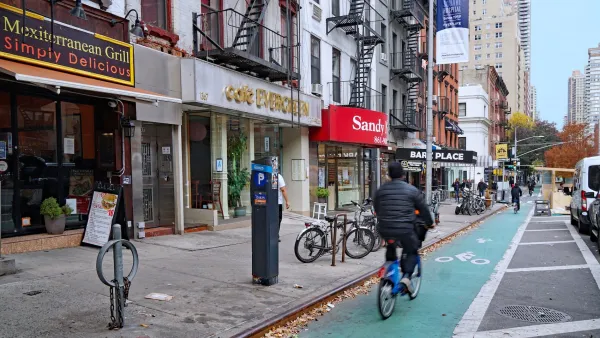
Study: Protected bike lanes increase Citi Bike rides by nearly 400 rides a month
An analysis of millions of NYC bike share rides reveals that only protected bike lanes have a 'statistically significant' increase in ridership.

Planetizen Federal Action Tracker
A weekly monitor of how Trump’s orders and actions are impacting planners and planning in America.

The state-sanctioned urbicide of Austin
People don’t kill cities. Freeways do.

US to reduce Colorado River water deliveries to Mexico
A new Colorado Treaty amendment reduces Mexico’s Colorado River water allocation by 250,000 acre feet.

Mamdani overhauls NYC's Vision Zero plan with 100 new policy goals
The overhaul aims to reduce traffic deaths and make streets safer for pedestrians, cyclists and drivers through lower speed limits, new safety infrastructure and more.

Amtrak not solely to blame for New Jersey commuter rail's unreliability, report finds
A new study from the Garden State Initiative found that NJ Transit’s budget grew 20% across a 4 year period, but reliability declined significantly over the same period.

EPA erases limits on planet-warming pollution from power plants
Under Monday’s plan, power plants would still have some limits on how much mercury, arsenic and other contaminants they can emit.

FREE Course: Walkable City 1: Why Walkability?
After describing his path towards focusing on walkability as the essence of good planning, Jeff Speck marches through his five principal reasons for making more walkable places.
Reinventing Malls: Planning Alchemy—Turning Gray Fields Into Gold
The course focuses on the opportunities and imperatives that shape reinvention of mall sites.

Eagle County Government
Harvard University Graduate School of Design
Nashville Planning Department
The Architects Foundation
University of Cincinnati Online
The Pocatello Development Authority
The Urban Renewal Agency of the City of Pocatello
Journal of the American Planning Association