An analysis of millions of NYC bike share rides reveals that only protected bike lanes have a 'statistically significant' increase in ridership.


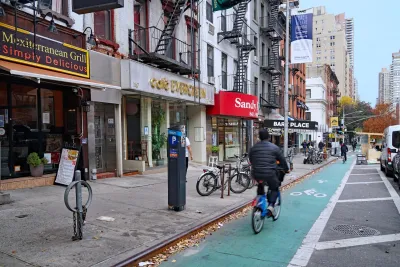
A new study from NYU's Tandon School of Engineering shows that bike lanes have a significant impact on cycling activity, particularly when it comes to the city's bike share system, Citi Bike.
According to an article on Bioengineer.org, "Initial comparisons appeared to show that both protected and painted bike lanes correlated with increased ridership, with protected bike lanes associated with an 18% rise in trips near stations and painted lanes alongside sharrows delivering around a 14% increase."
The study analyzed roughly 72 million Citi Bike trip records from between 2013 and 2024 to understand whether bike infrastructure actually had an impact. "After rigorous statistical refinement, only protected bike lanes emerged as having a statistically significant causal effect on Citi Bike ridership. The research team quantified this impact as an average increase of approximately 379 rides per station per month following the installation of protected lanes." The study's lead author noted that "protected bike lanes are truly what can move the needle on ridership."
The study also revealed that "positive ridership impacts were statistically significant predominantly in neighborhoods with the lowest proportions of Black residents. Conversely, in communities with higher percentages of Black populations, the study did not detect a clear causal effect on Citi Bike ridership." This pointed to bike infrastructure as insufficient for overcoming barriers to bike share use such as affordability and inequitable policing practices.
According to the study, protected bike lanes increased cycling the most among residents aged 60 to 79. "This dimension of the research spotlights the potential for targeted infrastructure design to enhance mobility and health outcomes for aging urban populations."
FULL STORY: Protected bike lanes boost NYC bikeshare use, though gains vary across communities

D.C.'s Ambitious Bike Infrastructure Plans
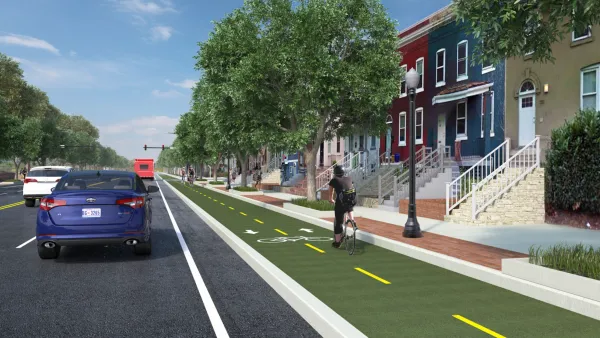
The District of Columbia plans to install ten miles of protected bike lanes this year, among other improvements including additional bike parking and more e-bikes for the Capital Bikeshare fleet.
Judge Orders Removal of Queens Bike Lane on One of NYC’s Most Dangerous Corridors
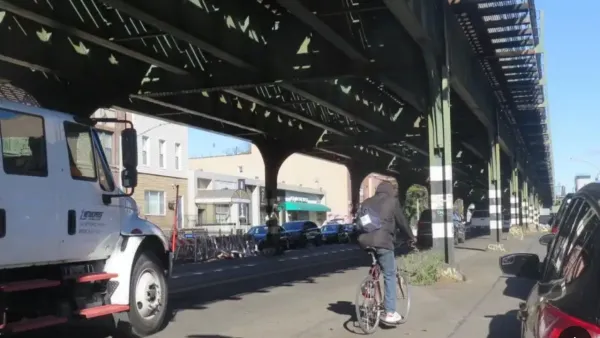
A group of local businesses and a school sued the city, arguing that NYCDOT didn’t follow appropriate procedures and failed to address safety concerns before going ahead with the project.
Chicago Sees Record Shared Bike, Scooter Use
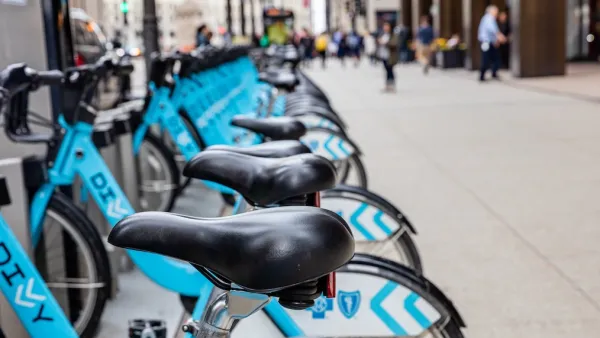
Riders took over 11 million bike share and scooter trips in 2024.

The state-sanctioned urbicide of Austin
People don’t kill cities. Freeways do.

US to reduce Colorado River water deliveries to Mexico
A new Colorado Treaty amendment reduces Mexico’s Colorado River water allocation by 250,000 acre feet.

New Jersey’s second-largest city bans standalone data centers
Jersey City will continue to allow co-location facilities, such as those meant for research institutions that store their own data.

Amtrak not solely to blame for New Jersey commuter rail's unreliability, report finds
A new study from the Garden State Initiative found that NJ Transit’s budget grew 20% across a 4 year period, but reliability declined significantly over the same period.

EPA erases limits on planet-warming pollution from power plants
Under Monday’s plan, power plants would still have some limits on how much mercury, arsenic and other contaminants they can emit.

Phoenix announces new on-demand transit service, more frequent RAPID buses
Both new services will launch in October, and are part of Phoenix's Project Effective Access Solutions for Easing Congestion.

FREE Course: Walkable City 1: Why Walkability?
After describing his path towards focusing on walkability as the essence of good planning, Jeff Speck marches through his five principal reasons for making more walkable places.
Reinventing Malls: Planning Alchemy—Turning Gray Fields Into Gold
The course focuses on the opportunities and imperatives that shape reinvention of mall sites.

Eagle County Government
Harvard University Graduate School of Design
Nashville Planning Department
The Architects Foundation
University of Cincinnati Online
The Pocatello Development Authority
The Urban Renewal Agency of the City of Pocatello
Journal of the American Planning Association