Analysts expect electric buses to be cheaper to operate than diesel buses by 2019.


"Municipal bus fleets across the world are expected to transition to 80% electric by 2040," reports Iulia Gheorghiu, sharing data from a recenet report by Bloomberg New Energy Finance.
"Despite the high cost to purchase e-buses and build out their charging infrastructure, BNEF forecasts operational savings by 2019 for many charging configurations, compared to the total cost of ownership of conventional diesel buses," adds Gheorghiu.
Gheorghiu also sets the report's predictions in context of two significant regulatory decisions of recent days and weeks. The California Air Resources Board (CARB) is crafting regulations [pdf] that will transition the state's public transit to zero emissions by 2040. The San Francisco Municipal Transportation Authority also in May to convert its hybrid buses to a fully electric fleet by 2035, according to a separate article by Sadie Gribbon.
For more recent coverage on the traction of electric buses int he public transit market, see also recent coverage by Planetizen.
Read the full story: 80% of transit buses expected to go electric by 2040, report forecasts


California Orders All Electric Buses by 2040
Converting all the public transit buses in California would save reduce carbon emissions in the state by 1 million metric tons by 2040.
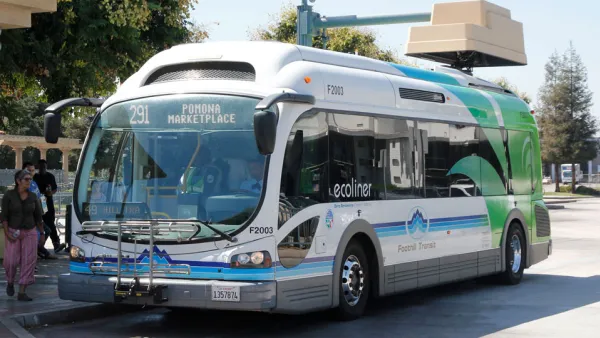
California to Invest $1 Billion in Electric Trucks, Buses, Charging Infrastructure
The investment comes not from the state legislature but from two regulatory bodies, the Air Resources Board and the Public Utilities Commission, authorizing the expenditure of VW settlement funds and utility ratepayer funds, respectively.
Renewable Natural Gas and Electricity Should Power Los Angeles Bus Fleet
It's not one or the other but both, argues Denny Zane of Move LA in a guest commentary for the Los Angeles Daily News about the decision that Los Angeles County Metro will make on June 22 on the future of the nation's second largest bus fleet.

Planetizen Federal Action Tracker
A weekly monitor of how Trump’s orders and actions are impacting planners and planning in America.

California plans to bury El Niño’s downpour
If the state plays its cards right, it may be able to store a billion acre-feet of El Niño’s water in aquifers.

Desperate measures: Advocates weigh draining Lake Powell to fill Colorado River
Draining the reservoir could reduce evaporation losses by a couple hundred thousand acre-feet.

California city breaks ground on transit connector
The project includes three mobility hubs and a pedestrian bridge.

After public outcry, Massachusetts city releases housing development tracker
Cambridge’s tracker currently shows 250 housing projects in various stages of development.

40 years after approval, Chicago breaks ground on new park
The park honors Jean Baptiste Point du Sable, the city’s first permanent non-native settler.

FREE Course: Walkable City 1: Why Walkability?
After describing his path towards focusing on walkability as the essence of good planning, Jeff Speck marches through his five principal reasons for making more walkable places.
Reinventing Malls: Planning Alchemy—Turning Gray Fields Into Gold
The course focuses on the opportunities and imperatives that shape reinvention of mall sites.

City of Rosemead
Rutgers University, Edward J. Bloustein School of Planning and Public Policy
One Hundred Miles
Hunter College, City University of New York (CUNY)
The Architects Foundation
University of Cincinnati Online
City of Cambridge
Montrose County
The Pocatello Development Authority