A deadly explosion in West, Texas spurred the Obama administration to update regulations to the chemical industry.


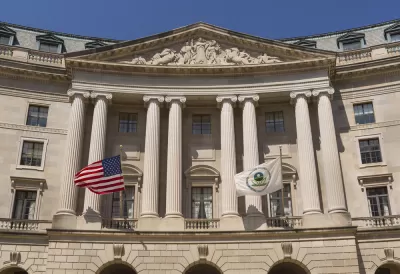
A 2013 fire in a West, Texas chemical plant killed 15, including 12 volunteer fire fighters, and led the U.S. Environmental Protection Agency to approve new regulations for the industry. "Twenty minutes after the fire started, the plant exploded — so powerfully that it registered as a 2.1-magnitude earthquake on the Richter scale," Meagan Flynn writes for The Washington Post.
After the 2013 tragedy the U.S. EPA took action: "The fatal blast prompted the Environmental Protection Agency to make serious changes to regulations about how companies store dangerous flammable chemicals and how they develop risk-management plans," Flynn reports.
Now those regulations are on the chopping block. EPA Secretary Scott Pruitt argues that eliminating rules around safe handling of flammable chemicals will save the industry $88 million. "The bulk of the claimed savings would come from getting rid of a rule requiring owners of a chemical plant to evaluate options for safer technology and procedures that would mitigate hazards," Flynn reports.
Read the full story: Pruitt moves to rescind regulations inspired by West, Tex., chemical explosion that killed 15

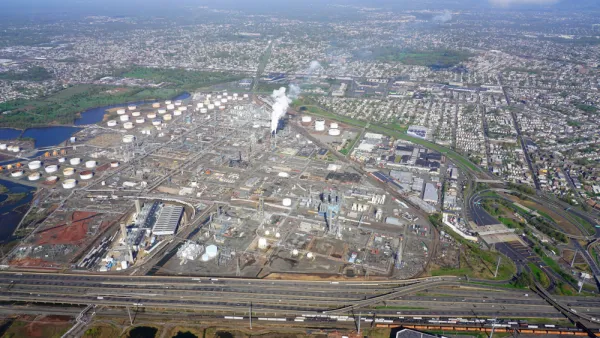
Supreme Court Guts the U.S. EPA’s Ability to Limit Carbon Emissions
The consequences of this ruling have long been foretold. With the U.S. Environmental Protection Agency now officially barred from the fight against climate change, Congress will have to act to reduce carbon emissions.

Federal Judge Liberates the Obama Era Clean Water Rule
The Trump administration cannot legally delay the Waters of the U.S. (WOTUS) rule, according to a ruling by a federal judge this week.
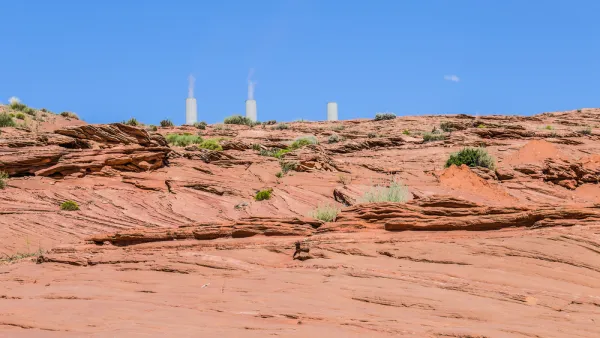
Trump Administration to Repeal Obama's Clean Power Plan
"The war on coal is over," says EPA Administrator Scott Pruitt.

Planetizen Federal Action Tracker
A weekly monitor of how Trump’s orders and actions are impacting planners and planning in America.

California plans to bury El Niño’s downpour
If the state plays its cards right, it may be able to store a billion acre-feet of El Niño’s water in aquifers.

Chicago breaks ground on $3 billion megadevelopment
The new neighborhood, titled Foundry Park, will one day host 3,700 residences.

Satanic place names
From streams and lakes to valleys and canyons, I mapped more than 1,000 places named after the Devil.

California High-Speed Rail Authority CEO resigns after $600,000 scandal
Under Ian Choudri, the authority used taxpayer dollars to fund first class flights and trips to nightclubs.

Want to study the Missouri River? Soon, you may need unanimous approval from 10 states
Legislation would require 10 governors’ permission to study or build projects moving water outside the basin.

FREE Course: Walkable City 1: Why Walkability?
After describing his path towards focusing on walkability as the essence of good planning, Jeff Speck marches through his five principal reasons for making more walkable places.
Reinventing Malls: Planning Alchemy—Turning Gray Fields Into Gold
The course focuses on the opportunities and imperatives that shape reinvention of mall sites.

City of Rosemead
Rutgers University, Edward J. Bloustein School of Planning and Public Policy
One Hundred Miles
Hunter College, City University of New York (CUNY)
The Architects Foundation
University of Cincinnati Online
City of Cambridge
Montrose County
The Pocatello Development Authority