Encouraging compact land use by allowing density, building near transit, and eliminating parking minimums can have a powerful effect on the emissions a city generates.


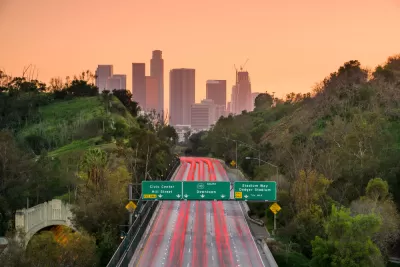
Liberal cities around the country have mayors who love to talk about climate change, but while there are proven strategies to curb emissions in cities, many of these same mayors are afraid to upset the status quo. Transportation is the main source of emissions in the United States, so "[m]ayors can play a big role in reducing per capita energy consumption by facilitating more efficient modes of travel and more compact land use," argues Angie Schmitt.
Eliminating parking requirements is one strategy that's been implemented in Mexico City. Parking requirements make building more expensive and serve as built-in support for private vehicles over public transit. While a few U.S. cities have taken steps to reduce some requirements, none has gone as far as the Mexican capital.
Other strategies Schmitt champions in her article include creating space for sustainable transit in the form of bus and bike lanes, allowing housing near transit, and narrowing streets and slowing vehicle traffic to make the public realm safer for walkers and bikers.
FULL STORY: You’re No “Climate Mayor” If You’re Not Doing These Four Things

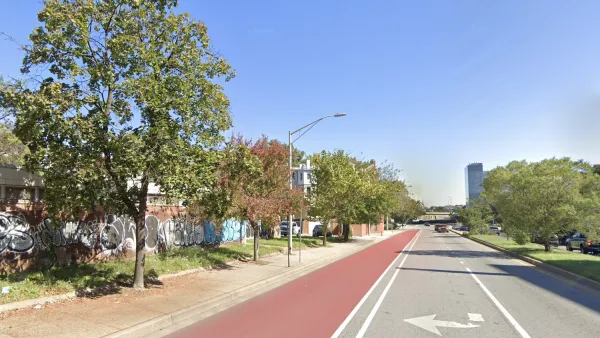
In a twist, Baltimore residents ask for less parking
A grocery store developer is asking to build more off-street parking than the city's new regulations allow, as well as 6 curbside spots that would replace an existing bus lane.
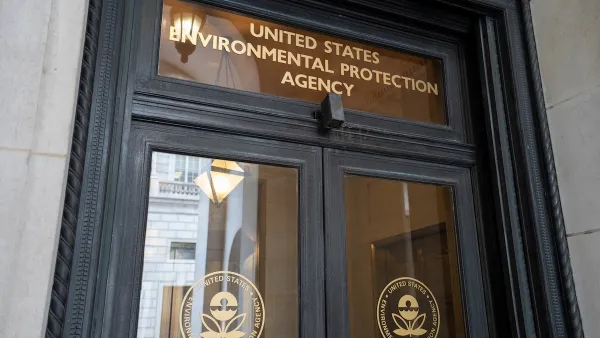
EPA Plans “Largest Deregulatory Action” in History
The agency plans to repeal a key 2009 rule that underpins the government’s authority to regulate greenhouse gas emissions.

LA’s Trees Absorb More Carbon Than Expected, But Can’t Do It Alone
A USC study finds that Los Angeles’ urban trees absorb more carbon than expected, but while they provide crucial environmental benefits, they cannot replace the urgent need for systemic emissions reductions.

Planetizen Federal Action Tracker
A weekly monitor of how Trump’s orders and actions are impacting planners and planning in America.

The state-sanctioned urbicide of Austin
People don’t kill cities. Freeways do.

US to reduce Colorado River water deliveries to Mexico
A new Colorado Treaty amendment reduces Mexico’s Colorado River water allocation by 250,000 acre feet.

5 New England states march closer to 800 megawatt wind energy project
Securing federal approval for the project may be complicated under the Trump administration, which has historically been hostile towards domestic wind power.

Baltimore to break ground on $50 million Transit Priority Project
The project will bring faster bus trips, safer streets and better bike connections to Baltimore.

Airbnb launches $250 million 'last-dollar financing' housing accelerator, makes first investment in Austin
The company will put $6.4 million towards affordable housing development in Texas’ capital.

FREE Course: Walkable City 1: Why Walkability?
After describing his path towards focusing on walkability as the essence of good planning, Jeff Speck marches through his five principal reasons for making more walkable places.
Reinventing Malls: Planning Alchemy—Turning Gray Fields Into Gold
The course focuses on the opportunities and imperatives that shape reinvention of mall sites.

Eagle County Government
Harvard University Graduate School of Design
Nashville Planning Department
The Architects Foundation
University of Cincinnati Online
The Pocatello Development Authority
The Urban Renewal Agency of the City of Pocatello
Journal of the American Planning Association