Development fees can add some $15,000 to the cost of building a home in Portland. Residents adding an accessory dwelling unit to their property won't need to worry about those expenses, as long as they don't use the limit for short-term rentals.


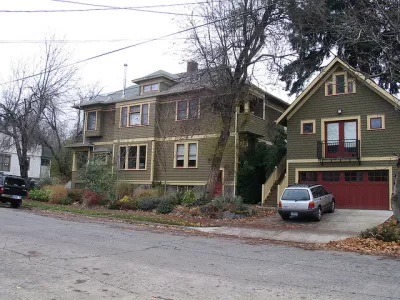
"The Portland City Council has moved aggressively to boost construction of more 'granny flats' or accessory dwelling units, by permanently eliminating costly development fees for those who build them," reports Steve Law.
The fee waiver has been in place since 2010, but the City Council vote makes the waiver permanent. The waivers are part of an incentive system that has spurred the growth of accessory dwelling units (ADUs) from 50 new units a year to 500, according to Law.
Law notes that the City Council set up the fee waiver to address a growing backlash against ADUs as some homeowners convert their ADUs into short-term rental unit. "The resolution adopted by the council…requires ADU builders to attest that they won't rent the units as short-term rentals for 10 years. If homeowners do rent them out via Airbnb or similar platforms during the ensuing decade, the SDC fees must be paid, along with a 50 percent penalty."
Read the full story: City council agrees to end costly development fees for accessory dwelling units

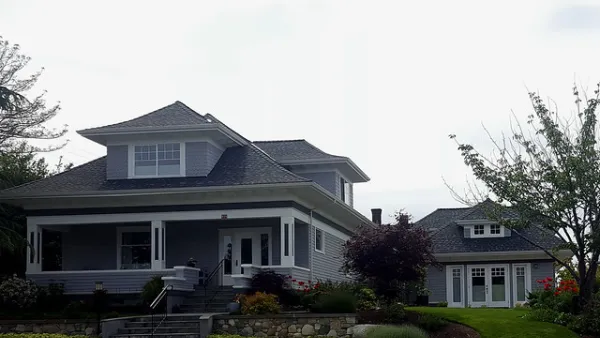
How Cities Can Support ADU Production
Although state-level laws are making it easier for homeowners to build accessory dwelling units, high impact and development fees remain a major barrier for many prospective ADU builders.
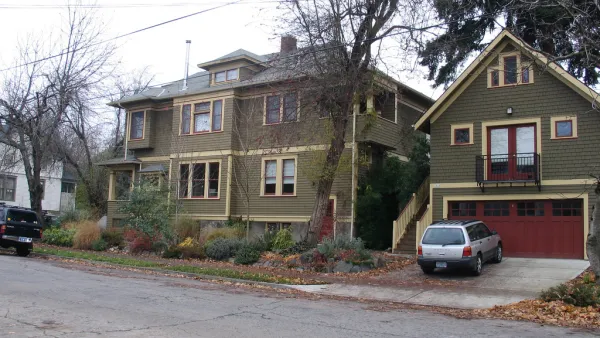
Op-Ed: Seattle Merely 'Inching Forward' on ADUs
They're a good start. But compared to similar policies in cities like Portland and Vancouver, Seattle's new policies around accessory dwelling units may be lackluster.
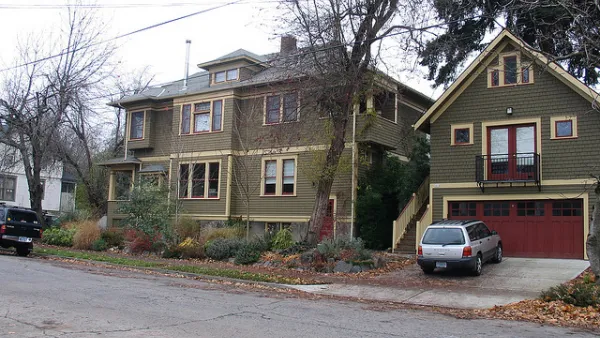
A Portland-Brand Building Boom: Accessory Dwelling Units
It's possible that construction permits for accessory dwelling units, also known as granny flats or mother-in-law units, could surpass permits for regular homes.

Planetizen Federal Action Tracker
A weekly monitor of how Trump’s orders and actions are impacting planners and planning in America.

California plans to bury El Niño’s downpour
If the state plays its cards right, it may be able to store a billion acre-feet of El Niño’s water in aquifers.

Chicago breaks ground on $3 billion megadevelopment
The new neighborhood, titled Foundry Park, will one day host 3,700 residences.

California High-Speed Rail Authority CEO resigns after $600,000 scandal
Under Ian Choudri, the authority used taxpayer dollars to fund first class flights and trips to nightclubs.

Want to study the Missouri River? Soon, you may need unanimous approval from 10 states
Legislation would require 10 governors’ permission to study or build projects moving water outside the basin.

Desperate measures: Advocates weigh draining Lake Powell to fill Colorado River
Draining the reservoir could reduce evaporation losses by a couple hundred thousand acre-feet.

FREE Course: Walkable City 1: Why Walkability?
After describing his path towards focusing on walkability as the essence of good planning, Jeff Speck marches through his five principal reasons for making more walkable places.
Reinventing Malls: Planning Alchemy—Turning Gray Fields Into Gold
The course focuses on the opportunities and imperatives that shape reinvention of mall sites.

City of Rosemead
Rutgers University, Edward J. Bloustein School of Planning and Public Policy
One Hundred Miles
Hunter College, City University of New York (CUNY)
The Architects Foundation
University of Cincinnati Online
City of Cambridge
Montrose County
The Pocatello Development Authority