Last year's tax reform bill seriously curtailed the mortgage interest deduction, despite its reputation for untouchability. Perhaps lawmakers should get rid of it entirely.


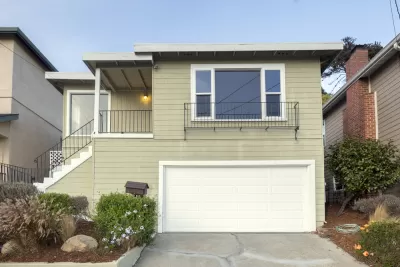
In the Tax Cuts and Jobs Act of 2017, Republican lawmakers substantially reduced the mortgage interest deduction. Jordan Weissmann writes, "The benefit for homeowners was once considered a politically untouchable upper-middle-class entitlement, but the GOP aggressively curtailed it in order to pay for cuts elsewhere in the tax code."
The change is predicted to more than halve the deduction's effects. Weissmann cites a recent report from Congress’s Joint Committee on Taxation. "The report predicts that just 13.8 million households will subtract mortgage interest from their 2018 returns, down from 32.3 million in 2017. The total cost of the deduction will fall from $59.9 billion to $25 billion—a drop of about 58 percent."
While fewer homeowners will take the deduction, its benefits will be skewed toward the well-off to an even greater degree. "The MID has long been criticized for being a large giveaway to well-off blue staters with expensive homes. Going forward, it will be a smaller giveaway but an even more regressive one."
Weissmann argues that given the chance, Democratic lawmakers could probably kill off the deduction with few adverse effects, especially given a robust housing market.
FULL STORY: Republicans Gutted the Mortgage Interest Deduction. Democrats Should Finish It Off.


Home Ownership Subsidy Takes a $250,000 Hit in Final Version of Tax Bill
The current mortgage interest deduction is $1 million. The House version of the tax bill called for a $500,000 cap while the Senate left it untouched. They split the difference and capped it at $750,000. Congress is expected to pass H.R. 1 this week

California Spends $6.5 Billion on Homeowner Subsidies, 15 Times Less on Renters
A new report from the California Housing Partnership "revealed a wide gap between state support for homeowners and renters."

Tax Reform and the Housing Market
Curbed analysis of how local and regional housing markets will react to changes to the country's tax code.

Planetizen Federal Action Tracker
A weekly monitor of how Trump’s orders and actions are impacting planners and planning in America.

The state-sanctioned urbicide of Austin
People don’t kill cities. Freeways do.

US to reduce Colorado River water deliveries to Mexico
A new Colorado Treaty amendment reduces Mexico’s Colorado River water allocation by 250,000 acre feet.

5 New England states march closer to 800 megawatt wind energy project
Securing federal approval for the project may be complicated under the Trump administration, which has historically been hostile towards domestic wind power.

Baltimore to break ground on $50 million Transit Priority Project
The project will bring faster bus trips, safer streets and better bike connections to Baltimore.

Airbnb launches $250 million 'last-dollar financing' housing accelerator, makes first investment in Austin
The company will put $6.4 million towards affordable housing development in Texas’ capital.

FREE Course: Walkable City 1: Why Walkability?
After describing his path towards focusing on walkability as the essence of good planning, Jeff Speck marches through his five principal reasons for making more walkable places.
Reinventing Malls: Planning Alchemy—Turning Gray Fields Into Gold
The course focuses on the opportunities and imperatives that shape reinvention of mall sites.

Eagle County Government
Harvard University Graduate School of Design
Nashville Planning Department
The Architects Foundation
University of Cincinnati Online
The Pocatello Development Authority
The Urban Renewal Agency of the City of Pocatello
Journal of the American Planning Association