The Miami suburb of Pinecrest, Florida would benefit greatly from a Bus Rapid Transit line on U.S. 1, argues City Councilmember James McDonald


Pinecrest City Councilmember James McDonald thinks a Bus Rapid Transit (BRT) system running down Highway 1 would be a great addition to the city. "Each day, our local drivers spend hours of lost time, burn thousands of dollars in wasted gas, and generate significant unnecessary pollution just by sitting in traffic, waiting," McDonald writes for Cities Speak. He reasons that a BRT could cut that congestion.
Experts don't always agree with the notion that public transit cuts traffic, reasoning that if cars were pulled off the road as riders got on buses the freed up space would eventually induce demand. But while transit doesn't necessarily reduce traffic it can create more equitable transport, cut emissions, and bring more economic activity to an area.
What's more, McDonald argues the process could likely be financed by a federal TIGER grant. "Congress just increased funding to the Transportation Investment Generating Economic Recovery (TIGER) program — and similar programs, like Transportation Alternatives, the Surface Transportation Block Grant Program, New Starts, and the Smart City Challenge, have all had some impressive results for communities," McDonald says.
FULL STORY: How Bus Rapid Transit Could Fight Congestion in Pinecrest, Florida


Miami to Launch America's First Fully Electric Bus Rapid Transit Line
The project, led by Miami-Dade County, will link Dadeland South to Florida City via a 20-mile dedicated lane.
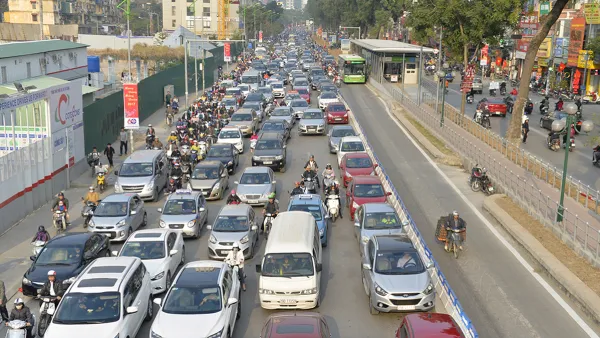
High Hopes and Stiff Resistance for Hanoi's New Bus Rapid Transit
Vietnam's capital is internationally known for pollution and traffic, the government is trying to take on both with a rapid transit bus system, but many remain skeptical.
Miami HOT Lanes Getting Drivers Out Of Cars Into Buses
Opponents of High-Occupancy-Toll lanes have long claimed that these lanes, often converted from High Occupancy Vehicle lanes like Miami's I-95, would encourage solo-drivers, especially wealthier ones, to pay to use the express lanes.

Planetizen Federal Action Tracker
A weekly monitor of how Trump’s orders and actions are impacting planners and planning in America.

The state-sanctioned urbicide of Austin
People don’t kill cities. Freeways do.

US to reduce Colorado River water deliveries to Mexico
A new Colorado Treaty amendment reduces Mexico’s Colorado River water allocation by 250,000 acre feet.

5 New England states march closer to 800 megawatt wind energy project
Securing federal approval for the project may be complicated under the Trump administration, which has historically been hostile towards domestic wind power.

Baltimore to break ground on $50 million Transit Priority Project
The project will bring faster bus trips, safer streets and better bike connections to Baltimore.

Airbnb launches $250 million 'last-dollar financing' housing accelerator, makes first investment in Austin
The company will put $6.4 million towards affordable housing development in Texas’ capital.

FREE Course: Walkable City 1: Why Walkability?
After describing his path towards focusing on walkability as the essence of good planning, Jeff Speck marches through his five principal reasons for making more walkable places.
Reinventing Malls: Planning Alchemy—Turning Gray Fields Into Gold
The course focuses on the opportunities and imperatives that shape reinvention of mall sites.

Eagle County Government
Harvard University Graduate School of Design
Nashville Planning Department
The Architects Foundation
University of Cincinnati Online
The Pocatello Development Authority
The Urban Renewal Agency of the City of Pocatello
Journal of the American Planning Association