The project, led by Miami-Dade County, will link Dadeland South to Florida City via a 20-mile dedicated lane.


Miami-Dade County is launching a new, all-electric bus rapid transit line, reports Sonia Osorio in the Miami Herald.
The line, which was funded through $100 million from Miami-Dade County, the Florida Department of Transportation (FDOT), and the Federal Transit Administration (FTA) will run along a dedicated 20-mile lane along the U.S. 1 corridor starting October 27. “The new service includes 14 exclusive BRT stations offering climate-controlled waiting areas for greater comfort and protection from the elements, a modern design with ample shade, bicycle access and parking, water stations, free Wi-Fi and mobile phone charging stations.”
According to Miami-Dade Department of Transportation and Public Works (DTPW) Director and CEO Stacy L. Miller, the service is a “modern transit experience” that features “Level boarding, clear wayfinding, well-lit platforms, and traffic signal priority.”
Read the full story: ‘A new era.’ Miami-Dade to have the first electric rapid bus system in the U.S.

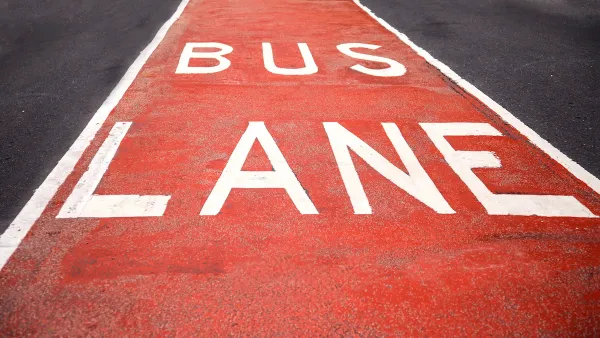
Why BRT Can Benefit Cities More Than Rail
Bus rapid transit lines offer a less expensive, quicker-build alternative to rail that can bring other infrastructure improvements with it.
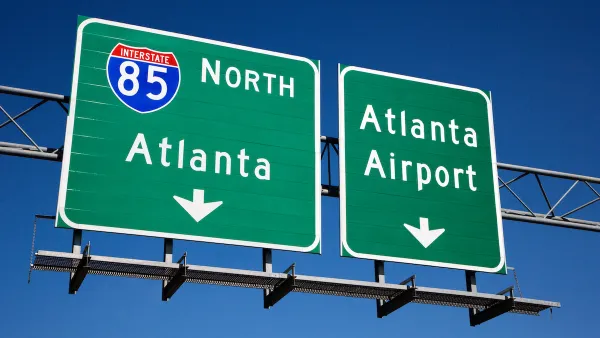
MARTA To Add BRT Connection to Airport
A new rapid bus line in Atlanta will link residents to one of the nation’s busiest airports.
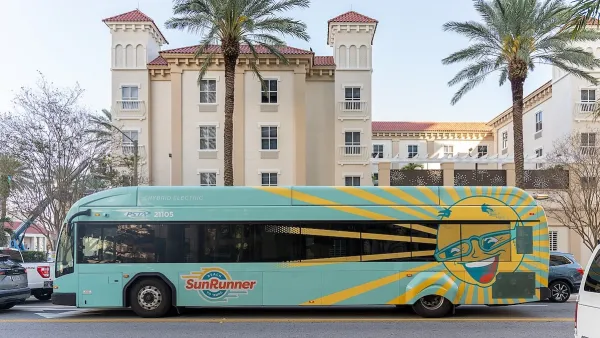
Florida DOT Orders Removal of St. Pete Bus Lane
The state says a popular BRT line has increased crashes and traffic on a state-owned portion of its corridor, prompting it to call for its reversal.

Planetizen Federal Action Tracker
A weekly monitor of how Trump’s orders and actions are impacting planners and planning in America.

California plans to bury El Niño’s downpour
If the state plays its cards right, it may be able to store a billion acre-feet of El Niño’s water in aquifers.

Chicago breaks ground on $3 billion megadevelopment
The new neighborhood, titled Foundry Park, will one day host 3,700 residences.

Satanic Place Names
From streams and lakes to valleys and canyons, I mapped more than 1,000 places named after the Devil.

California High-Speed Rail Authority CEO resigns after $600,000 scandal
Under Ian Choudri, the authority used taxpayer dollars to fund first class flights and trips to nightclubs.

Want to study the Missouri River? Soon, you may need unanimous approval from 10 states
Legislation would require 10 governors’ permission to study or build projects moving water outside the basin.

FREE Course: Walkable City 1: Why Walkability?
After describing his path towards focusing on walkability as the essence of good planning, Jeff Speck marches through his five principal reasons for making more walkable places.
Reinventing Malls: Planning Alchemy—Turning Gray Fields Into Gold
The course focuses on the opportunities and imperatives that shape reinvention of mall sites.

City of Rosemead
Rutgers University, Edward J. Bloustein School of Planning and Public Policy
One Hundred Miles
Hunter College, City University of New York (CUNY)
The Architects Foundation
University of Cincinnati Online
City of Cambridge
Montrose County
The Pocatello Development Authority