The state says a popular BRT line has increased crashes and traffic on a state-owned portion of its corridor, prompting it to call for its reversal.


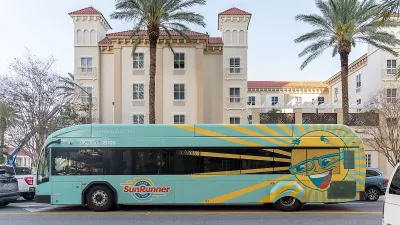
A South Florida bus rapid transit system is poised to lose its dedicated lanes after a state study found that a segment along a state road in St. Petersburg has seen a 50 percent increase in crashes and increased congestion in general purpose lanes.
According to an article by Janelle Irwin Taylor in Florida Politics, “The study recommended the dedicated lane be turned back into a general purpose and right-turn lane to improve traffic flow, while adding transit signal priority to mitigate any resulting impact to bus efficiency.”
According to Taylor, the move could jeopardize $22 million in federal grant funding that was awarded to PSTA on the condition that the route would use BRT. “[F]or now, the SunRunner will operate alongside other vehicles when traveling along Pasadena Boulevard, with dedicated lanes remaining along the bulk of the route on First Avenues North and South.”
An article by WTVT Web Staff for Fox 13 Tampa Bay includes data from a Forward Pinellas study that showed a 40 percent reduction in crashes along the SunRunner corridor. That study also claims that “Re-timing of traffic signals along the corridor has saved drivers up to six minutes during morning rush hour and three minutes in afternoon traffic.”
FULL STORY: SunRunner to lose dedicated lane along part of Pasadena Boulevard after state intervention


Experts Reject Florida Study That Killed St. Pete Bus Lane as ‘Incomplete,’ ‘Unfair’
A transit activist has filed a suit against FDOT, which used a a one-page study to justify removing a dedicated bus lane.
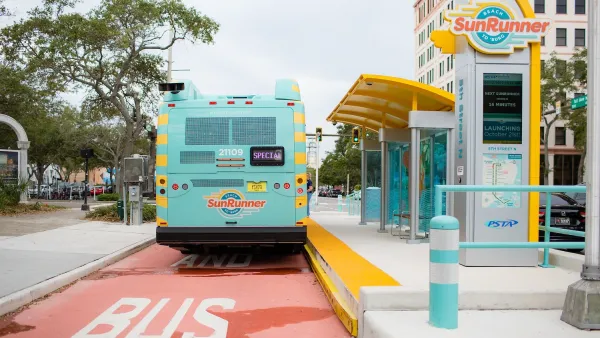
Lawsuit Claims Florida Bus Lane Removal was Illegal
The state cites an increase in crashes and congestion as reasons for eliminating a dedicated bus lane on the SunRunner BRT line, but city data tells a different story.

Van Ness BRT Speeds Travel by 36%, Earns Silver Designation
The San Francisco rapid bus line is making transit on the corridor more reliable and reducing traffic crashes and congestion.

Planetizen Federal Action Tracker
A weekly monitor of how Trump’s orders and actions are impacting planners and planning in America.

The state-sanctioned urbicide of Austin
People don’t kill cities. Freeways do.

US to reduce Colorado River water deliveries to Mexico
A new Colorado Treaty amendment reduces Mexico’s Colorado River water allocation by 250,000 acre feet.

Baltimore to break ground on $50 million Transit Priority Project
The project will bring faster bus trips, safer streets and better bike connections to Baltimore.

Airbnb launches $250 million 'last-dollar financing' housing accelerator, makes first investment in Austin
The company will put $6.4 million towards affordable housing development in Texas’ capital.

Guerilla urbanists are building DIY bus stop benches in Chicago
A before-and-after of one of the bus stops with a new bench. The new benches are not officially sanctioned or permitted, but the residents who placed them hope they will be the start of a network of DIY benches across the city.

FREE Course: Walkable City 1: Why Walkability?
After describing his path towards focusing on walkability as the essence of good planning, Jeff Speck marches through his five principal reasons for making more walkable places.
Reinventing Malls: Planning Alchemy—Turning Gray Fields Into Gold
The course focuses on the opportunities and imperatives that shape reinvention of mall sites.


Eagle County Government
Harvard University Graduate School of Design
Nashville Planning Department
The Architects Foundation
University of Cincinnati Online
The Pocatello Development Authority
The Urban Renewal Agency of the City of Pocatello
Journal of the American Planning Association