A transit activist has filed a suit against FDOT, which used a a one-page study to justify removing a dedicated bus lane.


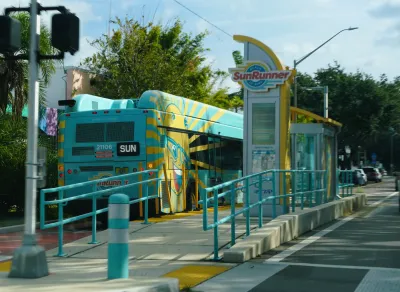
Three experts consulted by the Tampa Bay Times concluded that a one-page study used by the Florida Department of Transportation to justify the removal of a dedicated bus lane in St. Petersburg, reports Shauna Muckle in the Tampa Bay Times.
The three experts said the study, which cited a 40 percent increase in crashes on Pasadena Avenue between the period of 2020-2021 and 2023-2024, was “incomplete” and “not fair.” According to the article, the state’s data does not indicate whether buses were involved in crashes, as well as other indicators and contributing factors. Additionally, the 2020-2021 data from the height of the pandemic is not indicative of typical traffic.
Transit activist Garett Marple of Activate St. Pete has filed a formal complaint, arguing that FDOT broke state law by using such a limited study and that local governments are required to conduct traffic studies before implementing similar changes to bus lanes. However, the case is not expected to reverse FDOT’s decision, and could ultimately only result in fines.
FULL STORY: FDOT study used to scrap SunRunner lane ‘incomplete,’ ‘unfair’, experts say

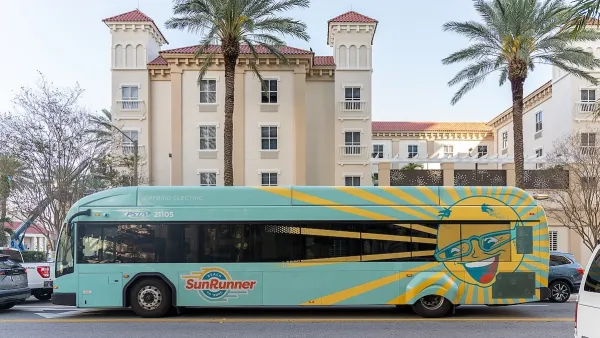
Florida DOT Orders Removal of St. Pete Bus Lane
The state says a popular BRT line has increased crashes and traffic on a state-owned portion of its corridor, prompting it to call for its reversal.

State Bill Could Kill Indy BRT Line
A law proposed in the Indiana state legislature would ban dedicated bus lanes and force IndyGo to cancel a planned bus rapid transit line to the city's airport.
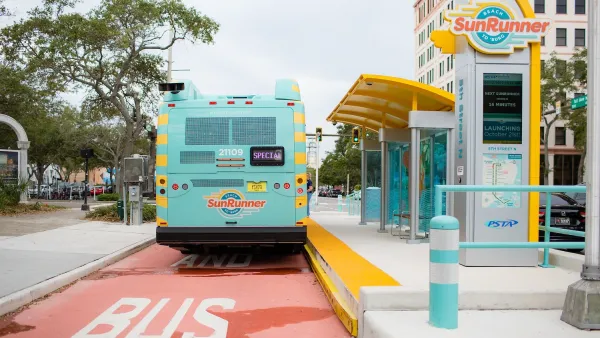
Lawsuit Claims Florida Bus Lane Removal was Illegal
The state cites an increase in crashes and congestion as reasons for eliminating a dedicated bus lane on the SunRunner BRT line, but city data tells a different story.

The state-sanctioned urbicide of Austin
People don’t kill cities. Freeways do.

US to reduce Colorado River water deliveries to Mexico
A new Colorado Treaty amendment reduces Mexico’s Colorado River water allocation by 250,000 acre feet.

New Jersey’s second-largest city bans standalone data centers
Jersey City will continue to allow co-location facilities, such as those meant for research institutions that store their own data.

Amtrak not solely to blame for New Jersey commuter rail's unreliability, report finds
A new study from the Garden State Initiative found that NJ Transit’s budget grew 20% across a 4 year period, but reliability declined significantly over the same period.

EPA erases limits on planet-warming pollution from power plants
Under Monday’s plan, power plants would still have some limits on how much mercury, arsenic and other contaminants they can emit.

Phoenix announces new on-demand transit service, more frequent RAPID buses
Both new services will launch in October, and are part of Phoenix's Project Effective Access Solutions for Easing Congestion.

FREE Course: Walkable City 1: Why Walkability?
After describing his path towards focusing on walkability as the essence of good planning, Jeff Speck marches through his five principal reasons for making more walkable places.
Reinventing Malls: Planning Alchemy—Turning Gray Fields Into Gold
The course focuses on the opportunities and imperatives that shape reinvention of mall sites.

Eagle County Government
Harvard University Graduate School of Design
Nashville Planning Department
The Architects Foundation
University of Cincinnati Online
The Pocatello Development Authority
The Urban Renewal Agency of the City of Pocatello
Journal of the American Planning Association