The 19 is one of the city's most popular bus routes, but a new plan will reduce wait times and speed up buses with pre-pay, signal priority, bump outs, and other improvements. Also, the 19 bus will become the C Line.


The Twin Cities are in the process of adding bus rapid transit, starting with the A Line in St. Paul, which opened in June 2016 and has since outperformed ridership projections. "Now comes BRT No. 2 — its construction, at least. A ceremonial groundbreaking Tuesday will kick off building of the C Line, which, once completed, will begin at the Brooklyn Center Transit Center and travel down Brooklyn Boulevard, Penn Avenue and Olson Memorial Highway before terminating at Hennepin Healthcare (formerly HCMC)," Peter Callaghan writes. The C Line will increase frequency and speed up trips with suite of improvements.
"The C Line has a $37 million budget and includes the construction of stations and purchase of new buses, including eight electric buses, purchased with a federal grant," Callaghan writes. But, more buses are just part of the plan—these buses should also move more quickly, with bump outs buses won't have to pull in and out of traffic. "Roth said the agency estimates that travel times on the C Line will be 20-25 percent faster than on the current bus line. Faster boarding helps. BRT buses permit exiting and boarding from all doors because tickets are purchased at the station, similar to light rail ticketing," Callaghan reports.
Besides spending less time at stops, buses should spend less time at red lights. "And the buses are equipped with automated signal priority systems that communicate with traffic light controls and might either keep a green light shining longer or get a red to change sooner than it might otherwise," Callaghan reports.
FULL STORY: 'It's a big deal': C Line to bring bus rapid transit to popular north Minneapolis route


Miami to Launch America's First Fully Electric Bus Rapid Transit Line
The project, led by Miami-Dade County, will link Dadeland South to Florida City via a 20-mile dedicated lane.
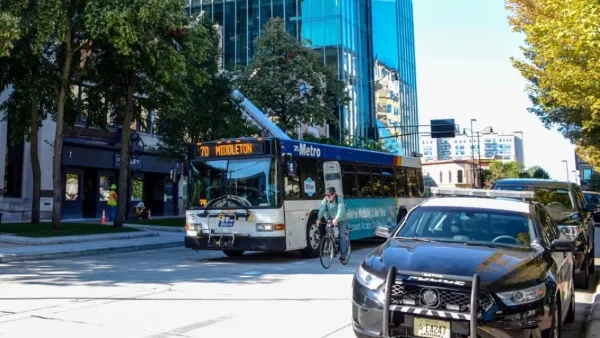
Madison BRT Line to Open Next Year
The city’s bus rapid transit service will be the second BRT system in Wisconsin.
Denver Leaders Take BRT Notes in Minneapolis
More cities are leaning into bus rapid transit, a faster, cheaper alternative to light rail-based rapid transit systems.

Planetizen Federal Action Tracker
A weekly monitor of how Trump’s orders and actions are impacting planners and planning in America.

The state-sanctioned urbicide of Austin
People don’t kill cities. Freeways do.

US to reduce Colorado River water deliveries to Mexico
A new Colorado Treaty amendment reduces Mexico’s Colorado River water allocation by 250,000 acre feet.

5 New England states march closer to 800 megawatt wind energy project
Securing federal approval for the project may be complicated under the Trump administration, which has historically been hostile towards domestic wind power.

Baltimore to break ground on $50 million Transit Priority Project
The project will bring faster bus trips, safer streets and better bike connections to Baltimore.

Airbnb launches $250 million 'last-dollar financing' housing accelerator, makes first investment in Austin
The company will put $6.4 million towards affordable housing development in Texas’ capital.

FREE Course: Walkable City 1: Why Walkability?
After describing his path towards focusing on walkability as the essence of good planning, Jeff Speck marches through his five principal reasons for making more walkable places.
Reinventing Malls: Planning Alchemy—Turning Gray Fields Into Gold
The course focuses on the opportunities and imperatives that shape reinvention of mall sites.

Eagle County Government
Harvard University Graduate School of Design
Nashville Planning Department
The Architects Foundation
University of Cincinnati Online
The Pocatello Development Authority
The Urban Renewal Agency of the City of Pocatello
Journal of the American Planning Association