The borough of Emerson, New Jersey is testing the limits of eminent domain.


The NorthJersey editorial board opposes a recent use of eminent domain in the borough of Emerson, where the Borough Council recently voted "to seize four properties in the downtown that will enable a for-profit developer to build between 22 and 29 low- to moderate-income apartments … and retail stores, more than 100 additional market-value apartments and a parking garage, if the owners don’t agree to voluntarily sell to the developer."
The editorial rejects the council's claims that the use of eminent domain is justified by the need for affordable housing. The public good that usually justifies the use of eminent domain, it argues, "is hard to see." The city believes it is acting with the blessing of precedents set by New Jersey's Local Redevelopment and Housing Law and the Fair Housing Act. "The attorney for the owners of the targeted land says the Local Redevelopment and Housing Law prohibits a municipality from taking property while the “blight” designation is being legally challenged," according to the editorial.
Read the full story: Editorial: In Emerson: Eminent domain or land grab?
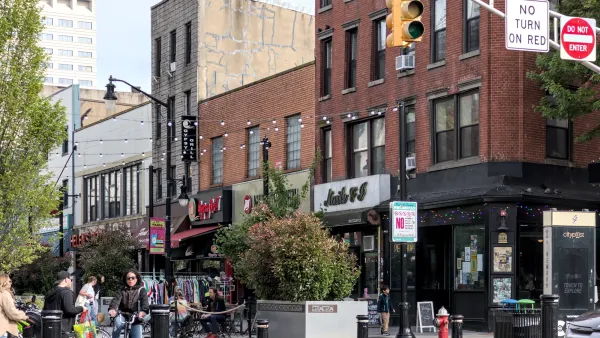
Jersey City could build 700 homes on city-owned parking lots
If approved, a redevelopment proposal would build hundreds of new homes on a pair of city parking lots.
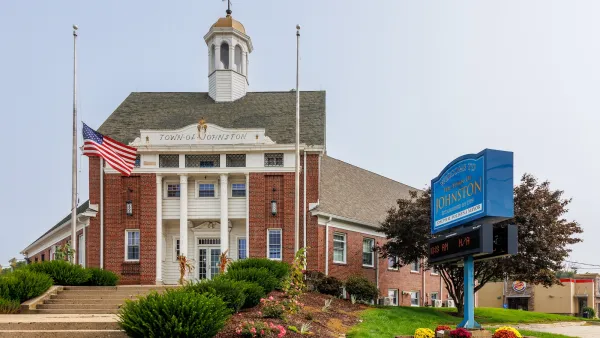
Judge says Rhode Island town can't seize private lot to block affordable housing
The town of Johnston moved to seize a lot for municipal buildings after its owners submitted a plan for a 254-unit housing development.
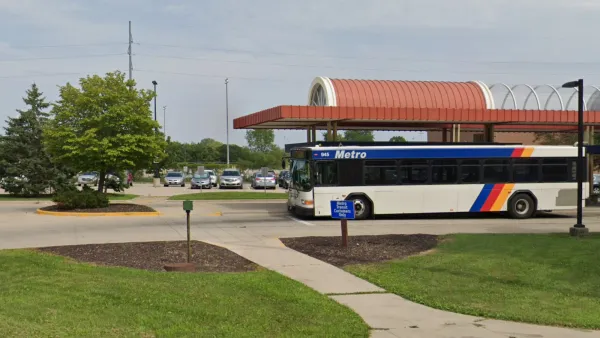
Madison approves hundreds of affordable apartments as deadline for federal funding looms
A recently approved project will bring 163 affordable units to the north side.

Planetizen Federal Action Tracker
A weekly monitor of how Trump’s orders and actions are impacting planners and planning in America.

California plans to bury El Niño’s downpour
If the state plays its cards right, it may be able to store a billion acre-feet of El Niño’s water in aquifers.

Desperate measures: Advocates weigh draining Lake Powell to fill Colorado River
Draining the reservoir could reduce evaporation losses by a couple hundred thousand acre-feet.

Mamdani’s pied-à-terre tax survives legal challenge
A panel of judges found that the plaintiffs failed to demonstrate injury as a result of New York City's implementation of the tax.

Eastern Nebraska is running out of electricity
Data centers and electrification are straining eastern Nebraska’s grid, throttling economic development.

Seattle passes record-breaking transit services expansion
Proposition 1 will double the city’s transit tax to add 95,000 more bus trips and preserve 180,000 bus trips annually.

FREE Course: Walkable City 1: Why Walkability?
After describing his path towards focusing on walkability as the essence of good planning, Jeff Speck marches through his five principal reasons for making more walkable places.
Reinventing Malls: Planning Alchemy—Turning Gray Fields Into Gold
The course focuses on the opportunities and imperatives that shape reinvention of mall sites.

City of Rosemead
Rutgers University, Edward J. Bloustein School of Planning and Public Policy
One Hundred Miles
University of Michigan School for Environment and Sustainability (SEAS)
Hunter College, City University of New York (CUNY)
The Architects Foundation
City of Cambridge
Montrose County
The Pocatello Development Authority