Urbanist and advocate Kristen Jeffers decries the thinly veiled racism underlying complaints about D.C.'s dockless bikeshare program.


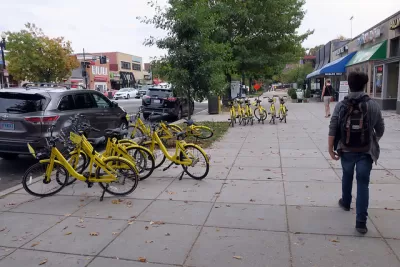
Bikelash, in general, is by now a familiar phenomenon to mobility advocates. And since D.C. launched a dockless bikeshare pilot in September 2017, the criticism has been rolling in. But Kristen Jeffers, founder and editor-in-chief of The Black Urbanist, warns that these complaints are quickly veering racist.
On public forums like Twitter and neighborhood listservs, the frequently expressed assumption that dockless bikes are stolen seems to be fueled primarily by the perception that they are ridden largely by Black teenagers.
In one case Jeffers documents, police intervened after a Georgetown resident urged neighbors to report cyclists—wrongly termed "assailants"—for "acting suspicious."
In another, an Advisory Neighborhood Commissioner warned Petworth residents that dockless bikes encourage "criminal elements" due to the "escape from watchful eyes and law enforcement" they supposedly provide.
D.C.'s demonstration project—and dockless bikeshare as a whole—are subject to real and important critiques, Jeffers points out. But "what's not acceptable is the continued demonization of the companies that have tapped into a need and the people — especially the young black male people — who are taking advantage of this new technology and making it their own."
FULL STORY: It’s ok to critique dockless bikeshare. It’s not ok to be bigoted.

Anti-Racist Reforms for the Urban Planning Status Quo
An urban planner in Vancouver defines the roots of racism in city building, and calls on urban planners to be more effective anti-racist allies.
Walking While Black: The Racial Disparity in Pedestrian Fatalities
Pedestrians of color are more likely to be killed in traffic crashes.

Chicago bike lane projects spark backlash from businesses, gentrification fears
A battle is brewing over Chicago's street space.

Planetizen Federal Action Tracker
A weekly monitor of how Trump’s orders and actions are impacting planners and planning in America.

The state-sanctioned urbicide of Austin
People don’t kill cities. Freeways do.

US to reduce Colorado River water deliveries to Mexico
A new Colorado Treaty amendment reduces Mexico’s Colorado River water allocation by 250,000 acre feet.

5 New England states march closer to 800 megawatt wind energy project
Securing federal approval for the project may be complicated under the Trump administration, which has historically been hostile towards domestic wind power.

Baltimore to break ground on $50 million Transit Priority Project
The project will bring faster bus trips, safer streets and better bike connections to Baltimore.

Airbnb launches $250 million 'last-dollar financing' housing accelerator, makes first investment in Austin
The company will put $6.4 million towards affordable housing development in Texas’ capital.

FREE Course: Walkable City 1: Why Walkability?
After describing his path towards focusing on walkability as the essence of good planning, Jeff Speck marches through his five principal reasons for making more walkable places.
Reinventing Malls: Planning Alchemy—Turning Gray Fields Into Gold
The course focuses on the opportunities and imperatives that shape reinvention of mall sites.

Eagle County Government
Harvard University Graduate School of Design
Nashville Planning Department
The Architects Foundation
University of Cincinnati Online
The Pocatello Development Authority
The Urban Renewal Agency of the City of Pocatello
Journal of the American Planning Association