Desalination is often suggested as a potential panacea for California's ongoing struggles with drought. The catch in the announcement of $34.4 million in state funding for desalination projects shows why desalination is not there yet.


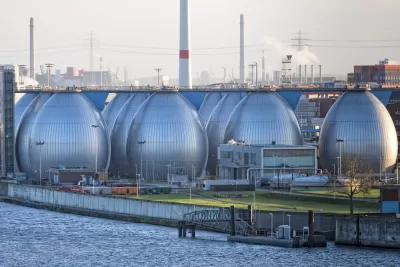
"As part of efforts to boost California’s water supply in the wake of its historic, five-year drought, state water officials have decided to award $34.4 million in grants to eight proposed desalination projects across the state," reports Paul Rogers.
An important characteristic of the vast majority of these projects: the facilities are for "brackish desalination, i.e., the "process in which salty water from a river, bay or underground aquifer is filtered for drinking, rather than taking ocean water, which is often up to three times saltier and more expensive to purify."
The article also details the current capabilities of desalination facilities in California, where five active ocean desalination plants produce less than one percent of the state's drinking water. "About a dozen other ocean desalination projects are still pending, or in various states of environmental studies, design or funding," according to Rogers.
Read the full story: California water: Desalination projects move forward with new state funding

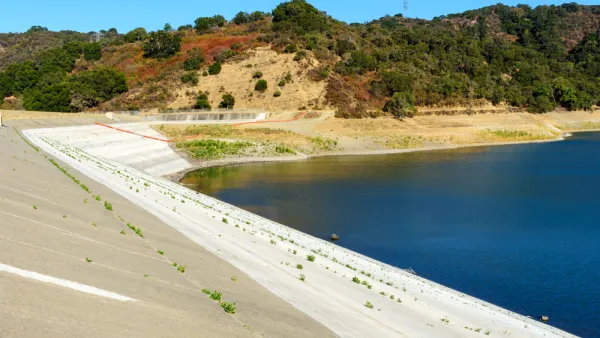
Desalination and Water Recycling Needed to Increase Bay Area Water Supply
In an ongoing drought exacerbated by climate change, the Bay Area needs to look toward two technologies to secure adequate drinking water supply: desalination and wastewater recycling, according to an analysis by the San Francisco Examiner.
California Ballot Measure Could Streamline Permitting for Water Projects
A coalition of farmers and desalination supporters is collecting signatures for a California ballot measure that would fast-track construction processes for water storage projects.
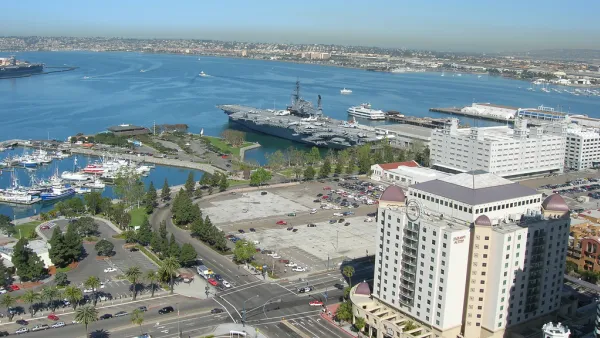
After the Drought, San Diego Faces Lead and Sewage
In 2017, the Southern California city no longer had to be concerned about water quantity, but was plagued by issues of water quality.

Planetizen Federal Action Tracker
A weekly monitor of how Trump’s orders and actions are impacting planners and planning in America.

California plans to bury El Niño’s downpour
If the state plays its cards right, it may be able to store a billion acre-feet of El Niño’s water in aquifers.

Chicago breaks ground on $3 billion megadevelopment
The new neighborhood, titled Foundry Park, will one day host 3,700 residences.

California High-Speed Rail Authority CEO resigns after $600,000 scandal
Under Ian Choudri, the authority used taxpayer dollars to fund first class flights and trips to nightclubs.

Want to study the Missouri River? Soon, you may need unanimous approval from 10 states
Legislation would require 10 governors’ permission to study or build projects moving water outside the basin.

Desperate measures: Advocates weigh draining Lake Powell to fill Colorado River
Draining the reservoir could reduce evaporation losses by a couple hundred thousand acre-feet.

FREE Course: Walkable City 1: Why Walkability?
After describing his path towards focusing on walkability as the essence of good planning, Jeff Speck marches through his five principal reasons for making more walkable places.
Reinventing Malls: Planning Alchemy—Turning Gray Fields Into Gold
The course focuses on the opportunities and imperatives that shape reinvention of mall sites.

City of Rosemead
Rutgers University, Edward J. Bloustein School of Planning and Public Policy
One Hundred Miles
Hunter College, City University of New York (CUNY)
The Architects Foundation
University of Cincinnati Online
City of Cambridge
Montrose County
The Pocatello Development Authority