By 2030, the world's consumption of oil will drop due to increasing electric vehicle sales, according to a report by Bank of America. Other researchers disagree on the timeframe. The report is useful for highlighting the term, "peak oil demand."


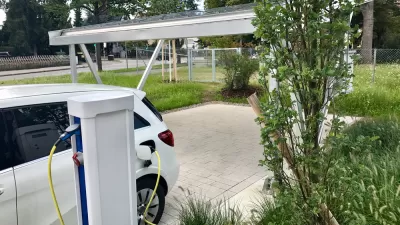
Forty percent of global light duty vehicle sales will be electric vehicles by 2030, causing "global oil demand to peak by 2030,” according to a Bank of America Merrill Lynch analysis emailed to Bloomberg News.
"Despite strong global oil consumption helping to push crude prices higher, the rise of electric vehicles [EVs] is seen as one of the biggest long-term threats to demand," reports Alex Longley on the B of A analysis on Jan. 22. This graph tracking projected EV sales and global oil demand forecast shows the latter peaking around 2030.
Most oil companies see demand peaking around 2040, while Royal Dutch Shell Plc has said it expects to see demand peak in the early 2030s.
Consultancy Wood Mackenzie said late last year that it expects oil demand growth to crawl, but not peak, by 2035, forcing major energy companies to shift from oil to natural gas and chemicals.
"About 60 percent of oil is used in transportation, which is also where the biggest technological changes are emerging," report Jess Shankleman and Hayley Warren for Bloomberg Businessweek on Dec. 21, 2017. They delve deeper into the different "peak oil demand" forecasts and also look back at the old, now discredited predictions of peak oil supply.
Wall Street Journal reporters Lynn Cook and Elena Cherney reported on "peak oil demand" on May 21, 2017.
There's a growing consensus that the end of ever-rising consumption is in sight. The big question that many oil companies are debating: When?
A related post last July on an analysis by Bloomberg New Energy Finance focused on the outlook for electric vehicles predicts that EVs will outsell passenger vehicles with internal combustion engines by 2040 due to a plunge in battery prices and improvement in battery technology. The posts indicates that oil companies do not see EVs as that big a threat. That reaction may be changing now.
Hat tip to Nan Hildreth.
FULL STORY: BofA Sees Oil Demand Peaking by 2030 as Electric Vehicles Boom

Climate Concerns Largely Absent in Auto Showrooms
A consumer survey found that less than a third of respondents considered carbon emissions or the environment when they last purchased a motor vehicle, yet three-quarters of Americans consider climate change a major problem or crisis.
Are Reports Predicting a Future of Electric Vehicles Exaggerated?
David Yager, an oil industry consultant, writes that recent reports predicting electric vehicles will eventually outsell those with internal combustion engines are vastly exaggerated, notwithstanding national bans on future sales of such cars.
The Era of the Electric Vehicle is Approaching
A new report from Bloomberg New Energy Finance predicts that due to a plunge in battery prices and improvement in battery technology, electric vehicles will be cost-competitive with gasoline vehicles in eight years. By 2040, they will outsell them.

Planetizen Federal Action Tracker
A weekly monitor of how Trump’s orders and actions are impacting planners and planning in America.

The state-sanctioned urbicide of Austin
People don’t kill cities. Freeways do.

US to reduce Colorado River water deliveries to Mexico
A new Colorado Treaty amendment reduces Mexico’s Colorado River water allocation by 250,000 acre feet.

Mamdani overhauls NYC's Vision Zero plan with 100 new policy goals
The overhaul aims to reduce traffic deaths and make streets safer for pedestrians, cyclists and drivers through lower speed limits, new safety infrastructure and more.

Amtrak not solely to blame for New Jersey commuter rail's unreliability, report finds
A new study from the Garden State Initiative found that NJ Transit’s budget grew 20% across a 4 year period, but reliability declined significantly over the same period.

EPA erases limits on planet-warming pollution from power plants
Under Monday’s plan, power plants would still have some limits on how much mercury, arsenic and other contaminants they can emit.

FREE Course: Walkable City 1: Why Walkability?
After describing his path towards focusing on walkability as the essence of good planning, Jeff Speck marches through his five principal reasons for making more walkable places.
Reinventing Malls: Planning Alchemy—Turning Gray Fields Into Gold
The course focuses on the opportunities and imperatives that shape reinvention of mall sites.

Eagle County Government
Harvard University Graduate School of Design
Nashville Planning Department
The Architects Foundation
University of Cincinnati Online
The Pocatello Development Authority
The Urban Renewal Agency of the City of Pocatello
Journal of the American Planning Association