When home values rise, the state constitution requires cuts to residential tax rates that severely impact less-developed areas.


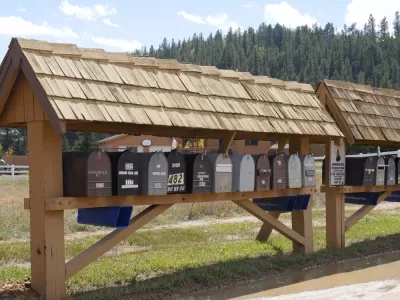
A new report shows that, once again, a collision of two tax mandates in the Colorado state constitution will further reduce the funding available to rural districts for schools, fire departments, and other services.
Brian Eason of the The Denver Post quotes one lawmaker who, after hearing the latest forecast commented, “Thank you for this very disturbing analysis.”
The first issue at hand is the 1982 Gallagher Amendment, which mandates that residential property taxes can comprise only 45 percent of statewide property tax revenue, with commercial and industrial property making up the remaining 45 percent. (In 1982, Colorado homeowners paid significantly more in property taxes than did businesses.)
The second is the 1992 Taxpayer Bill of Rights, which requires voter approval of any increase in property taxes.
As a result of Colorado’s rapid development over the last decades, residential property values soared, and in order to maintain the ratio determined by Gallagher, tax rates on those properties have fallen. (Meanwhile, the tax rate on commercial properties has remained the same.)
The most significant problem, at the moment, is that “The Gallagher cuts have disparate effects in different parts of the state.”
Because residential property values in areas like the Front Range have soared over the last decades, those areas are still seeing an increase in revenue, but in rural areas, where property values are rising at much slower rates, revenues are way down. (The Colorado Fiscal Institute produced a very helpful video that makes sense of the whole thing.)
The already pronounced “urban-rural divide” will only be exacerbated by the next round of statewide property tax cuts in 2019.

Ann Arbor millage tax has created over $27M for affordable housing
The 2020 property tax is expected to fund roughly 1,500 new affordable homes.
Richmond's new 'stadium district' will include hundreds of homes, offices, jobs
The city is planning for a neighborhood revival in the area around a new baseball stadium.
Report: Land Under US Highways Could Earn Over $5 Billion in Property Taxes Yearly
An analysis of 142 U.S. cities reveals the economic potential of land used for highways.

Planetizen Federal Action Tracker
A weekly monitor of how Trump’s orders and actions are impacting planners and planning in America.

The state-sanctioned urbicide of Austin
People don’t kill cities. Freeways do.

US to reduce Colorado River water deliveries to Mexico
A new Colorado Treaty amendment reduces Mexico’s Colorado River water allocation by 250,000 acre feet.

Mamdani overhauls NYC's Vision Zero plan with 100 new policy goals
The overhaul aims to reduce traffic deaths and make streets safer for pedestrians, cyclists and drivers through lower speed limits, new safety infrastructure and more.

Amtrak not solely to blame for New Jersey commuter rail's unreliability, report finds
A new study from the Garden State Initiative found that NJ Transit’s budget grew 20% across a 4 year period, but reliability declined significantly over the same period.

EPA erases limits on planet-warming pollution from power plants
Under Monday’s plan, power plants would still have some limits on how much mercury, arsenic and other contaminants they can emit.

FREE Course: Walkable City 1: Why Walkability?
After describing his path towards focusing on walkability as the essence of good planning, Jeff Speck marches through his five principal reasons for making more walkable places.
Reinventing Malls: Planning Alchemy—Turning Gray Fields Into Gold
The course focuses on the opportunities and imperatives that shape reinvention of mall sites.

Eagle County Government
Harvard University Graduate School of Design
Nashville Planning Department
The Architects Foundation
University of Cincinnati Online
The Pocatello Development Authority
The Urban Renewal Agency of the City of Pocatello
Journal of the American Planning Association