Creating a new version of the "haves" and the "have nots," Richard Florida distinguishes cities struggling against state-level anti-urban policies from cities that get more support from the state.



Richard Florida opens his latest article for CityLab by sharing a familiar refrain heard in blue cities located in red states: "The folks in our state government and state legislature are against us." According to Florida's take, the problem is worsening in the Trump era of U.S. politics, and "a growing number of cities and metro areas are also located in states which are actively undermining their interests."
To quantify the damage that anti-urban state policies can have on urban localities, Florida worked with his Martin Prosperity Institute (MPI) colleague, Patrick Adler, to build an infographic to separate the state-supported local urban areas, from the state-obstructed local urban areas. Following the chart, Florida lists some of the anti-urban policies that have earned states like Texas, Georgia, North Carolina, and Arizona their reputation.
"This split between states is becoming yet another factor in America’s deepening spatial inequality," writes Florida. "Over time, the relatively small group of cities and metros in pro-urban states are likely to develop even deeper advantages in attracting talent and building the knowledge economy."
FULL STORY: Anti-Urban States Aren't Just Hurting Their Cities

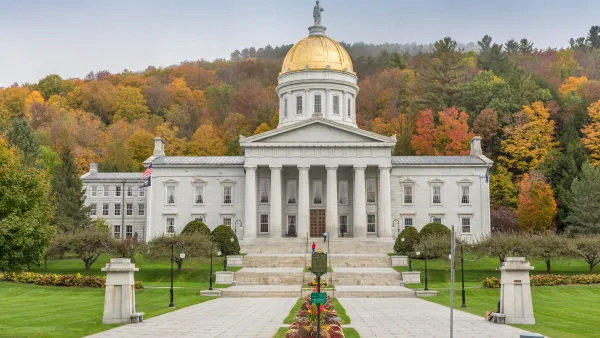
Vermont Next State in Line to End Single-Family Zoning, Ease Parking Requirements
Both houses in the Vermont Legislature have approved legislation to preempt local land use regulations by rescinding single-family zoning and easing parking requirements throughout the state.

Housing Reform Package Under Consideration by Rhode Island General Assembly
The Rhode Island House Speaker has introduced a package of 14 bills intended to ease housing construction without stepping on any toes at the local level.

Virginia Law Granting Local Authority for Energy Efficiency Rejected Due to Housing Affordability Concerns
The state preemption pendulum swings again—this time in favor of state preemption of energy efficiency standards in Virginia.

Planetizen Federal Action Tracker
A weekly monitor of how Trump’s orders and actions are impacting planners and planning in America.

The state-sanctioned urbicide of Austin
People don’t kill cities. Freeways do.

US to reduce Colorado River water deliveries to Mexico
A new Colorado Treaty amendment reduces Mexico’s Colorado River water allocation by 250,000 acre feet.

Mamdani overhauls NYC's Vision Zero plan with 100 new policy goals
The overhaul aims to reduce traffic deaths and make streets safer for pedestrians, cyclists and drivers through lower speed limits, new safety infrastructure and more.

Amtrak not solely to blame for New Jersey commuter rail's unreliability, report finds
A new study from the Garden State Initiative found that NJ Transit’s budget grew 20% across a 4 year period, but reliability declined significantly over the same period.

EPA erases limits on planet-warming pollution from power plants
Under Monday’s plan, power plants would still have some limits on how much mercury, arsenic and other contaminants they can emit.

FREE Course: Walkable City 1: Why Walkability?
After describing his path towards focusing on walkability as the essence of good planning, Jeff Speck marches through his five principal reasons for making more walkable places.
Reinventing Malls: Planning Alchemy—Turning Gray Fields Into Gold
The course focuses on the opportunities and imperatives that shape reinvention of mall sites.

Eagle County Government
Harvard University Graduate School of Design
Nashville Planning Department
The Architects Foundation
University of Cincinnati Online
The Pocatello Development Authority
The Urban Renewal Agency of the City of Pocatello
Journal of the American Planning Association