The European Court of Justice (ECJ) decided Wednesday that Uber is indeed a taxi service, despite protests to the contrary, and must comply with national laws. The ruling has major implications for on-demand transport services across the EU.


The decision also could increase legal risks for other “sharing” economy companies including Airbnb. Cities could use the ECJ ruling as precedent and argue that Airbnb is a hotel operator and should only list “hosts” with valid tourist licenses.

Uber has been claiming for years that is a “computer services business”, providing an e-commerce platform for connecting people offering and receiving a service. A Barcelona taxi association disagreed and in 2014 went to the European court arguing that Uber was directly involved in carrying passengers. The ECJ ruling puts the argument to rest.
Read the full story: Top European Court Declares Uber is a Taxi Service


California Judge Renders Gig Worker Law Unenforceable
A judge ruled against California's Proposition 22, which let ride-hailing and delivery businesses classify workers as independent contractors and discouraged unionization efforts.

Uber Hoping to Mend Relationship with Drivers by Offering Equity, Tips
Uber drivers may be offered equity in the company if a company plan goes through.
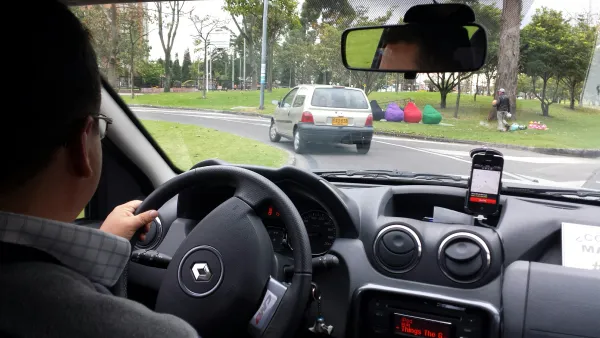
For Uber, Lawsuits in Seattle and New York Drag On
The transportation network company is facing an ongoing legal battle over its drivers’ right to unionize in Seattle and an antitrust lawsuit in New York.

Planetizen Federal Action Tracker
A weekly monitor of how Trump’s orders and actions are impacting planners and planning in America.

Amtrak, CN end decades-long dispute with eight-year agreement
The new operating agreement establishes an updated framework for the companies to work together, including processes to resolve disputes.

Northwest rail fans eager for Sept. 30 debut of Amtrak’s Airo fleet
Get ready for that new train smell and more seats. But they won’t go faster or run more frequently on the Cascades route in Washington and Oregon.

Brightline Florida files for bankruptcy
The transit company is over $5 billion in debt.

St. Louis Metro to test if single-car trains can reduce operating costs, maintain rider satisfaction
The pilot program will run from October to spring 2027, and begin with one single-car train operating on Metrolink’s Red and Blue lines.

Pennsylvania is building data centers in abandoned mines
Housing data centers in mines provides an alternative to destroying local forests and may spare residents from data centers’ noise and air pollution.

FREE Course: Walkable City 1: Why Walkability?
After describing his path towards focusing on walkability as the essence of good planning, Jeff Speck marches through his five principal reasons for making more walkable places.
Reinventing Malls: Planning Alchemy—Turning Gray Fields Into Gold
The course focuses on the opportunities and imperatives that shape reinvention of mall sites.

City of Thousand Oaks
City of Wisconsin Rapids
Harvard University Graduate School of Design
The Architects Foundation
University of Cincinnati Online
The Pocatello Development Authority
The Urban Renewal Agency of the City of Pocatello