In an update to his 1986 movie "She's Gotta Have It," Spike Lee confronts the ways Brooklyn has changed since then, gentrification and racial tension included.


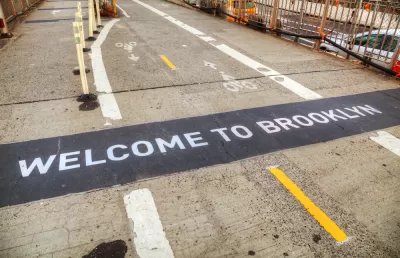
Brentin Mock discusses how Spike Lee treats gentrification in She's Gotta Have It, a Netflix update of his 1986 film of the same title.
On top of her relationship challenges, "In the Netflix special, [main character Nola] Darling's freedoms are further depressed by a new antagonist: gentrification. Darling's white neighbors call the police and hold neighborhood meetings to report noise, loitering, funky smells, graffiti, and other perceived nuisances in their neighborhood."
According to Mock, much of Lee's earlier work portrayed a New York City "as black as Woody Allen's was white." He goes on, "It wasn't until Lee's seminal 1989 film Do the Right Thing that he began teasing the menace of the invasion of white people into Black Brooklyn."
Mock points out that Lee "has been publicly challenged on the fact that his own living and business arrangements in Fort Greene, Brooklyn, have drawn upscale developers, renters, and homeowners to the neighborhood, helping make it unaffordable." But the director is, perhaps, a special case here.
Lee is part of a vanguard of black artists and professionals who helped buy and fix up properties throughout Fort Greene after white residents abandoned it. He helped fortify Fort Greene so he's earned the right to speak out for it. But it was that exact urban-renewable energy that made it attractive to the children of white flight, who began moving back to neighborhoods like Fort Greene, interrupting the beautiful Black Brooklyn canvas that Lee was so in love with.
FULL STORY: The Arc of Gentrification Bends Toward Spike Lee

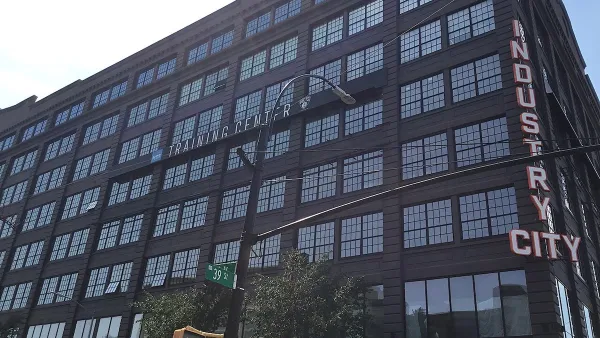
‘Emergent City’ Documentary Highlights Rare Anti-Gentrification Victory
The film charts the saga of a Brooklyn site called Industry City.
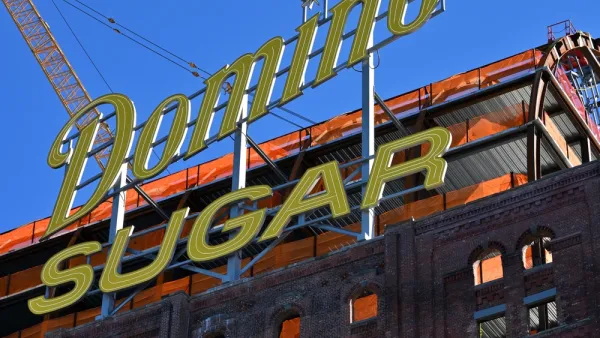
Bitter Irony Behind Brooklyn’s Sweet Domino Sugar Sign
A new feature on the Brooklyn waterfront is a reminder that Domino Sugar has made several unsavory appearances in the history of Puerto Rican communities.
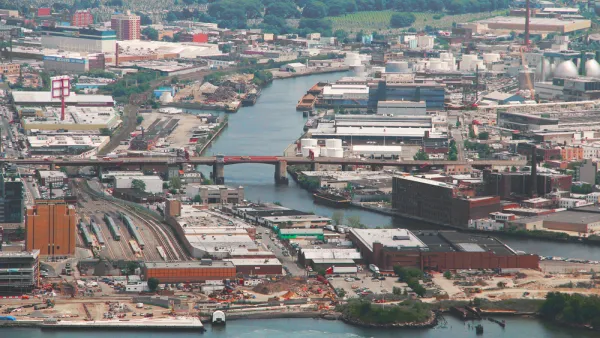
How Broken Planning and Development Processes Hobble the Potential of Neighborhoods
A stinging critique of the public review process in New York City.

Planetizen Federal Action Tracker
A weekly monitor of how Trump’s orders and actions are impacting planners and planning in America.

The state-sanctioned urbicide of Austin
People don’t kill cities. Freeways do.

US to reduce Colorado River water deliveries to Mexico
A new Colorado Treaty amendment reduces Mexico’s Colorado River water allocation by 250,000 acre feet.

Mamdani overhauls NYC's Vision Zero plan with 100 new policy goals
The overhaul aims to reduce traffic deaths and make streets safer for pedestrians, cyclists and drivers through lower speed limits, new safety infrastructure and more.

Amtrak not solely to blame for New Jersey commuter rail's unreliability, report finds
A new study from the Garden State Initiative found that NJ Transit’s budget grew 20% across a 4 year period, but reliability declined significantly over the same period.

EPA erases limits on planet-warming pollution from power plants
Under Monday’s plan, power plants would still have some limits on how much mercury, arsenic and other contaminants they can emit.

FREE Course: Walkable City 1: Why Walkability?
After describing his path towards focusing on walkability as the essence of good planning, Jeff Speck marches through his five principal reasons for making more walkable places.
Reinventing Malls: Planning Alchemy—Turning Gray Fields Into Gold
The course focuses on the opportunities and imperatives that shape reinvention of mall sites.

Eagle County Government
Harvard University Graduate School of Design
Nashville Planning Department
The Architects Foundation
University of Cincinnati Online
The Pocatello Development Authority
The Urban Renewal Agency of the City of Pocatello
Journal of the American Planning Association