Like many of the country's sunny and popular cities, Denver is struggling to house its people. Accessory dwelling units, otherwise known as Granny Flats, could be part of a solution to that problem.


"West Denver is full of modest homes in neighborhoods that are among the last bastions of affordability for their heavily Latino and working-class owners. But in a fast-growing city, that stability is fading quickly," Jon Murray writes in the Denver Post. Renee Martinez-Stone, of the West Denver Renaissance Collaborative, is trying to build accessory dwelling units (ADUs) as part of the solution to spiking housing costs.
"She sees two potential shots in the arm for the neighborhoods if more homeowners build accessory dwelling units, or ADUs: more financial stability for the primary homes’ owners, and greater availability of small, affordable rentals for young adults and, perhaps, older residents with fixed incomes," Murray reports.
Her group is working with Habitat for Humanity on a pilot program to build these homes. "The program also could streamline the permitting process by offering a half-dozen or so pre-reviewed, quickly adaptable ADU designs," Murray writes. If the response to the program is positive, the group would look to expand the initiative, eventually building 250 homes.

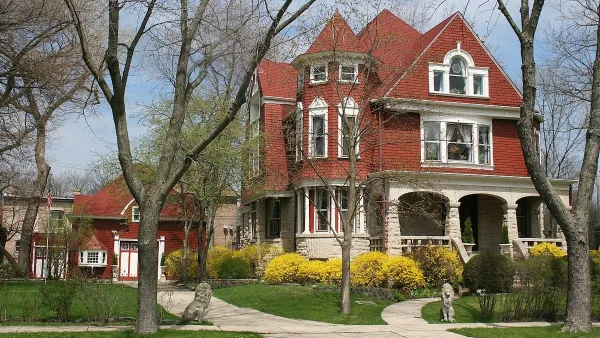
Chicago ADU Law Gives Alderpeople Veto Power
After years of debate, the city approved an ordinance that legalizes ADUs in some neighborhoods, but gives alderpeople the power to restrict them in single-family zones.
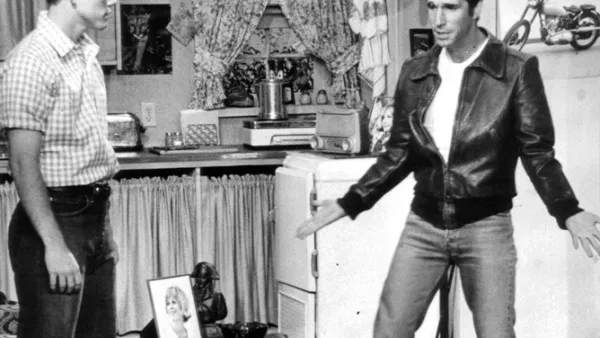
What do the Gilmore Girls, Happy Days, and Full House have in common? ADUs.
American sitcoms are full of garage apartments, attic rooms, and pool houses. Why aren't our cities?
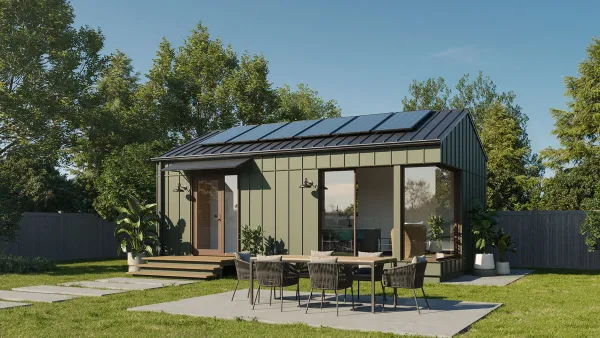
NYC’s ‘ADU for You’ Initiative Offers Pre-approved Plans and Financing Tools
The project pairs pre-approved plans with financing and other tools to help more homeowners build accessory units.

Planetizen Federal Action Tracker
A weekly monitor of how Trump’s orders and actions are impacting planners and planning in America.

The state-sanctioned urbicide of Austin
People don’t kill cities. Freeways do.

US to reduce Colorado River water deliveries to Mexico
A new Colorado Treaty amendment reduces Mexico’s Colorado River water allocation by 250,000 acre feet.

5 New England states march closer to 800 megawatt wind energy project
Securing federal approval for the project may be complicated under the Trump administration, which has historically been hostile towards domestic wind power.

Baltimore to break ground on $50 million Transit Priority Project
The project will bring faster bus trips, safer streets and better bike connections to Baltimore.

Airbnb launches $250 million 'last-dollar financing' housing accelerator, makes first investment in Austin
The company will put $6.4 million towards affordable housing development in Texas’ capital.

FREE Course: Walkable City 1: Why Walkability?
After describing his path towards focusing on walkability as the essence of good planning, Jeff Speck marches through his five principal reasons for making more walkable places.
Reinventing Malls: Planning Alchemy—Turning Gray Fields Into Gold
The course focuses on the opportunities and imperatives that shape reinvention of mall sites.

Eagle County Government
Harvard University Graduate School of Design
Nashville Planning Department
The Architects Foundation
University of Cincinnati Online
The Pocatello Development Authority
The Urban Renewal Agency of the City of Pocatello
Journal of the American Planning Association