Most people would probably assume a shared street, with no signs, lanes, or other regulatory infrastructure, is an accident waiting to happen. More and more cities are proving the opposite.


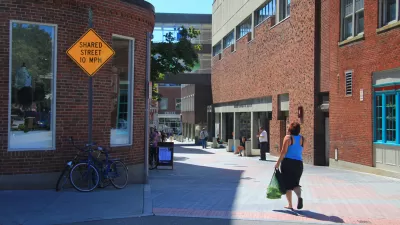
The title of this new video from Vox and 99 Percent Invisible is a bit misleading if you're a planner. The headline mentions getting rid of road signs, but what the video is really talking about shared streets.
According to the video, shared streets have been adopted in Europe, as exemplified by Poynton, United Kingdom. But Planetizen readers also know that Chicago has already adopted the shared street model on Argyle Street, New York tested a version of the idea, and advocates have pitched the idea in Pittsburgh.
Read the full story: Road signs suck. What if we got rid of them all?

Video: Jane Jacobs’ ‘Sidewalk Ballet’ is Alive and Well
“Streets Make Cities” takes viewers on a stroll down West 4th Street in Greenwich Village, illustrating the many ways that streets and sidewalks form the lifeblood of a city.
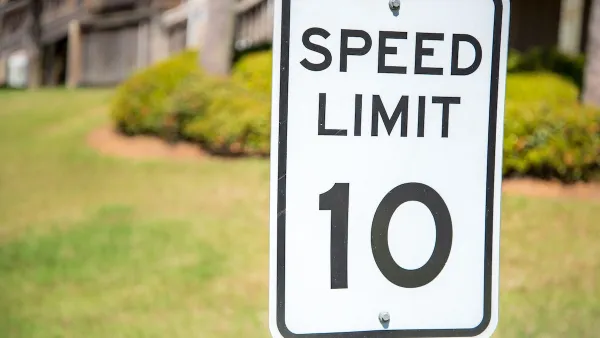
Washington Passes First US ‘Shared Streets’ Law
Cities will be allowed to lower speed limits to 10 miles per hour and prioritize pedestrians on certain streets.
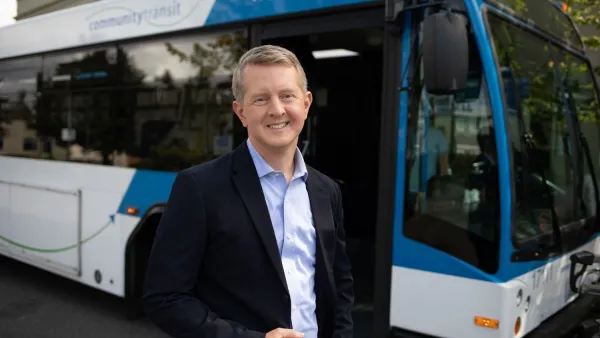
Ken Jennings Launches Transit Web Series
The Jeopardy champ wants you to ride public transit.

Planetizen Federal Action Tracker
A weekly monitor of how Trump’s orders and actions are impacting planners and planning in America.

California plans to bury El Niño’s downpour
If the state plays its cards right, it may be able to store a billion acre-feet of El Niño’s water in aquifers.

Desperate measures: Advocates weigh draining Lake Powell to fill Colorado River
Draining the reservoir could reduce evaporation losses by a couple hundred thousand acre-feet.

Mamdani’s pied-à-terre tax survives legal challenge
A panel of judges found that the plaintiffs failed to demonstrate injury as a result of New York City's implementation of the tax.

Eastern Nebraska is running out of electricity
Data centers and electrification are straining eastern Nebraska’s grid, throttling economic development.

Seattle passes record-breaking transit services expansion
Proposition 1 will double the city’s transit tax to add 95,000 more bus trips and preserve 180,000 bus trips annually.

FREE Course: Walkable City 1: Why Walkability?
After describing his path towards focusing on walkability as the essence of good planning, Jeff Speck marches through his five principal reasons for making more walkable places.
Reinventing Malls: Planning Alchemy—Turning Gray Fields Into Gold
The course focuses on the opportunities and imperatives that shape reinvention of mall sites.

City of Rosemead
Rutgers University, Edward J. Bloustein School of Planning and Public Policy
One Hundred Miles
University of Michigan School for Environment and Sustainability (SEAS)
Hunter College, City University of New York (CUNY)
The Architects Foundation
City of Cambridge
Montrose County
The Pocatello Development Authority