Christopher Hawthrone discusses the rise of a "quiet style" in architecture that returns to basic shapes and resists the urge to look futuristic.



On what he calls "the most important emerging strain in contemporary architecture," Christopher Hawthrone writes, "This is an approach that rejects the hyperactive form-making of celebrated architects like Thom Mayne [...], Daniel Libeskind, the late Zaha Hadid and others in favor of work that is spare, solid and unhurried."
The emerging style, typified by the work of architects like Chile's Mauricio Pezo and Sofía von Ellrichshausen, Portugal’s Aires Mateus, and the Swiss firms Christ & Gantenbein and Office Kersten Geers David Van Severen, embraces a quiet solidity. Hawthrone writes, "there's something archetypal about this architecture. [...] It’s post-digital, which means it rejects the compulsion to push form-making to its absolute limits that overtook architecture at the turn of the century. As a result, it sometimes looks ancient or even primordial. It never looks futuristic."
Hawthorne concludes with a word of praise for the "boring" style. "I for one think architects should embrace the boring charge. [...] the spirit of this new work, its power, comes in part from what it's reacting to — the overloud, overwrought, mostly male voices it has already managed to mute."
Read the full story: Boring architecture? Yes, please


Architecture Is for Everyone
An architecture critic disavows ‘gatekeeping’ in the field.
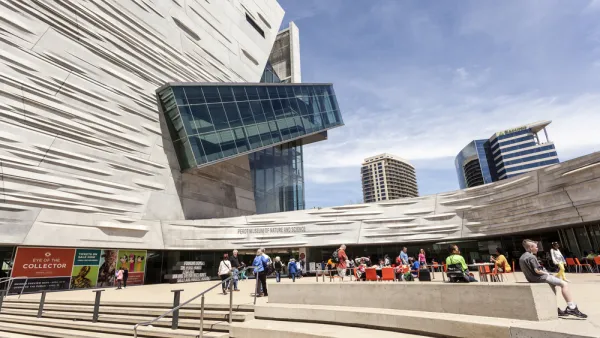
Critiquing an AI-Generated Architecture Critic
Artificial intelligence is being used to generate all kinds of content. Can it successfully replace architecture critics, or does understanding place require physical presence?

Chicago's Esteemed Architecture Critic, Blair Kamin, Moves On
One of two architecture critics working at major daily newspapers to receive the Pulitzer Prize for Criticism, Blair Kamin announced his retirement last week via Twitter.

Planetizen Federal Action Tracker
A weekly monitor of how Trump’s orders and actions are impacting planners and planning in America.
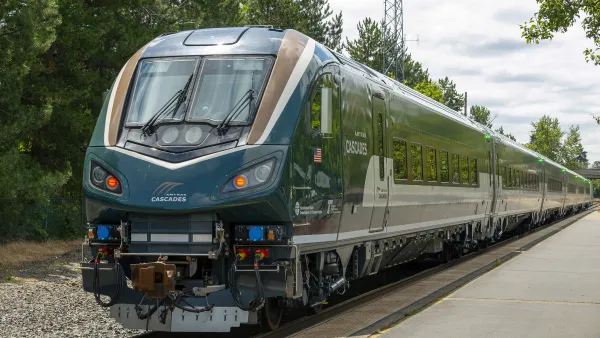
Northwest rail fans eager for Sept. 30 debut of Amtrak’s Airo fleet
Get ready for that new train smell and more seats. But they won’t go faster or run more frequently on the Cascades route in Washington and Oregon.

Trump is considering data centers on 6 states' public land — some state officials say they had no idea
If the administration approves the proposed projects, data center and data center-related developments will cover 17,600 acres of public land.

After decades of planning, Sacramento gains new light rail station
Trains will arrive every 15 minutes during peak hours and every 30 minutes during non-peak hours.

Massive tunnel-boring machine breaks ground on Gateway Project
The Trump administration revoked funding for the project in October 2025, and then restored it earlier this year.

Airo trainsets begin service on Amtrak Cascades route
The trains feature panoramic windows, complementary wifi and over 300 seats per train set.

FREE Course: Walkable City 1: Why Walkability?
After describing his path towards focusing on walkability as the essence of good planning, Jeff Speck marches through his five principal reasons for making more walkable places.
Reinventing Malls: Planning Alchemy—Turning Gray Fields Into Gold
The course focuses on the opportunities and imperatives that shape reinvention of mall sites.

.jpg)
City of Thousand Oaks
City of Wisconsin Rapids
Harvard University Graduate School of Design
The Architects Foundation
University of Cincinnati Online
The Pocatello Development Authority
The Urban Renewal Agency of the City of Pocatello