The new plan tackles housing affordability and food justice alongside water supply and greenhouse gas emissions.


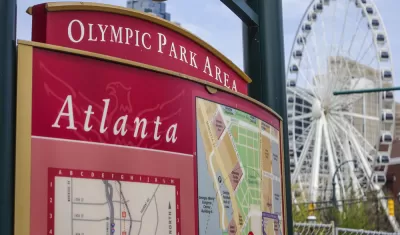
A year in the making, Resilient Atlanta: Actions to Build a More Equitable Future aims to prepare the city for the social, economic, and physical challenges of the 21st century, which it says include extreme climate events, terrorist threats, income inequality, and housing affordability.
The plan is organized into four broad "visions," with targets spanning cultural preservation, economic justice, transportation infrastructure, clean energy, and more. Target 1.1, for example: "Become a national leader by 2022 in addressing structural racism, reconciling historic racism and promoting racial equity." Each section also includes recommendations for concrete actions to help the city meet its targets.
Atlanta created the plan as part the 100 Resilient Cities program, and the lessons provided by cities in the network are noted in the document.
FULL STORY: Atlanta publishes resilience strategy

Chicago-Based Equiticity Takes Mobility Justice Nationwide
The new group will challenge the unequal distribution of mobility resources to low-income communities of color.
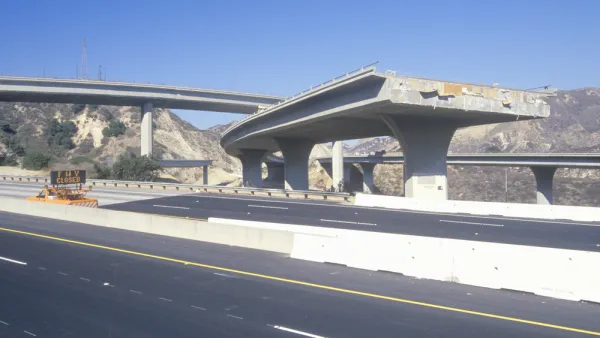
Los Angeles Resiliency Strategy Looks Beyond 'The Big One'
Renewable energy, sea-level rise, and, of course, seismic safety are all part of the plan.
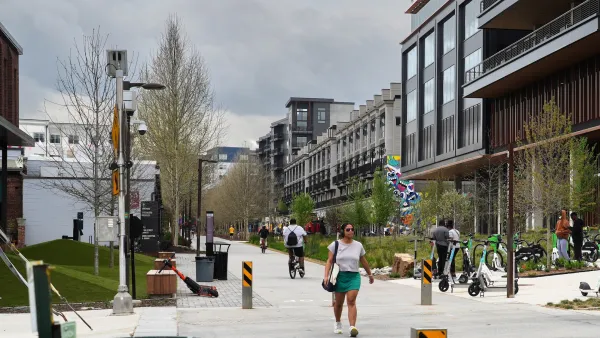
Atlanta's Beltline hits 79% of its affordable housing goal
The walking, biking, and transit corridor set a goal to create 5,600 affordable housing units in the area by 2030.

Planetizen Federal Action Tracker
A weekly monitor of how Trump’s orders and actions are impacting planners and planning in America.

The state-sanctioned urbicide of Austin
People don’t kill cities. Freeways do.

US to reduce Colorado River water deliveries to Mexico
A new Colorado Treaty amendment reduces Mexico’s Colorado River water allocation by 250,000 acre feet.

Guerilla urbanists are building DIY bus stop benches in Chicago
A before-and-after of one of the bus stops with a new bench. The new benches are not officially sanctioned or permitted, but the residents who placed them hope they will be the start of a network of DIY benches across the city.

Mamdani overhauls NYC's Vision Zero plan with 100 new policy goals
The overhaul aims to reduce traffic deaths and make streets safer for pedestrians, cyclists and drivers through lower speed limits, new safety infrastructure and more.

Amtrak not solely to blame for New Jersey commuter rail's unreliability, report finds
A new study from the Garden State Initiative found that NJ Transit’s budget grew 20% across a 4 year period, but reliability declined significantly over the same period.

FREE Course: Walkable City 1: Why Walkability?
After describing his path towards focusing on walkability as the essence of good planning, Jeff Speck marches through his five principal reasons for making more walkable places.
Reinventing Malls: Planning Alchemy—Turning Gray Fields Into Gold
The course focuses on the opportunities and imperatives that shape reinvention of mall sites.

Eagle County Government
Harvard University Graduate School of Design
Nashville Planning Department
The Architects Foundation
University of Cincinnati Online
The Pocatello Development Authority
The Urban Renewal Agency of the City of Pocatello
Journal of the American Planning Association