Two GOP bills and one bipartisan Senate bill hope to reduce the wildfire risk in the West. The "Wildfires Management Act of 2017" is sponsored by the two Republican senators of Idaho and three of the four Democratic senators of Washington and Oregon.


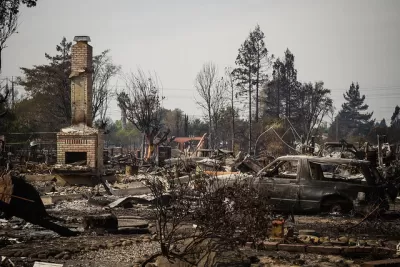
The first of the three bills is H.R. 2936, the "Resilient Federal Forests Act of 2017," introduced by Rep. Bruce Westerman (R-Ark.), which Congress will vote on next week, said Majority Leader Kevin McCarthy, R-Calif, in a Washington Post article by Matthew Daly, AP's Congressional reporter, on Oct. 26.
"The Resilient Federal Forests Act is the only solution on the table to bend the cost curve of fire suppression and prevent wildfires from becoming uncontrollable, life-threatening calamities," said Chairman Rob Bishop (R-Utah) in an Oct. 26 press release by the House Committee on Natural Resources.
However, Democrats and environmentalists see the bill as a means to sanction clear-cutting and eliminate environmental regulations on logging, writes Daly. Furthermore, it ignores the influence of climate change, which is believed to be connected to the historic droughts in the West that lead to the destructive wildfires.
“Denying science and waiving the National Environmental Policy Act is the Republican prescription for everything,” said Rep. Raul Grijalva, D-Ariz, the senior Democrat on the House Natural Resources Committee.
A GOP Senate bill, the ‘Wildfire Prevention and Mitigation Act of 2017’’, primarily authored by Sen. John Barrasso R-Wyo, chairman of the Senate Environment and Public Works Committee, "would greatly expand categorical exclusions and measures to reduce litigation risk" and reverses an appeals court decision requiring federal agencies in certain circumstances to consult with U.S. Fish and Wildlife Service according to the committee's Oct. 23 press release.
The third bill, S.1991, introduced by Senate Energy and Natural Resources Committee ranking member Maria Cantwell (D-Wash.) on Oct. 19, unlike the first two, is bipartisan, as it is co-sponsored by the two Republican senators of Idaho, James E. Risch and Mike Crapo, along with Sens. Ron Wyden (D-Ore.) and Patty Murray (D-Wash.).
The Wildfires Management Act of 2017 "provides up to $100 million in funding to at-risk communities to plan and prepare for wildfires" and "[e]stablishes a pilot program that directs the Forest Service and the Department of the Interior to treat their top 1% most-at-risk, least-controversial lands over the next 10 years," according to Sen. Cantwell.
Daly reported on this bill separately on Oct. 20.
FULL STORY: GOP targets environmental rules after wildfires


Bipartisan Support for Federal Diesel Emissions Reduction Bill
Established in 2005 to reduce toxic diesel emissions, the Diesel Emissions Reductions Act expired in 2016. A bipartisan effort appears to be in place to see it reauthorized this year.
A Win for ‘Keep it in the Ground’
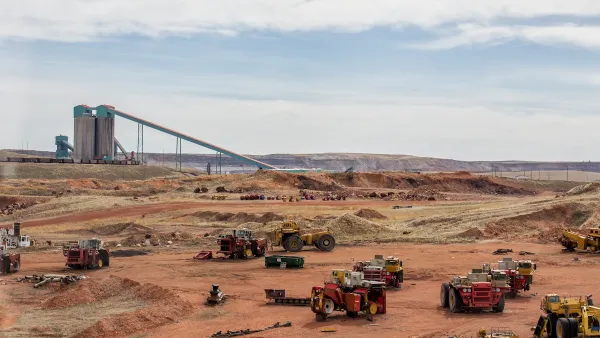
Coal mining in Wyoming will take a major hit as a result of a U.S. Department of Interior plan to cease future leasing of coal mines in the nation's most productive coal mining basin. The decision casts a spotlight on the presidential election.

Undoing Biden's EV Rule
The partisan divide over how government should reduce greenhouse gas emissions was on full display after the Biden administration finalized its emissions standards rule for light and medium duty vehicles on March 20.

The state-sanctioned urbicide of Austin
People don’t kill cities. Freeways do.

US to reduce Colorado River water deliveries to Mexico
A new Colorado Treaty amendment reduces Mexico’s Colorado River water allocation by 250,000 acre feet.

New Jersey’s second-largest city bans standalone data centers
Jersey City will continue to allow co-location facilities, such as those meant for research institutions that store their own data.

Amtrak not solely to blame for New Jersey commuter rail's unreliability, report finds
A new study from the Garden State Initiative found that NJ Transit’s budget grew 20% across a 4 year period, but reliability declined significantly over the same period.

EPA erases limits on planet-warming pollution from power plants
Under Monday’s plan, power plants would still have some limits on how much mercury, arsenic and other contaminants they can emit.

Phoenix announces new on-demand transit service, more frequent RAPID buses
Both new services will launch in October, and are part of Phoenix's Project Effective Access Solutions for Easing Congestion.

FREE Course: Walkable City 1: Why Walkability?
After describing his path towards focusing on walkability as the essence of good planning, Jeff Speck marches through his five principal reasons for making more walkable places.
Reinventing Malls: Planning Alchemy—Turning Gray Fields Into Gold
The course focuses on the opportunities and imperatives that shape reinvention of mall sites.

Eagle County Government
Harvard University Graduate School of Design
Nashville Planning Department
The Architects Foundation
University of Cincinnati Online
The Pocatello Development Authority
The Urban Renewal Agency of the City of Pocatello
Journal of the American Planning Association