Several communities across Massachusetts are looking to take private property to build new schools.



Laura Krantz of the Boston Globe reports on several ongoing eminent domain disputes impacting communities around the state. In the city of Waltham, the mayor and city councilors are at odds over the potential eminent domain of a retirement home for priests that also hosts a number of community programs. The city wants the land to build a new high school, and the mayor argues that the priests violated an agreement that they had with the city not to market or sell the property for other uses.
In Massachusetts, municipalities have the power to seize land as long as they show that it is in the public interest. Cities and towns must compensate the property owner for the land’s fair market value but otherwise have broad power.
...
For now, the mayor said, the proposal to seize the land is dead, because a majority of the council opposes it. But just last month she sent a three-page letter to the city explaining why that location is still ideal for a new school.
Jim Lampke, executive director of the Massachusetts Municipal Lawyers Association, said eminent domain is common but always a last resort when a community can’t reach a voluntary agreement with a property owner. He said he has not seen communities abuse the power.
Other eminent domain proposals in Brookline and Lowell, MA have received mixed, but mostly negative, responses from citizens and property owners with plans for new schools requiring the taking of private property.
Read the full story: Across region, communities mull seizing private property


MBTA threatens to use eminent domain to pedestrianize Boston streets during World Cup
Boston city hall has been unusually reluctant to align with MassDOT and MBTA's proposed crowd management plans.
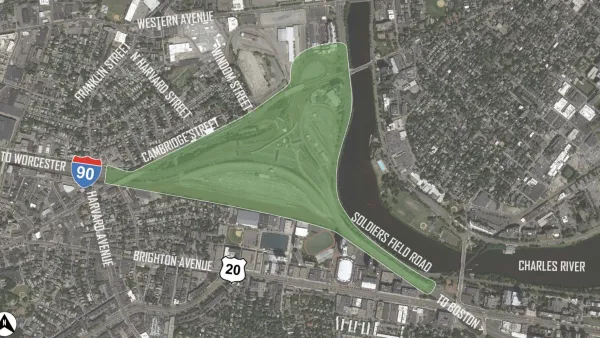
Imagining Alternatives to an Enlarged I-90 Viaduct in Boston
Massachusetts Department of Transportation plans to heighten and widen the Allston section of I-90 viaduct do not align with the community's desire for an environmentally friendly and pedestrian- and cycling-oriented new solution.

Watch: The Dark Side of Eminent Domain
In cities like Boston, the government’s right to take private property displaced residents and destroyed vulnerable neighborhoods and communities.

Planetizen Federal Action Tracker
A weekly monitor of how Trump’s orders and actions are impacting planners and planning in America.

Colorado’s Largest Data Center Could Rise Next to Homes — Without a Public Hearing
The proposed campus would consume 11 times the power of Denver International Airport; as it has across the country, opposition mounts.

US to reduce Colorado River water deliveries to Mexico
A new Colorado Treaty amendment reduces Mexico’s Colorado River water allocation by 250,000 acre feet.

'This is going to be painful:’ Virginia stares down $1.7 billion funding gap for highway maintenance
The state may address the deficit by shifting $290 million from its construction budget to maintenance projects.
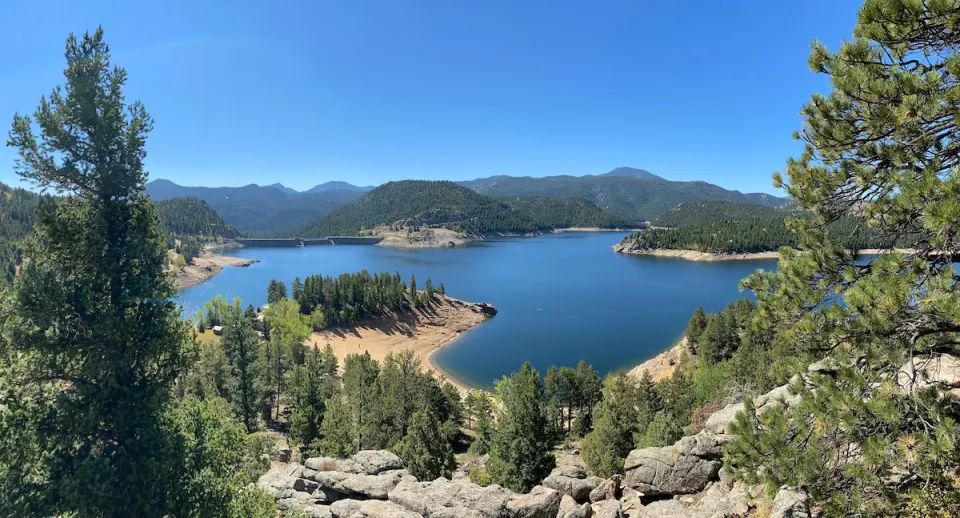
Judges permit Denver to divert 77,000 acre feet from the Colorado River for reservoir expansion
Overuse and climate change have caused the Colorado River’s water levels to plummet.

Amtrak, CN end decades-long dispute with eight-year agreement
The new operating agreement establishes an updated framework for the companies to work together, including processes to resolve disputes.

FREE Course: Walkable City 1: Why Walkability?
After describing his path towards focusing on walkability as the essence of good planning, Jeff Speck marches through his five principal reasons for making more walkable places.
Reinventing Malls: Planning Alchemy—Turning Gray Fields Into Gold
The course focuses on the opportunities and imperatives that shape reinvention of mall sites.

KFH Group Inc.
Greater Baltimore Committee
Eagle County Government
The Architects Foundation
University of Cincinnati Online
The Pocatello Development Authority
The Urban Renewal Agency of the City of Pocatello